

minimal vector concept art, two-tone palette, top-down overhead bird's-eye view, flat geometric layout, cool neutral overcast light, flat even📷 Photo by Tech&Space
- ★AI-powered video chat, not just transcripts
- ★Skip-ahead feature tests real-world utility
- ★Competes with Rask, Tldv—but lacks open benchmarks
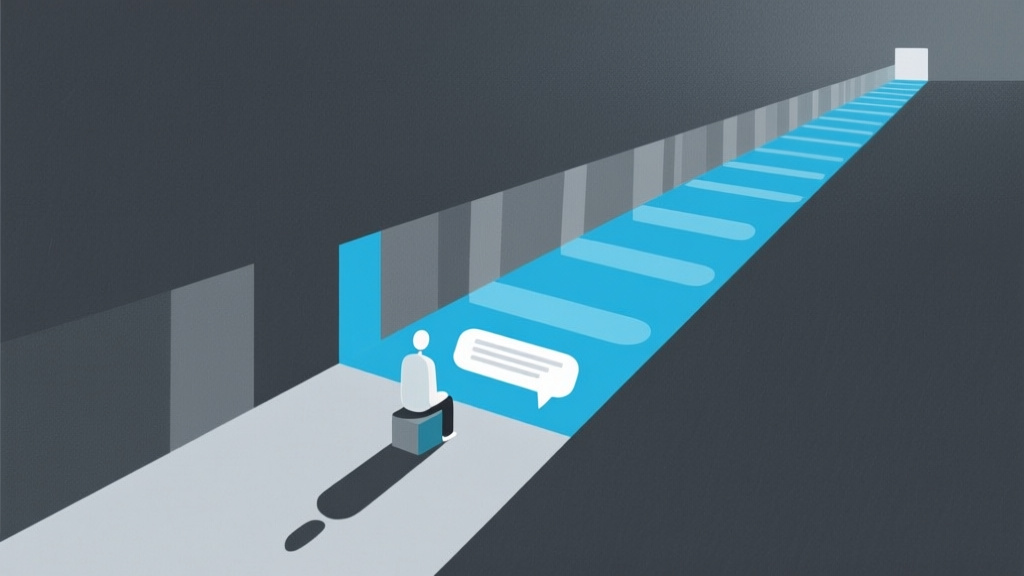
Claras isn’t the first tool promising to unlock YouTube’s unsearchable hours via AI, but it’s the latest to frame ‘chat with videos’ as a solved problem. The pitch is familiar: upload a link, ask questions, skip to relevant timestamps—all while the model synthesizes answers from spoken content. Unlike Rask AI’s translation-heavy approach or Tldv’s meeting-focused summaries, Claras leans into conversational interaction, betting that users want dialogue, not just cliff notes.
The skip-ahead feature is the actual innovation here. Most tools dump you into a transcript or a static summary; Claras lets you jump to moments mid-conversation, theoretically closing the loop between Q&A and playback. But ‘theoretically’ is the operative word: early user reports on Product Hunt note inconsistent timestamp accuracy, especially with longer videos. That’s the reality gap—demo clips show seamless skips, while real-world use reveals the fragility of voice-to-text alignment.
This isn’t a knock on Claras specifically, but on the category. ‘Chat with any video’ implies a level of reliability that even OpenAI’s Whisper struggles to deliver at scale. The benchmark here isn’t ‘does it work sometimes?’ but ‘does it work better than manually scrubbing through a transcript?’ For most users, the answer is still ‘not yet.’
minimal vector concept art, two-tone palette of slate grey and electric blue accents on dark matte background, top-down overhead bird's-eye view,📷 Photo by Tech&Space
The gap between ‘talk to any video’ and ‘talk to any video well’
The competitive landscape is already crowded, and Claras’ edge—if it has one—lies in its conversational framing. Tools like Glaze and Voxscript offer similar functionality but target different niches (creators vs. researchers). Claras’ bet is that users want a chatbot, not a search tool. That’s a gamble: most people don’t ‘chat’ with videos so much as they hunt for specific information. The skip-ahead feature could bridge that gap, but only if it’s precise enough to outperform Ctrl+F on a transcript.
Developer reaction has been muted. GitHub and Hacker News threads mention Claras as ‘another Whisper wrapper,’ though its skip-ahead logic isn’t open-sourced. The lack of technical deep dives suggests either proprietary tech or—more likely—a thin layer over existing models. Without benchmarks on accuracy (e.g., timestamp precision across video lengths) or latency (how fast it processes a 2-hour lecture), it’s hard to separate hype from utility.
The real signal here isn’t the product itself, but the assumption that ‘AI + YouTube’ is an untapped goldmine. It’s not—it’s a graveyard of half-baked tools that underestimate how hard it is to parse unstructured audio. Claras might stick if it nails the skip-ahead use case, but for now, it’s another reminder that ‘talk to videos’ is still a demo-looking-for-a-product.
Early users report spotty timestamp accuracy, but how often does it fail—and on what kinds of videos? A 10-minute tutorial is one thing; a noisy two-hour podcast is another. Until we see failure rates by content type, ‘works with any video’ is just marketing.