

Gemini in Your Car: AI Assistant or Google’s Latest Test?
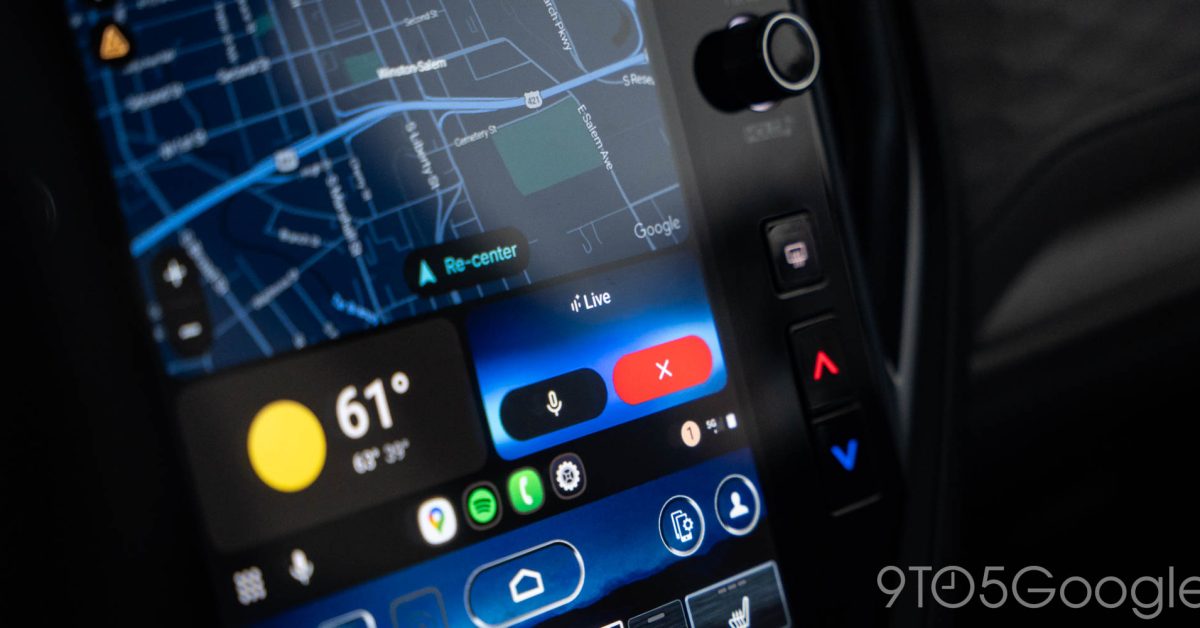
Gemini in Your Car: AI Assistant or Google’s Latest Test?📷 Source: Web
- ★Sudden Gemini rollout on Android Auto
- ★Mixed user reactions to silent activation
- ★Unclear global scope or car compatibility
Google’s Gemini voice assistant is now appearing in cars, months after its announcement and with little warning. Multiple users report the AI assistant suddenly activating on Android Auto, replacing or augmenting Google Assistant without explicit opt-in. The rollout suggests a broader push beyond early testers, but details remain scarce—no official confirmation on whether this is global, regional, or tied to specific car models or Android Auto versions. 9to5Google first flagged the pattern, noting frustration among some users who didn’t ask for a new voice assistant in their daily commute.
The timing aligns with Google’s habit of quietly expanding AI features, often before they’re fully baked. Gemini’s car integration feels like another beta test wrapped in marketing—this time, inside a moving vehicle. What’s genuinely new here isn’t the assistant itself, but the suddenness of its arrival. Unlike a traditional software update, this rollout feels more like a silent experiment, with users as unwitting testers. The lack of transparency around functionality—Does it understand local accents? Can it reliably parse driving commands?—hints at a reality gap between Google’s demo labs and real-world deployment.
For drivers, the change isn’t just about a new voice—it’s about trust. Google Assistant, despite its flaws, was a known quantity. Gemini’s sudden appearance raises questions about consent, especially for those who didn’t actively seek an upgrade. Is this a seamless evolution, or a forced beta test with zero off-ramp?

Google’s demo ends at the driveway—what actually works?📷 Source: Web
Google’s demo ends at the driveway—what actually works?
Benchmarking Gemini’s car performance isn’t easy, because there’s no benchmark—just anecdotal reports of sudden activations and mixed reactions. Some users applaud the native integration, while others report glitches or unintended behavior, like the assistant misinterpreting commands or defaulting to awkward responses. Without a clear changelog or training data, it’s hard to separate genuine improvements from placebo effects. The industry map here is simple: Google gains another data stream for Gemini’s fine-tuning, while car manufacturers remain passive observers, their own voice assistants (like BMW’s or Ford’s) sidelined by Google’s expanding ecosystem.
The developer signal is muted, partly because Gemini’s car integration isn’t open-source. GitHub shows minimal activity around Android Auto-specific Gemini implementations, and technical forums are buzzing with questions, not solutions. Most discussions revolve around how to disable Gemini rather than optimize it—a telling sign. The real competitive advantage here isn’t for users, but for Google: another platform lock-in, another dataset to train its next-gen AI, and another step toward making Assistant just a brand name for Gemini.
The hype filter here is clear: Gemini in cars isn’t a revolution—it’s a feature expansion, wrapped in the usual Google opacity. What actually changed? Not much for the end user, beyond a new voice with unproven reliability. The real story isn’t Gemini’s capabilities, but Google’s playbook: roll out first, fine-tune later, and let users figure out the edge cases. For now, the only thing confirmed is that your car’s voice assistant might not be the one you signed up for.
If Gemini is suddenly everywhere, why hasn’t Google shared performance metrics, success rates, or even basic compatibility guidelines? The silence suggests either confidence—or something worth hiding.