


LLMs ace benchmarks yet still fail at common sense📷 Published: Apr 10, 2026 at 12:18 UTC
- ★Benchmark-aligned data narrows model adaptability
- ★Coverage-expanding data improves generalization
- ★Spectral analysis reveals training regime signatures
Another week, another paper that proves large language models can crush benchmarks without actually getting smarter. The latest arXiv preprint Benchmark Shadows (2604.07363v1) dissects the disconnect between synthetic scores and real-world performance—confirming what developers have been murmuring for months: LLMs are becoming benchmark specialists, not generalists.
The researchers ran controlled experiments with fixed training settings, swapping only the data distribution. The results were stark. Models trained on benchmark-aligned data saw narrow metric improvements but suffered in broader representational development. Meanwhile, coverage-expanding data led to more distributed parameter adaptation—though the gains were subtler and harder to quantify.
What’s genuinely new here isn’t the problem—it’s the diagnosis. The team introduced spectral and rank analyses to reveal distinct structural signatures in model parameters, linking training regimes to measurable outcomes. This isn’t just hand-wringing about overfitting; it’s a toolkit to spot when a model is gaming the test rather than learning.
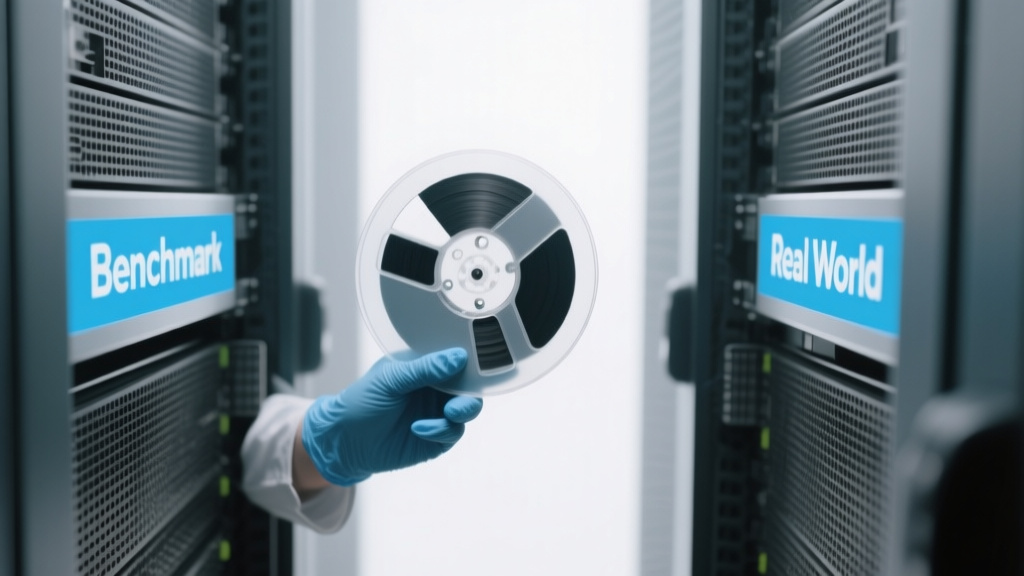
The gap between synthetic scores and real-world smarts hasn't budged📷 Published: Apr 10, 2026 at 12:18 UTC
The gap between synthetic scores and real-world smarts hasn't budged
The implications stretch beyond academia. Every AI lab chasing leaderboard glory is now on notice: high benchmark scores ≠ product readiness. For enterprises, this means treating vendor claims with skepticism—especially when demos rely on cherry-picked datasets. The real bottleneck isn’t model size or training compute; it’s the misalignment between what’s measured and what matters.
Developers have already started adapting. GitHub discussions show a shift toward diverse, real-world datasets over synthetic benchmarks, even if it means slower progress on paper. Open-source projects like Mistral’s v0.3 are quietly prioritizing ‘boring’ robustness over flashy metrics—a trend worth watching.
For all the noise, the actual story is about incentives. Labs optimized for publications and funding will keep chasing benchmark highs, while those building actual products are forced to look elsewhere. The hype cycle rolls on, but the cracks are widening.