

Anthropic’s job market study: AI hype or hiring reality?
Anthropic’s job market study: AI hype or hiring reality?📷 Published: Apr 12, 2026 at 08:27 UTC
- ★2023 study assumed AI tools would reshape jobs—without real-world data
- ★Theoretical benchmarks vs. messy deployment in actual workplaces
- ★Who benefits when ‘anticipated’ software stays hypothetical
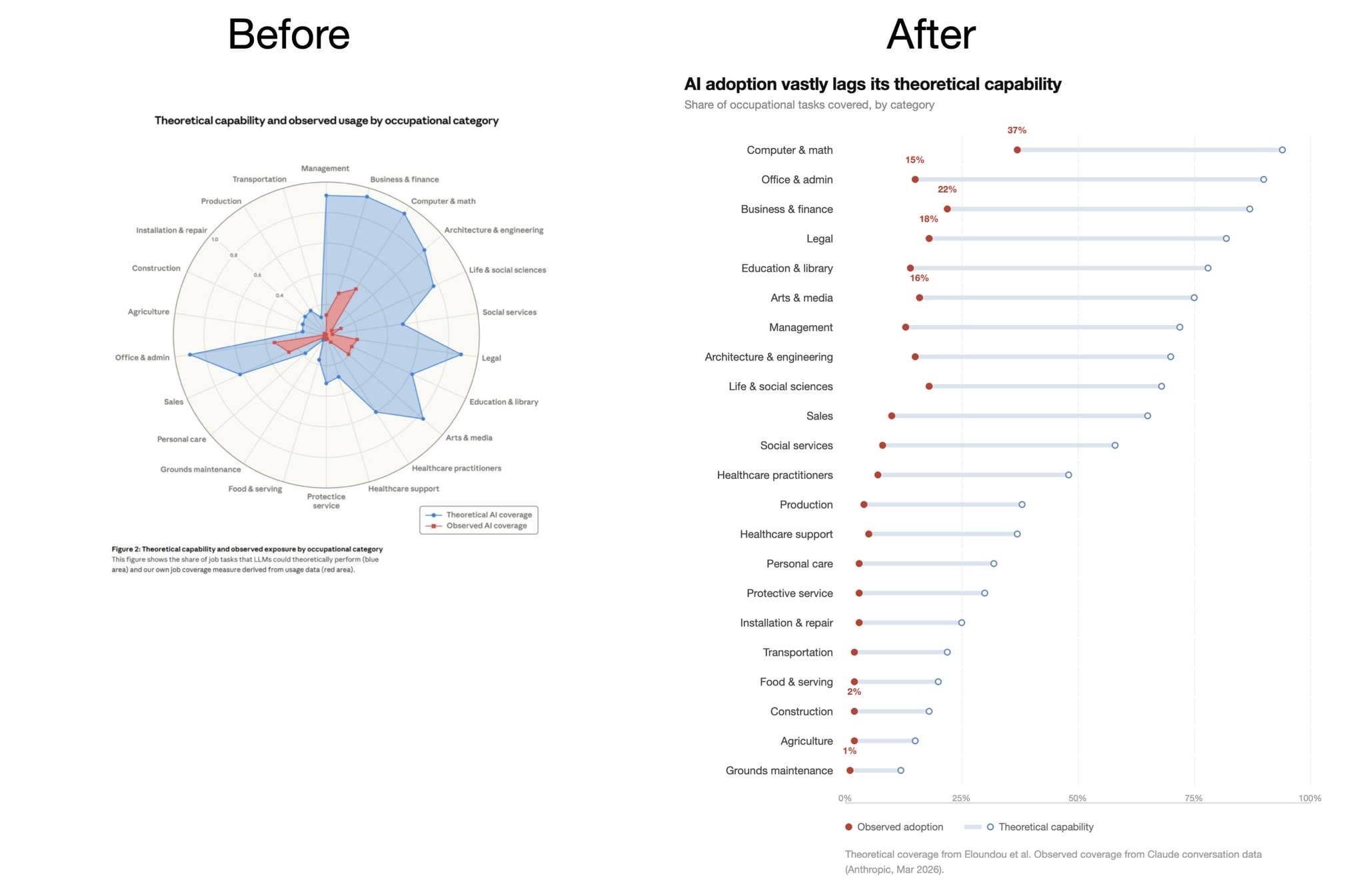
Anthropic’s 2023 study on AI’s theoretical job market impact didn’t just measure capabilities—it bet big on unbuilt software. The analysis hinged on LLM-powered tools that, at the time, existed mostly as PowerPoint slides and demo videos. Task automation, code assistance, even document generation: all framed as inevitable, all tested in controlled labs where variables like human resistance, legacy systems, or actual adoption rates didn’t muddy the results.
The study’s core tension isn’t what AI can do—it’s what employers will deploy. Early signals suggest companies are far more interested in augmenting high-value roles than replacing mid-tier ones, despite the hype around ‘full automation.’ And yet the paper’s language leans heavily on anticipated software, a weasel word that does a lot of work. It’s the difference between a benchmark and a payroll.
This isn’t just academic nitpicking. When a study’s assumptions become marketing collateral—see: every AI vendor’s ‘job transformation’ whitepaper—it’s worth asking who benefits from the ambiguity. Spoiler: it’s not the workers being told their roles are ‘evolving.’

The gap between ‘could’ and ‘does’ in AI workforce predictions📷 Published: Apr 12, 2026 at 08:27 UTC
The gap between ‘could’ and ‘does’ in AI workforce predictions
The developer community’s reaction to these studies follows a familiar script: skepticism about the real-world utility of tools that sound impressive in press releases but falter in production. GitHub threads and technical forums light up with the same question: Where’s the evidence this scales? For now, the answer is mostly crickets—or carefully worded disclaimers about ‘early-stage research.’
Anthropic’s study does highlight one genuine shift: the race to define which tasks are theoretically automatable. That’s a competitive advantage for AI vendors pitching ‘future-proof’ solutions, but it’s cold comfort for HR departments staring down actual hiring budgets. The gap between ‘could replace’ and ‘will replace’ is where most workforce strategies go to die.
What’s missing? A clear-eyed look at the deployment costs no one wants to talk about: retraining, integration hell, and the fact that most companies still run on Excel and email. The study’s ‘theoretical’ label isn’t a bug—it’s the feature. It lets everyone project their best-case scenarios onto the same vague graph.