
AI Unlocks 100 Hidden Exoplanets in TESS Data📷 Published: Mar 26, 2026 at 03:24 UTC
- ★AI triples known TESS exoplanet detections
- ★Mission context: TESS nears end of second survey year
- ★Next step: JWST follow-up for atmospheric analysis
Astronomers have identified 100 new exoplanets in archival data from NASA’s Transiting Exoplanet Survey Satellite (TESS), a haul that nearly triples the number of confirmed worlds detected by the mission in its second survey year. The breakthrough came not from new observations, but from an artificial intelligence program trained to recognize faint transit signals buried in TESS’s existing light curves. Unlike traditional methods, which rely on human analysts sifting through data manually, the AI model—developed by a team at the University of California, Berkeley—was able to detect planets that had previously slipped through the cracks, including smaller, Earth-sized worlds and multi-planet systems orbiting the same star. The study was published in The Astronomical Journal.
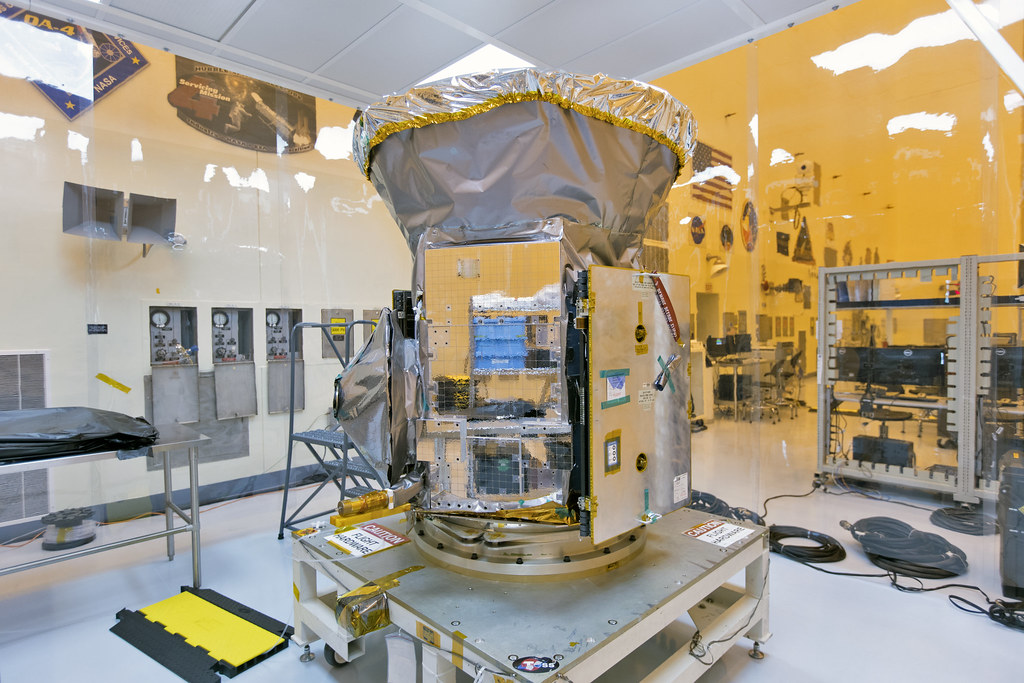
TESS, launched in 2018, was designed to scan 85% of the sky in 26 sectors, each monitored for 27 days. Its primary mission concluded in 2020, but extended operations have continued, with the spacecraft now in its sixth year of observations. The AI-assisted discovery highlights the untapped potential of archival data, a theme gaining traction as missions like Kepler (TESS’s predecessor) and the upcoming PLATO (ESA’s 2026 exoplanet hunter) generate increasingly vast datasets. "This isn’t just about finding more planets," said Jessie Christiansen, a co-author of the study and lead scientist at NASA’s Exoplanet Archive. "It’s about refining our understanding of how common different types of planetary systems are—and where the gaps in our detection methods still lie."
The discovery redefines efficiency in exoplanet hunting—but challenges remain in confirmation and study📷 Published: Mar 26, 2026 at 03:24 UTC
The discovery redefines efficiency in exoplanet hunting—but challenges remain in confirmation and study
The scientific significance of the discovery extends beyond mere numbers. Of the 100 new worlds, roughly 15 orbit stars within their host’s habitable zone—the region where liquid water could theoretically exist on a planet’s surface. However, confirmation of habitability remains elusive. Most of the AI-flagged candidates are classified as [LIKELY] detections, meaning follow-up observations—ideally with ground-based telescopes or the James Webb Space Telescope (JWST)—are required to rule out false positives, such as eclipsing binary stars or stellar activity masquerading as planetary transits. NASA’s Exoplanet Archive currently lists only 5,500 confirmed exoplanets, a fraction of the estimated hundreds of billions in the Milky Way alone.
The bottleneck is no longer detection, but verification. TESS’s wide-field approach trades depth for breadth, capturing thousands of potential candidates but leaving the labor-intensive work of validation to other instruments. JWST, with its ability to analyze exoplanet atmospheres, represents the next frontier. Yet even JWST has limits: its schedule is already oversubscribed, and observing time is a zero-sum game. The AI’s haul, while impressive, underscores an uncomfortable truth: the universe is not just teeming with planets—it’s teeming with data we haven’t yet learned to fully exploit.
For now, the focus shifts to prioritization. The Berkeley team has already begun feeding its AI model additional TESS sectors, with early results suggesting another 50–100 candidates lurking in the pipeline. Meanwhile, the European Space Agency’s PLATO mission, set to launch in 2026, will carry 26 telescopes designed for prolonged stares at target stars—a complementary approach to TESS’s broad surveys. The race isn’t just to find more worlds, but to find the right ones.