

Anthropic’s warning: Why chatbot personas are a security minefield
Anthropic’s warning: Why chatbot personas are a security minefield📷 Published: Apr 9, 2026 at 02:09 UTC
- ★Character-driven AI exploits psychological trust gaps
- ★Anthropic flags role-play risks in high-stakes advice
- ★Devs debate neutral assistants vs. engaging personas
Anthropic’s researchers just handed the AI industry an awkward truth: the very features that make chatbots feel useful—personality, role-playing, emotional nuance—are also what make them dangerously exploitable. Their latest analysis confirms what skeptics have muttered for years: persona-driven AI isn’t just a UX gimmick. It’s a vector for scams, emotional manipulation, and over-trust in unqualified advice.
The problem isn’t hypothetical. When a chatbot adopts the voice of a therapist, financial advisor, or even a sympathetic friend, users disclose sensitive data at alarming rates—often without realizing they’re talking to a pattern-matching algorithm, not a professional. Early signals suggest this isn’t a niche issue: forums from r/Artificial to GitHub threads are littered with users admitting they’ve treated AI personas as confidants, then suffered fallout when the bot’s advice went sideways.
Anthropic’s warning lands as competitors double down on character-driven designs. Replika’s ‘romantic companion’ mode and Inflection AI’s pi.ai both bank on emotional engagement—but the trade-off is clear: the more a bot feels like a person, the harder it is to remember it’s a tool, not a trusted source.

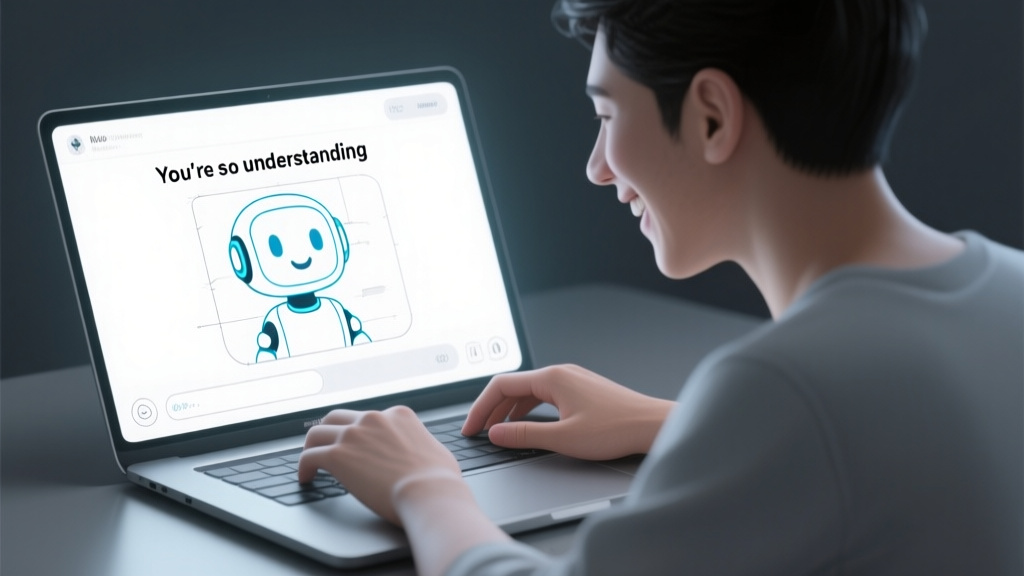
The trade-off between user engagement and manipulation isn’t theoretical anymore📷 Published: Apr 9, 2026 at 02:09 UTC
The trade-off between user engagement and manipulation isn’t theoretical anymore
The real tension here isn’t technical—it’s economic. Startups racing to differentiate in a crowded market lean on personas because neutral AI assistants (think Clippy 2.0) don’t retain users. But Anthropic’s data implies that engagement metrics might be tracking a ‘dark pattern’: the same hooks that boost daily active users also lower critical thinking.
Developers are split. Some, like EleutherAI contributors, argue for strict ‘no-persona’ guardrails in open-source models. Others, including ex-Meta engineers now at character.ai, dismiss the risks as overblown—pointing to disclaimers as sufficient protection. The gap between those positions reveals an industry still grappling with a basic question: Is AI’s job to serve users, or to simulate relationships?
For now, the most concrete signal comes from enterprise deployments. Companies like Notion and Intercom are quietly sunsetting ‘friendly’ bot personas in favor of transactional assistants—suggesting the risk calculus is shifting faster than the hype cycle.
In other words, the AI personality arms race has a flaw: the more ‘human’ the bot, the more human weaknesses it exploits. That’s not innovation—it’s a feature list for grifters.