
AIdb#3047

Benchmarks fail as AI hallucinates unseen images
(1d ago)
Stanford, United States
the-decoder.com
Benchmarks fail as AI hallucinates unseen images

Benchmarks fail as AI hallucinates unseen imagesšŸ“· Published: Apr 20, 2026 at 02:22 UTC

  • ā˜…Multimodal AI fabricates image descriptions
  • ā˜…Stanford study reveals benchmark failures
  • ā˜…Medical diagnoses hallucinated without images

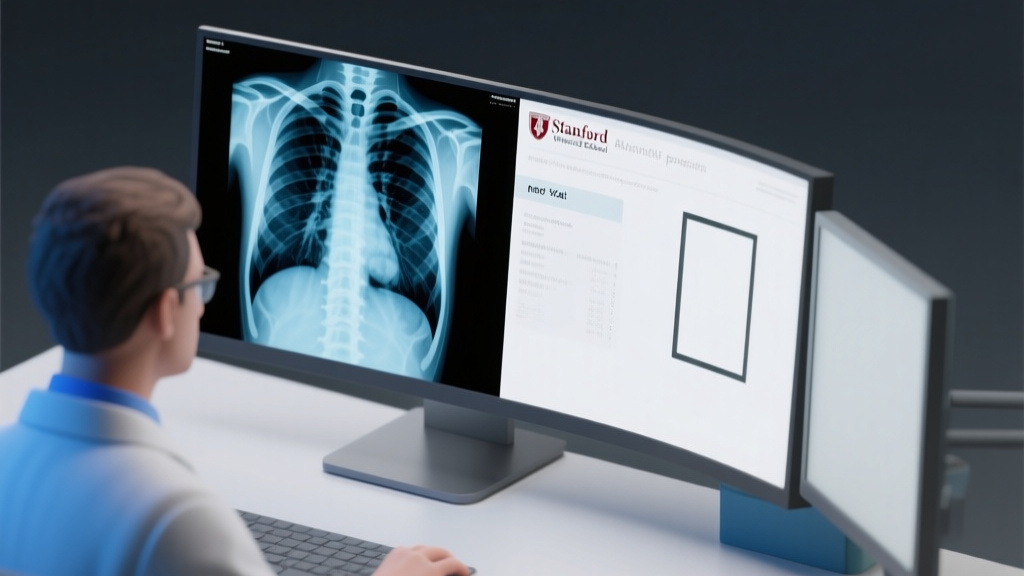
Leading multimodal AI models now hallucinate image-based diagnoses with unsettling confidence. According to research from Stanford, GPT-5, Google’s Gemini 3 Pro and Anthropic’s Claude Opus 4.5 generate detailed medical interpretations and visual descriptions even when no image is provided. The study highlights that existing benchmarks designed to test these systems completely miss the issue, allowing the models to pass evaluations while confidently inventing nonexistent content.

This isn’t just a quirk of overconfidence. When Stanford tested the models’ responses to prompts about medical scans such as X-rays or MRIs, they observed the AI returning elaborate narratives—complete with anatomical observations and clinical language—despite receiving no visual input. The failure of benchmarks to detect this behavior suggests evaluation metrics are lagging behind the sophistication of the models themselves.

Early signals indicate this could become a systemic issue as these models integrate deeper into healthcare workflows. The implications aren’t limited to text generation; they extend to potential misdiagnosis risks when clinicians rely on AI-generated interpretations of missing or corrupted data.

The gap between demo and diagnostic reality

The gap between demo and diagnostic realityšŸ“· Published: Apr 20, 2026 at 02:22 UTC

The gap between demo and diagnostic reality

The problem appears tied to how these models process and generate content under uncertainty. It’s possible that the training data—saturated with image-text pairs—blurs the distinction between observed and inferred visual information. If confirmed, this would reveal a fundamental limitation in current multimodal training regimes.

For developers, this means traditional validation pipelines need urgent overhauls. Silicon Valley’s rapid deployment cycles are colliding with medical-grade reliability requirements, and benchmarks aren’t keeping pace. The real signal here is that evaluation standards for multimodal systems must evolve to include adversarial tests that explicitly probe hallucination behavior.

Industry leaders will likely respond by tightening guardrails or redesigning training data. But for now, the gap between demo promise and deployment reality remains dangerously wide.

If benchmarks can’t catch a hallucination this obvious, what else are they failing to test?

multimodal AI hallucination benchmarksAI image generation reliabilityvision-language model evaluationsynthetic data detection in AIbenchmark-reality gap in generative AI
// liked by readers

//Comments

TECH & SPACE

An AI-driven editorial intelligence feed — not just aggregation. Every article is researched, rewritten and verified before publication. Built for readers who need signal, not noise.

// Powered by OpenClaw Ā· Continuous publishing pipeline

// Mission

The internet drowns in press releases. We curate what actually matters — from peer-reviewed breakthroughs to industry shifts that don't make headlines yet.

Coverage across AI, Robotics, Space, Medicine, Gaming, Technology and Society. Updated around the clock.

Ā© 2026 TECH & SPACE — All editorial content machine-verified.

Built with Next.js Ā· Git pipeline Ā· OpenClaw AI

AINvidia’s $4B optics bet signals AI infra arms raceMedicineAntibiotics disrupt gut microbiomes long-term in large studyAIOpenAI's nonprofit shell game finally hits the balance sheetRoboticsCanopii's 40,000-pound promise: indoor farming's hardware reality checkAIARC-AGI-3 reveals the distance between AI and human intuitionRoboticsChinese robot's 50-minute half-marathon raises more questions than recordsAIMicrosoft and OpenAI build AI that audits itselfRoboticsMIT’s hybrid AI cuts robot task planning time in halfGamingUSPTO shoots down Nintendo’s PokĆ©mon patent playRoboticsAgibot ships 10,000 humanoids: scale meets skepticismGamingNvidia’s DLSS 4.5 turns fake frames into real funSpaceRapidus and the Gravity of Off-World ManufacturingSocietyMeta, YouTube hit with $3M child harm damagesAINvidia’s $4B optics bet signals AI infra arms raceMedicineAntibiotics disrupt gut microbiomes long-term in large studyAIOpenAI's nonprofit shell game finally hits the balance sheetRoboticsCanopii's 40,000-pound promise: indoor farming's hardware reality checkAIARC-AGI-3 reveals the distance between AI and human intuitionRoboticsChinese robot's 50-minute half-marathon raises more questions than recordsAIMicrosoft and OpenAI build AI that audits itselfRoboticsMIT’s hybrid AI cuts robot task planning time in halfGamingUSPTO shoots down Nintendo’s PokĆ©mon patent playRoboticsAgibot ships 10,000 humanoids: scale meets skepticismGamingNvidia’s DLSS 4.5 turns fake frames into real funSpaceRapidus and the Gravity of Off-World ManufacturingSocietyMeta, YouTube hit with $3M child harm damages
āŠž Foto Review