
MIT’s hybrid AI cuts robot task planning time in half

MIT’s hybrid AI cuts robot task planning time in half📷 Published: Apr 20, 2026 at 14:10 UTC
- ★Two-model vision planner halves trial-and-error
- ★Converts simulated actions to executable code
- ★Visual navigation claims double prior success
MIT’s new hybrid AI system doesn’t just guide robots—it writes their to-do lists from pixels. Using a paired vision-language model and a planning translator, researchers have achieved roughly twice the success rate of existing visual planning systems in navigation tasks. The first model parses a scene, simulates possible action sequences to reach a goal, and hands off the simulation to a second model that converts the plan into executable code. No manual path programming required, just a goal image and a suite of learned behaviors.
Early tests show the planner excels in static, well-lit environments where obstacles are clearly visible. Yet the biggest unknown remains: how well does it scale beyond the lab’s controlled floors? The team’s paper—published under the title “Hybrid AI planner turns images into robot action plans”—doesn’t quantify performance in crowded corridors, low-light warehouses, or emergency scenes where labels blur and floors shift.
According to MIT CSAIL’s project page, the system currently supports differential-drive robots like Turtlebots and Husky UGVs, both common research platforms with modest sensing suites. No mention of integration with industrial arms, humanoid torsos, or underwater drones—suggesting the method remains tethered to lightweight, two-dimensional navigation rather than full-body manipulation or multi-modal terrain traversal.
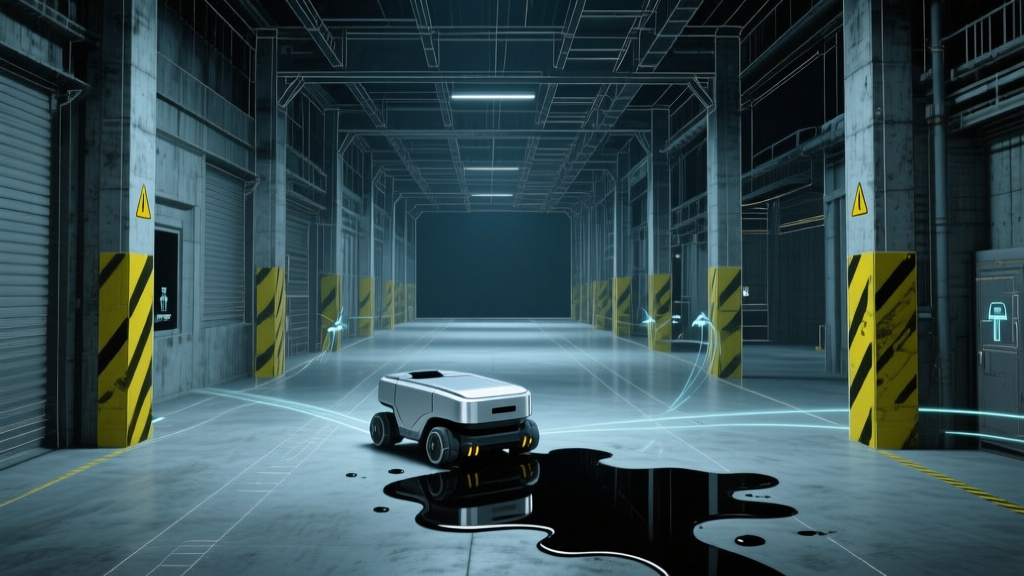
From controlled demo to unpredictable floors: where the math meets the mess📷 Published: Apr 20, 2026 at 14:10 UTC
From controlled demo to unpredictable floors: where the math meets the mess
Visible gaps remain on the hardware side. The vision-language model relies on datasets dominated by daytime indoor scenes, leaving night operations or glossy warehouse floors in shadow. Safety certification—critical for anything touching human spaces—isn’t addressed, and the paper offers no timeline for real-world pilots. Early community responses on TechXplore’s comment thread suggest commercial players like Boston Dynamics or Tesla might adopt the core idea but would need to pair it with robust sensor fusion and fail-safes before deployment.
If the numbers hold outside demos, industrial use could arrive first in predictable settings: automated fulfillment aisles, routine warehouse mapping, and repetitive inspection routes where lighting and geometry are stable. Outside those niches, the planner’s reliance on clear visual inputs could translate into expensive redesigns of factory layouts or lighting systems—hardware limits that rarely surface in slick demo reels.
The method doesn’t yet tackle the messy middle of real deployments: dynamic objects, human traffic, and the constant drift between simulation and reality. Until those gaps narrow, the planner’s headline speed-up remains a classroom experiment rather than a factory floor upgrade.
Demo videos never show the janitor’s mop bucket left in the corridor or the LED panel flickering. Until planners can read intentions through the noise, their twice-as-fast claims won’t survive Monday morning in the warehouse.