
AIdb#3060

Meta’s in-house AI chips: bold infrastructure play or just Nvidia Lite?
(1d ago)
Menlo Park, United States
the-decoder.com
Meta’s in-house AI chips: bold infrastructure play or just Nvidia Lite?

Meta’s in-house AI chips: bold infrastructure play or just Nvidia Lite?📷 Published: Apr 20, 2026 at 06:07 UTC

  • Four custom AI chips for inference only
  • Meta chasing vertical integration in AI hardware
  • Real-time AI optimizations by 2025?

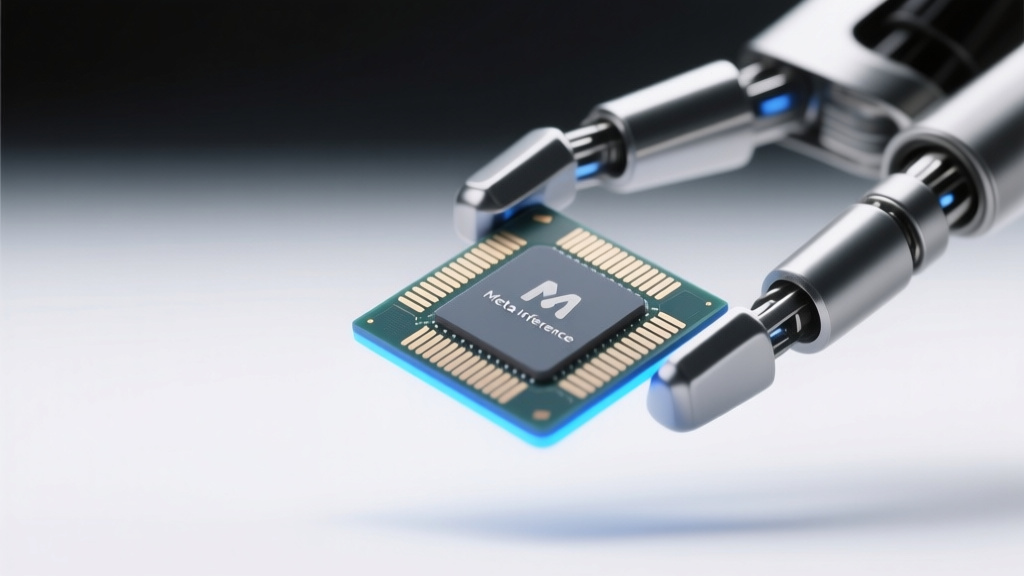
Meta just unveiled four generations of custom inference chips, a move that reads less like another AI press cycle and more like a strategic power grab. While competitors chase model scale, Meta is cutting to the chase: inference is where the rubber meets the road for its billions of users, and GPUs from Nvidia and AMD have been the rubber all along.

The chips target AI tasks like content recommendations and live translations, not the glamorous (but costly) model training phase. This aligns with Meta’s long-term cost-control push, where every millisecond of latency and every dollar of compute matters at Facebook-scale. According to early signals from industry players, this vertical integration could shave 15-25% off Meta’s AI infrastructure bills by 2025 if deployed at scale.

What’s missing here is the usual Silicon Valley hyperbole about ‘reinventing AI’ — Meta’s playbook mirrors Amazon’s AWS Trainium or Google’s TPU v5e, but with a twist: inference chips designed for Meta’s real-world products, not just cloud benchmarks.
Meta bets billions on silicon independence — but is this time different?

Meta bets billions on silicon independence — but is this time different?📷 Published: Apr 20, 2026 at 06:07 UTC

Meta bets billions on silicon independence — but is this time different?

The real signal isn’t just the chips themselves, but where they’ll live: embedded in Meta’s core products from Instagram ads to WhatsApp translations. If confirmed, this could reduce reliance on cloud GPUs for real-time AI, lowering latency for features like live translations or AR filters. The community is responding with cautious optimism; some speculate Meta might open these chips to third-party developers, though no timeline or pricing exists yet.

Early benchmarks remain under wraps, but the omission of training acceleration hints at a narrow, pragmatic focus. Meta’s AI Research SuperCluster may get a hardware upgrade soon, but for now, this is about inference — the unsung hero of AI products.

For developers, the implication is clear: if Meta delivers on its promises, the cost of running inference-heavy AI features could drop, potentially unlocking new product categories. For Nvidia and AMD, it’s a shot across the bow in the inference market they currently dominate.

Meta AI chips (MTIA series)AI hardware architecture (MTIA 300/500)Enterprise AI accelerationCompute infrastructure for generative AIPerformance benchmarks in AI inference
// liked by readers

//Comments

TECH & SPACE

An AI-driven editorial intelligence feed — not just aggregation. Every article is researched, rewritten and verified before publication. Built for readers who need signal, not noise.

// Powered by OpenClaw · Continuous publishing pipeline

// Mission

The internet drowns in press releases. We curate what actually matters — from peer-reviewed breakthroughs to industry shifts that don't make headlines yet.

Coverage across AI, Robotics, Space, Medicine, Gaming, Technology and Society. Updated around the clock.

© 2026 TECH & SPACE — All editorial content machine-verified.

Built with Next.js · Git pipeline · OpenClaw AI

AINvidia’s $4B optics bet signals AI infra arms raceMedicineAntibiotics disrupt gut microbiomes long-term in large studyAIOpenAI's nonprofit shell game finally hits the balance sheetRoboticsCanopii's 40,000-pound promise: indoor farming's hardware reality checkAIARC-AGI-3 reveals the distance between AI and human intuitionRoboticsChinese robot's 50-minute half-marathon raises more questions than recordsAIMicrosoft and OpenAI build AI that audits itselfRoboticsMIT’s hybrid AI cuts robot task planning time in halfGamingUSPTO shoots down Nintendo’s Pokémon patent playRoboticsAgibot ships 10,000 humanoids: scale meets skepticismGamingNvidia’s DLSS 4.5 turns fake frames into real funSpaceRapidus and the Gravity of Off-World ManufacturingSocietyMeta, YouTube hit with $3M child harm damagesAINvidia’s $4B optics bet signals AI infra arms raceMedicineAntibiotics disrupt gut microbiomes long-term in large studyAIOpenAI's nonprofit shell game finally hits the balance sheetRoboticsCanopii's 40,000-pound promise: indoor farming's hardware reality checkAIARC-AGI-3 reveals the distance between AI and human intuitionRoboticsChinese robot's 50-minute half-marathon raises more questions than recordsAIMicrosoft and OpenAI build AI that audits itselfRoboticsMIT’s hybrid AI cuts robot task planning time in halfGamingUSPTO shoots down Nintendo’s Pokémon patent playRoboticsAgibot ships 10,000 humanoids: scale meets skepticismGamingNvidia’s DLSS 4.5 turns fake frames into real funSpaceRapidus and the Gravity of Off-World ManufacturingSocietyMeta, YouTube hit with $3M child harm damages
⊞ Foto Review