
Stroke sparks brain’s hidden rejuvenation effect
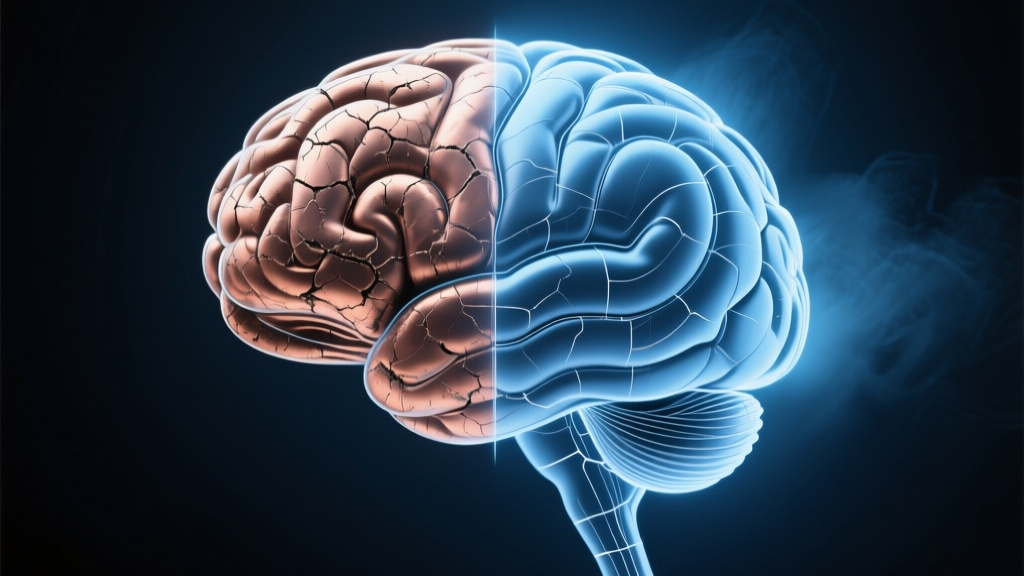
Technical blueprint-style illustration of a human brain viewed from low-angle upward perspective, with left hemisphere rendered in aged copper tones📷 Photo by Tech&Space
- ★500+ stroke survivors studied
- ★Undamaged brain regions appear younger
- ★Findings limited to observational data
In one of the largest analyses of its kind, researchers examining brain scans from over 500 stroke survivors have uncovered a surprising compensatory mechanism: while the injured hemisphere ages more rapidly, the opposite side of the brain can exhibit signs of rejuvenation. The study, published in a peer-reviewed journal and cited by ScienceDaily, suggests this shift reflects the brain’s effort to rewire itself by strengthening healthy regions to offset lost function. The findings align with earlier research on neuroplasticity but offer new quantitative evidence of structural changes.
However, the study is observational, not interventional. It maps correlations between stroke and brain morphology but cannot prove causation—or whether these changes translate into meaningful clinical benefits. The sample, while substantial, lacks longitudinal tracking to determine if the observed rejuvenation persists or fades over time. Furthermore, the analysis doesn’t account for variations in stroke severity, rehabilitation protocols, or pre-existing conditions, all of which could influence outcomes.
For patients, the immediate takeaway is modest: the brain’s adaptive potential is real, but this study does not identify a new treatment or prognostic tool. The rejuvenation effect remains a biological curiosity rather than a medical breakthrough.
ultra-realistic documentary photography, maximum clarity, razor-sharp edges, no grain. A close-up detail or consequence scene from: 'A large📷 Photo by Tech&Space
A large observational study reveals unexpected plasticity—but not a cure
What this research underscores is the brain’s remarkable—but still poorly understood—capacity for self-repair. The unaffected hemisphere’s apparent youthfulness, measured through imaging biomarkers like cortical thickness and neural density, may reflect heightened synaptic activity or increased neurogenesis. Yet without functional MRI or cognitive assessments, it’s unclear whether these structural changes correlate with improved recovery or merely a temporary redistribution of resources.
The study’s limitations are critical. Observational data cannot distinguish between cause and effect, and the lack of a control group for age-matched healthy individuals makes it difficult to isolate stroke-specific changes. Additionally, the absence of patient-reported outcomes means we don’t know if the observed rejuvenation translates into better quality of life, reduced disability, or delayed cognitive decline.
For now, clinicians can use these findings to reassure patients that the brain’s plasticity extends beyond the acute recovery phase—but not to overpromise. The next steps for research include longitudinal studies to track these changes over years and randomized trials to test whether targeted therapies (e.g., transcranial magnetic stimulation or neuroprotective drugs) can amplify this effect. Until then, the headline-grabbing ‘rejuvenation’ remains a footnote in the complex story of post-stroke recovery.