
Amazon’s $50B OpenAI bet: Trainium’s real test begins now
Amazon’s $50B OpenAI bet: Trainium’s real test begins now📷 Published: Apr 15, 2026 at 20:24 UTC
- ★Trainium chips power OpenAI, Anthropic, Apple
- ★$50B investment tied to AWS infrastructure
- ★NVIDIA’s GPU dominance faces new pressure
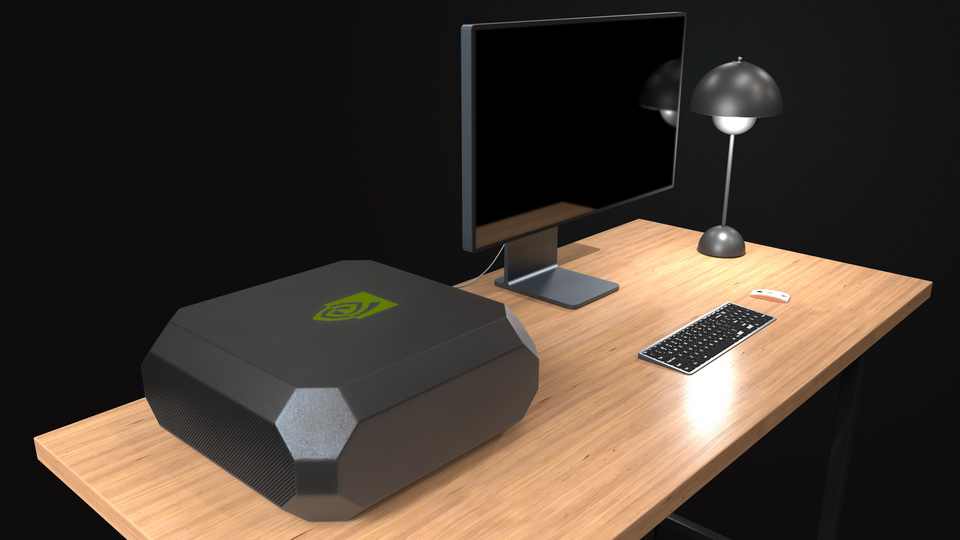
Amazon’s $50 billion investment in OpenAI isn’t just another corporate check—it’s a Trojan horse for Trainium, AWS’s custom AI chip. The deal, framed as a strategic partnership, doubles as a high-stakes sales pitch for a processor that’s quietly won over Anthropic, OpenAI, and even Apple. But here’s the catch: none of these companies have publicly detailed how—or even if—Trainium outperforms NVIDIA’s GPUs in real-world workloads. The lab tour AWS arranged for TechCrunch was less a technical deep dive and more a carefully staged showcase, complete with the kind of access usually reserved for analysts who’ve already signed NDAs.
Trainium’s marketing hinges on two claims: cost efficiency and AWS integration. The chip is designed to slot seamlessly into AWS’s cloud infrastructure, offering a vertically integrated alternative to NVIDIA’s dominant GPUs. Early benchmarks, like those from MLCommons, suggest Trainium can handle inference workloads at a lower cost per token, but training performance—where NVIDIA’s H100 still reigns—remains a question mark. The real test isn’t whether Trainium works; it’s whether it works better than the status quo for companies already locked into AWS’s ecosystem.
The timing of Amazon’s OpenAI investment is no coincidence. With Microsoft’s Azure and Google Cloud both pushing their own AI hardware, AWS needed a way to differentiate itself beyond raw compute. Trainium isn’t just a chip—it’s a loyalty play, bundling hardware, cloud credits, and strategic partnerships into a package that’s hard for AI labs to ignore. But as AnandTech’s analysis notes, the chip’s success depends less on its specs and more on whether AWS can convince developers to rewrite their models for it.
The gap between AWS’s chip demo and real-world AI adoption📷 Published: Apr 15, 2026 at 20:24 UTC
The gap between AWS’s chip demo and real-world AI adoption
The developer community’s reaction has been cautious. GitHub repositories for Trainium-optimized frameworks like AWS Neuron show steady but unspectacular activity, with most commits focused on compatibility rather than performance breakthroughs. Forums like Hacker News and r/MachineLearning are split: some users praise the cost savings, while others point out that NVIDIA’s CUDA ecosystem remains the default for most AI workloads. The reality gap here is familiar—AWS is selling a vision of frictionless AI, but the transition from NVIDIA’s GPUs to Trainium requires non-trivial effort.
The competitive implications are clearer. NVIDIA’s stock dipped slightly after Amazon’s OpenAI deal was announced, a sign that even a fraction of the AI market shifting to custom chips could erode its dominance. But Trainium’s real advantage may not be technical—it’s economic. AWS can afford to subsidize Trainium’s adoption through cloud credits and co-marketing deals, a strategy that’s harder for standalone chip startups to replicate. For AI labs, the calculus is simple: if Trainium delivers even 80% of NVIDIA’s performance at 60% of the cost, the switch becomes a no-brainer.
Yet the biggest unanswered question is scale. Apple’s reported evaluation of Trainium for internal AI workloads is intriguing, but the company’s history with custom silicon (see: Apple Silicon) suggests it won’t commit until it sees benchmarks that justify the migration. OpenAI and Anthropic, meanwhile, are likely using Trainium for specific workloads rather than full-stack replacements. The lab tour may have been exclusive, but the real story is happening in the trenches—where developers decide whether Trainium is a curiosity or a cornerstone.
For all the noise about Trainium’s adoption by OpenAI and Apple, the most critical detail remains unconfirmed: what percentage of their AI workloads actually run on AWS’s chip? And if the answer is ‘less than 10%’, does the $50 billion investment start to look more like a cloud subsidy than a hardware revolution?