
Mapping the Local Bubble’s magnetic field reshapes cosmic science
Mapping the Local Bubble’s magnetic field reshapes cosmic science📷 Published: Apr 15, 2026 at 18:24 UTC
- ★First-ever magnetic field map of Local Bubble
- ★Harvard-Smithsonian team confirms cosmic structure details
- ★Superbubble research gains critical new dimension
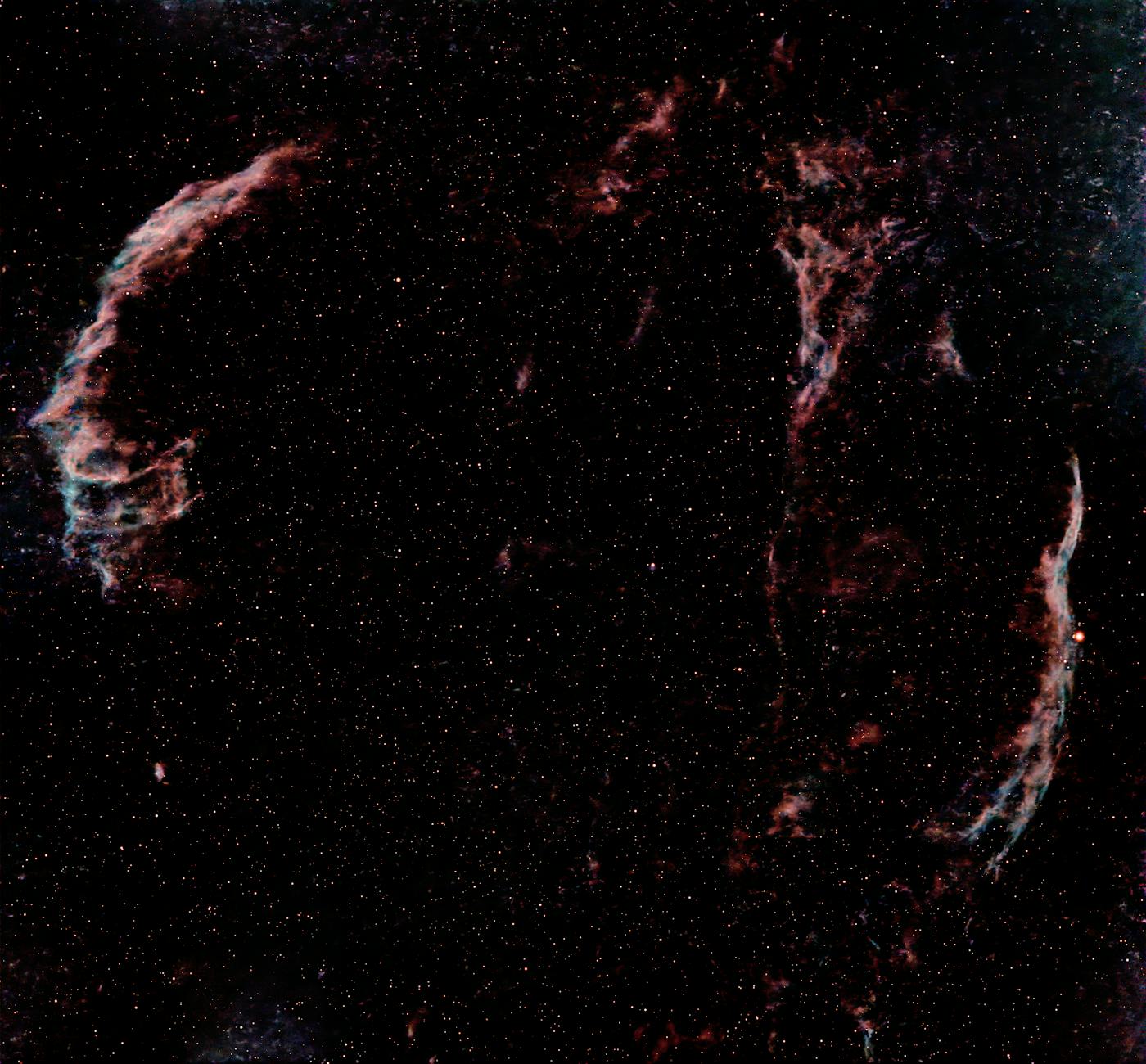
The Local Bubble isn’t just a void—it’s a 1,000-light-year-wide cavity carved by ancient supernovae, and our solar system has drifted through its dusty expanse for millions of years. Now, researchers at the Harvard-Smithsonian Center for Astrophysics have achieved what was once thought impossible: mapping its magnetic field in three dimensions. This isn’t just a technical feat; it’s a fundamental shift in how we understand the forces sculpting our galactic environment.
The breakthrough comes as part of a broader effort to decode superbubbles—gigantic structures formed by the collective explosions of dying stars. These bubbles don’t just sit idle; they shape star formation, influence cosmic ray propagation, and even alter the trajectories of interstellar dust. Until now, their magnetic fields remained a black box, limiting models of how they evolve and interact with their surroundings. The new map, though still preliminary, provides the first empirical data to test decades of theoretical predictions.
What makes this mapping particularly significant is its timing. The European Space Agency’s Gaia mission has spent years charting the precise positions and motions of over a billion stars, while projects like Planck have mapped the cosmic microwave background in unprecedented detail. The Local Bubble’s magnetic field acts as a missing link between these datasets, offering a way to connect large-scale cosmic structures with the fine-grained dynamics of star formation.
The invisible force shaping our solar system’s neighborhood just became measurable📷 Published: Apr 15, 2026 at 18:24 UTC
The invisible force shaping our solar system’s neighborhood just became measurable
The implications stretch far beyond astrophysics. Magnetic fields are the unsung architects of the cosmos, guiding the flow of charged particles and shaping the distribution of matter. In the Local Bubble, this field may explain why certain regions are more prone to star formation than others, or why some interstellar clouds collapse into new solar systems while others remain diffuse. The Harvard-Smithsonian team’s work suggests that the bubble’s magnetic pressure could even be counteracting gravitational forces, preventing the structure from collapsing under its own weight.
Yet for all its promise, the map is only a first step. The methodology—likely combining polarization data from dust grains with stellar motion analysis—remains unpublished in full, leaving some in the scientific community cautious. Early interpretations, such as the idea that the field might influence nearby cosmic rays, are speculative but compelling. What’s certain is that this research opens a new frontier in astrophysics, one where magnetic fields are no longer invisible obstacles but measurable forces with tangible effects.
The next phase is already taking shape. Teams at the Max Planck Institute for Astronomy and elsewhere are racing to refine these techniques, with plans to map other superbubbles in our galaxy. If successful, we may soon have a magnetic atlas of the Milky Way, revealing patterns that could rewrite our understanding of how galaxies evolve. For now, the Local Bubble stands as a proof of concept—a reminder that even the most familiar corners of the cosmos still hold secrets waiting to be uncovered.
In other words, we’ve spent centuries mapping the visible universe, only to realize that its invisible scaffolding might hold the key to its deepest mysteries. The Local Bubble’s magnetic field isn’t just a curiosity; it’s a new lens through which to view the cosmos, one that could redefine our place within it.