
Biological AI’s promise: One model to rule all life sciences
Biological AI’s promise: One model to rule all life sciences📷 Published: Apr 16, 2026 at 12:32 UTC
- ★Generalist AI for biology debuts in Nature review
- ★Cross-domain tasks could unify genomics and protein folding
- ★Current models still face data scarcity and interpretability gaps
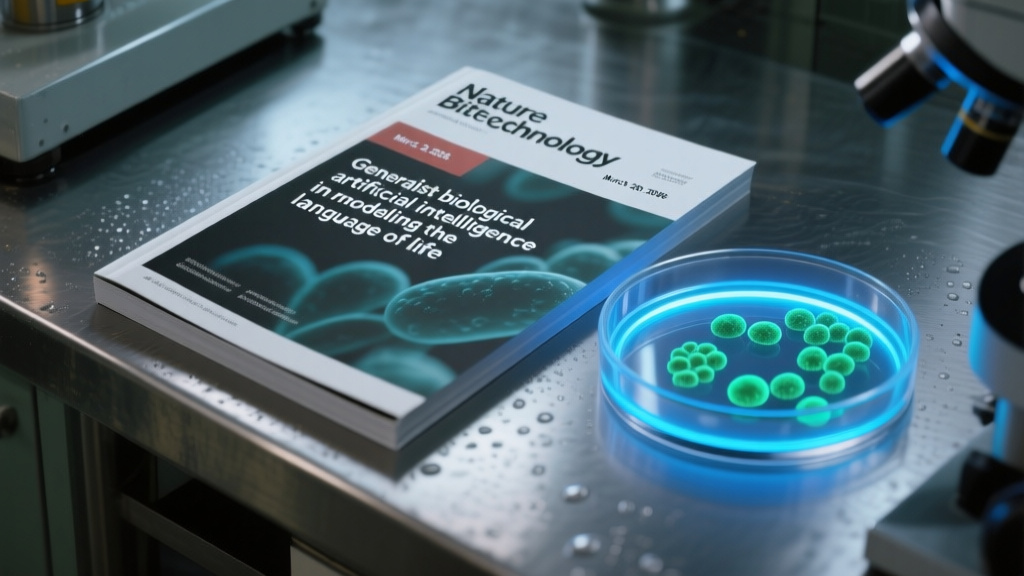
On 20 March 2026, Nature Biotechnology published a review that reframed the conversation around artificial intelligence in biology. Titled "Generalist biological artificial intelligence in modeling the language of life", the paper argues for a shift from narrow, task-specific models to a single AI capable of tackling diverse biological challenges—from genomics to synthetic biology. The concept, dubbed "generalist biological AI," mirrors the adaptability of large language models but applies it to the complexities of living systems. Early signals suggest this could break down silos between disciplines, though the review stops short of claiming it as a present-day reality.
The promise is undeniable: a unified framework that integrates metabolic pathways, evolutionary models, and protein folding into one system. If realized, such a model could accelerate drug discovery or even predict ecological shifts with unprecedented precision. Yet, as the review acknowledges, the field is still grappling with fundamental limitations. Biological data is often fragmented, and AI’s "black-box" nature raises concerns about interpretability—critical when lives are at stake. For now, this remains a research-stage vision, not a clinical tool.
What’s clear is the ambition. The review positions generalist biological AI as the next frontier, but it also underscores the distance between theory and practice. The DOI-linked paper itself is a call to action, urging the scientific community to address these gaps before the hype outpaces the science.

A vision for adaptable biological AI emerges—but the path remains speculative📷 Published: Apr 16, 2026 at 12:32 UTC
A vision for adaptable biological AI emerges—but the path remains speculative
For patients and clinicians, the immediate implications are limited. This is not a breakthrough with near-term applications, but a conceptual leap that could redefine biological research over the next decade. The review’s authors avoid overpromising, instead framing their vision as a long-term goal—one that requires advances in data standardization, computational power, and ethical oversight. There’s speculation that such models could eventually predict disease trajectories or design personalized therapies, but these remain hypotheticals for now.
The regulatory landscape adds another layer of complexity. Biological AI models, especially those with clinical applications, would need rigorous validation before gaining approval from agencies like the FDA or EMA. The review sidesteps this issue, focusing instead on the scientific challenges. That leaves a critical question unanswered: How will these models be governed when they transition from research to real-world use?
What we know today is this: generalist biological AI is an intriguing idea with transformative potential. What we don’t know is whether it can overcome the field’s current bottlenecks—data scarcity, interpretability, and cross-domain integration. The Nature Biotechnology review provides a roadmap, but the journey has only just begun. For now, the most responsible takeaway is to temper excitement with caution.
For future research, this vision could catalyze collaboration between AI developers and biologists, pushing both fields to think bigger. For patients, the impact is indirect but profound: if these models succeed, they could shorten the timeline from lab discovery to bedside treatment. The catch? That timeline is measured in years, not months.