
Artemis II rollout marks NASA’s next step toward lunar return
Artemis II rollout marks NASA’s next step toward lunar return📷 Published: Mar 27, 2026 at 18:06 UTC
- ★SLS rocket begins 4.2-mile crawl to Launch Pad 39B
- ★April 1 launch window hinges on flight readiness reviews
- ★First crewed lunar flyby since Apollo 17 in 1972
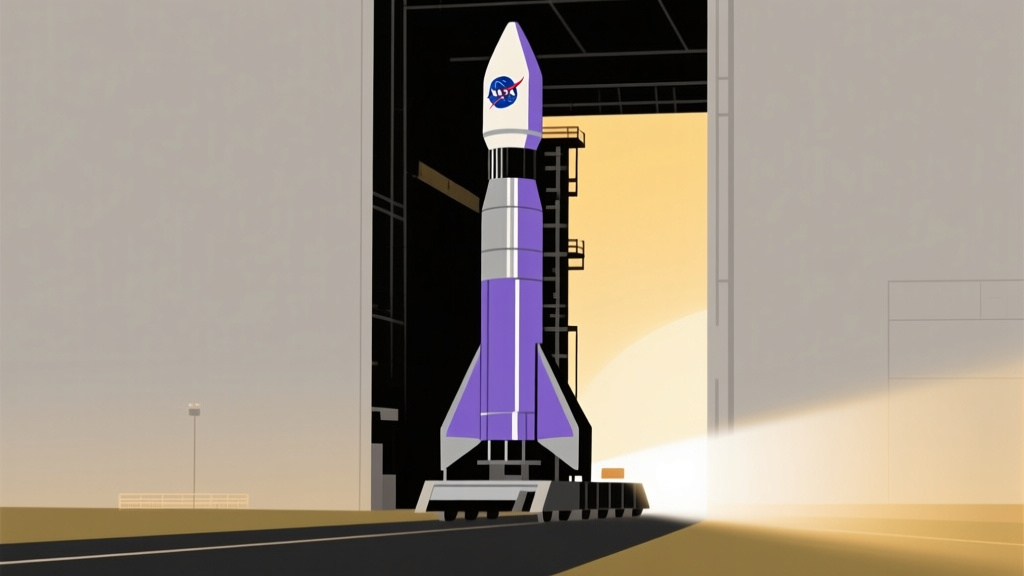
The slow, deliberate rollout of NASA’s Space Launch System (SLS) rocket from the Vehicle Assembly Building to Launch Pad 39B isn’t just logistical theater—it’s the first physical proof that Artemis II is transitioning from preparation to execution. Beginning March 19, the 322-foot-tall stack, topped with the Orion capsule, will traverse the 4.2-mile route at a glacial 0.8 mph, a pace that underscores the precision required for a mission carrying humans beyond low Earth orbit for the first time in over 50 years.
This isn’t a dress rehearsal. While Artemis I validated the rocket’s uncrewed performance in 2022, Artemis II will test life-support systems, deep-space navigation, and the crew’s ability to operate in a lunar environment. The mission’s four astronauts—Reid Wiseman, Victor Glover, Christina Koch, and Jeremy Hansen—won’t land on the Moon, but their 10-day flyby will push Orion farther into space than any human-rated spacecraft since Apollo 17.
The rollout itself is a milestone, but the real signal comes next: the flight readiness review. NASA’s mission management team must certify every subsystem—from the rocket’s core stage to the ground support infrastructure—before committing to the earliest possible launch on April 1. Delays are not just possible but expected; the agency’s own timelines frame the window as fluid, contingent on data, not deadlines.
The confirmation that changes the timeline: hardware meets human readiness📷 Published: Mar 27, 2026 at 18:06 UTC
The confirmation that changes the timeline: hardware meets human readiness
Artemis II sits at the intersection of legacy and innovation. The SLS, often criticized for its cost and developmental delays, remains the only rocket currently capable of launching Orion, astronauts, and the necessary payload for lunar missions. Yet its success here is table stakes—what follows is the harder test: proving that humans can endure the radiation, isolation, and operational demands of a lunar mission, even one that doesn’t touch down.
The scientific stakes extend beyond engineering. This mission will validate the Orion spacecraft’s heat shield during re-entry at lunar-return velocities (24,500 mph), a critical step before Artemis III’s planned Moon landing. It will also test the Deep Space Network’s ability to maintain communications at lunar distances, a capability last exercised during Apollo but now facing modern data demands.
What we don’t yet know: how the crew’s biology will respond to the Van Allen belts’ radiation, or whether Orion’s environmental controls can handle the thermal extremes of cislunar space. These aren’t abstract concerns—they’re the difference between a program that stalls after a flyby and one that lands the first woman and person of color on the Moon.
In other words, Artemis II isn’t about reaching the Moon—it’s about proving we can leave Earth’s cradle again, this time with the tools and resilience to stay. The rollout is the first step in a chain of events that will either redefine human spaceflight or expose its remaining gaps.