
Ryugu Samples Hold Life's Full Genetic Toolkit📷 Published: Mar 17, 2026 at 12:00 UTC
- ★All five nucleobases found in asteroid samples
- ★Chain of custody eliminates contamination concerns
- ★Discovery reframes life's origins question
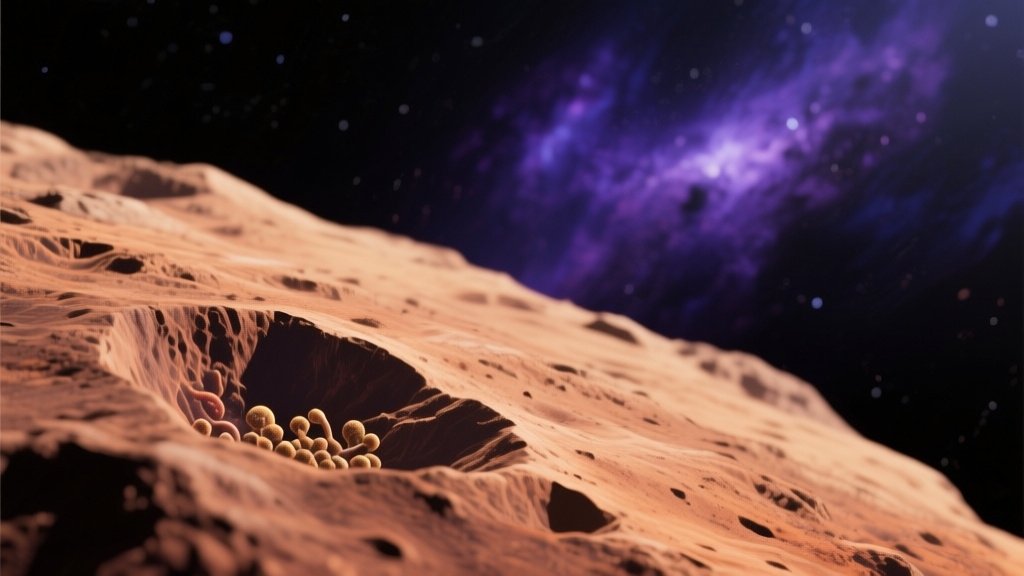
Scientists confirmed Monday that samples from asteroid Ryugu contain all five nucleobases—the fundamental building blocks of DNA and RNA. This isn't another tantalizing hint or partial detection. It's the complete set, recovered intact from a pristine carbon-rich asteroid that hasn't changed much since the solar system formed 4.5 billion years ago. The Hayabusa2 mission delivered these samples to Earth in 2020, after a journey of over 300 million kilometers. But analysis continues to yield results that reframe how we think about life's origins. What makes this finding significant isn't spectacle—it's completeness. Previous meteorite discoveries showed some nucleobases, but terrestrial contamination always clouded the interpretation. Ryugu's samples were collected in space, sealed in pristine containers, and returned without ever touching Earth's surface. The chain of custody is unbroken, which means the confidence level is unusually high.

Why completeness matters more than spectacle📷 Published: Mar 17, 2026 at 12:00 UTC
Why completeness matters more than spectacle
The implications extend beyond confirming that organic chemistry operates consistently beyond Earth. If asteroids like Ryugu carried the full genetic toolkit to early Earth, the bottleneck for abiogenesis shifts from "where do the ingredients come from?" to "how do they assemble themselves?" That's a fundamentally different scientific question—and arguably a more tractable one. The discovery supports the theory that life's chemistry isn't uniquely terrestrial but rather a process the universe runs wherever conditions permit. What remains uncertain is whether these nucleobases formed on Ryugu itself or were delivered by even older cosmic processes. The research team at JAXA and partner institutions continues analyzing sample composition, searching for concentration patterns and isotopic signatures that might answer that question.