
Asteroid DNA building blocks rewrite life’s cosmic timeline
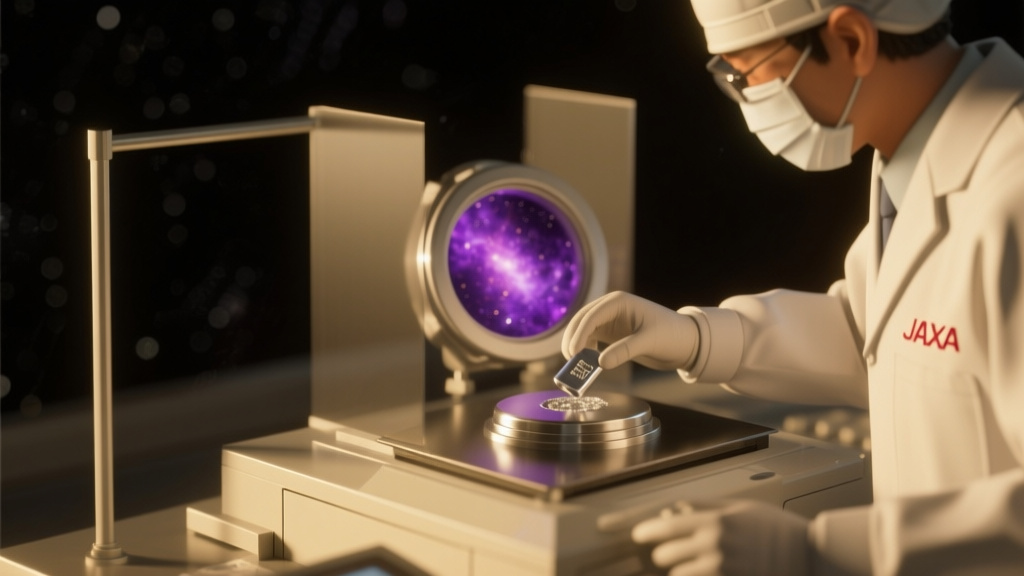
A JAXA scientist in a sterile cleanroom, carefully placing a tiny, silver-metallic sample capsule from the Hayabusa2 mission onto a laboratory stage;📷 Photo by Tech&Space
- ★Five confirmed nucleobases now detected in space rocks
- ★Hayabusa2 samples reveal uracil and niacin in pristine form
- ★Prebiotic chemistry may predate Earth’s formation by millions of years
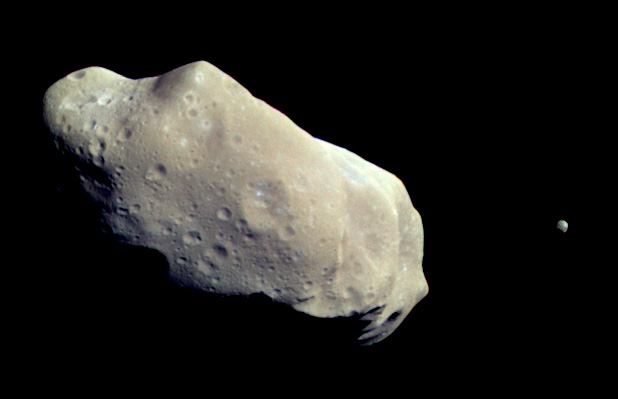
The list of life’s essential ingredients found beyond Earth just grew longer—and more specific. Researchers analyzing samples from the asteroid Ryugu, collected by JAXA’s Hayabusa2 mission, have confirmed the presence of uracil—one of the four nucleobases in RNA—as well as niacin (vitamin B3), a key coenzyme for metabolism. This isn’t the first detection: similar compounds were identified in Murchison meteorite fragments in the 1960s and again in carbon-rich asteroids last year. But Ryugu’s samples are pristine, uncontaminated by Earth’s biosphere, and their chemical signatures match lab-synthesized prebiotic precursors almost exactly.
The pattern is becoming harder to dismiss as coincidence. These molecules aren’t just drifting in space—they’re embedded in the same carbonaceous chondrites that delivered water to early Earth. According to the study published in Nature Communications, the concentrations and isotopic ratios suggest formation via photochemical reactions in interstellar ice, not terrestrial contamination. That aligns with earlier work on comet 67P, where the Rosetta mission detected glycine, another prebiotic compound.
This isn’t about alien life. It’s about chemical inevitability—the idea that the raw materials for biology may assemble wherever the right conditions exist, no divine spark required. The question isn’t whether these molecules can form in space, but how often they do, and under what constraints.
Asteroid DNA building blocks rewrite life’s cosmic timeline📷 Photo by Tech&Space
Not just a trace finding—this is the third independent confirmation in two years
The timeline is what makes this discovery sharp. Ryugu’s parent body formed over 4.5 billion years ago, before Earth’s crust solidified. If uracil and niacin were already present in its building blocks, then the prebiotic soup hypothesis gains a cosmic dimension: Earth may have inherited its first genetic alphabet from delivery, not just random synthesis in tidal pools. That shifts the burden of proof to models of abiogenesis that assume a purely terrestrial origin.
There’s a operational twist, too. JAXA’s sample-return protocol—sealing Ryugu’s material in a nitrogen-purged chamber—proved critical. Earlier meteorite studies faced skepticism over contamination, but Hayabusa2’s pristine samples eliminate that variable. NASA’s OSIRIS-REx, which returned samples from asteroid Bennu last year, is now under pressure to replicate these findings. Early spectra from Bennu’s surface already hint at similar organic signatures, but lab confirmation won’t come until 2024.
What we don’t yet know: whether these molecules survive atmospheric entry in usable quantities, or if they require the shield of a larger impactor. The Tanpopo mission on the ISS suggested some organics can endure re-entry, but scaling that to planetary delivery remains untested. For now, the signal is clear: the boundary between ‘space chemistry’ and ‘biology’ is blurrier than we thought.