
Psyche’s Metal Craters Could Rewrite Planetary Formation
Psyche’s Metal Craters Could Rewrite Planetary Formation📷 Published: Mar 24, 2026 at 12:00 UTC
- ★Metal asteroid’s craters may expose protoplanet core history
- ★NASA’s 2026 mission to verify core remnant hypothesis
- ★Composition data could reshape solar system formation models
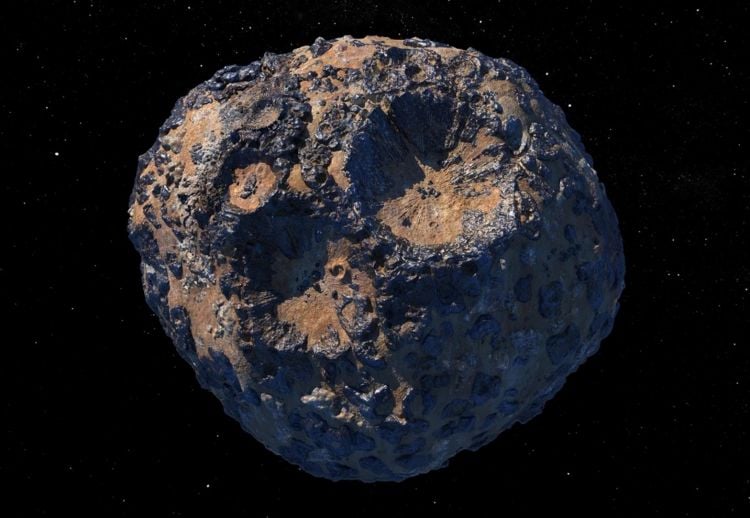
The asteroid 16 Psyche isn’t just another space rock. It’s a 140-mile-wide metallic relic—roughly the size of Massachusetts—orbiting in the Main Asteroid Belt, and its pockmarked surface may hold the key to understanding how planetary cores form and fail. Unlike the rocky or icy bodies that dominate the belt, Psyche’s iron-nickel composition suggests it could be the exposed core of a protoplanet stripped bare by violent collisions during the solar system’s infancy.
The real significance lies in its craters. If Psyche is indeed a failed planetary core, as early models propose, then the size, distribution, and composition of its impact scars could reveal whether its outer layers were blasted away in a single catastrophic event or eroded over time. This isn’t just academic: confirming the core hypothesis would provide the first direct evidence that protoplanets can be violently dismantled, leaving behind only their dense, metal-rich hearts.
NASA’s Psyche mission, set to arrive in 2026, will map the asteroid’s surface and analyze its elemental makeup. The spacecraft’s magnetometer—critical for detecting remnants of a former magnetic field—could settle the debate over whether Psyche ever hosted a dynamo, a hallmark of planetary cores. If it did, the implications stretch beyond one asteroid: it would mean the building blocks of planets are more fragile than previously assumed.
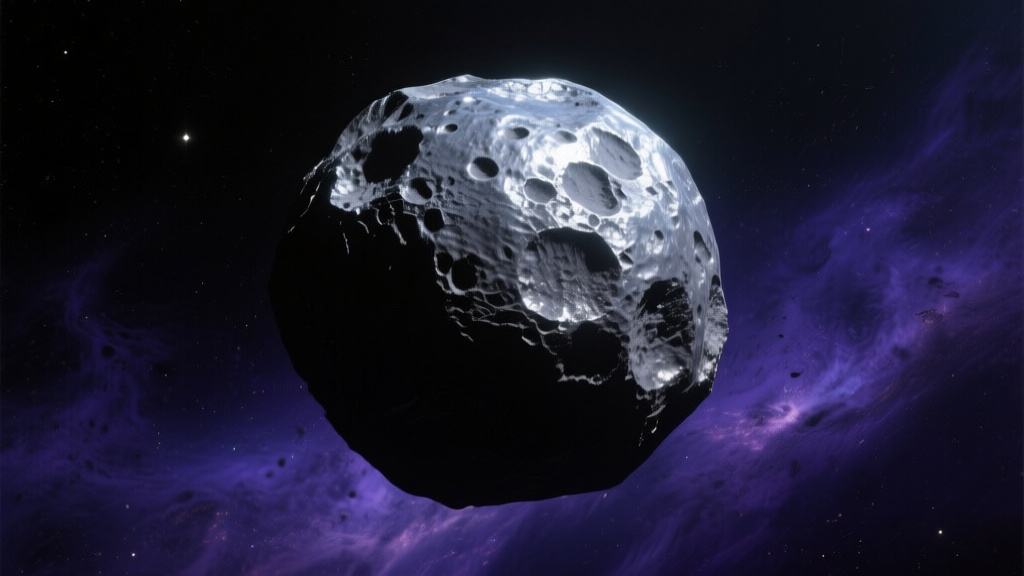
The scars on 16 Psyche aren’t just impact marks—they’re a record of what happens when a planet fails to form.📷 Published: Mar 24, 2026 at 12:00 UTC
The scars on 16 Psyche aren’t just impact marks—they’re a record of what happens when a planet fails to form.
The scientific stakes are higher than mere classification. Psyche’s composition challenges the assumption that all asteroid belt objects are primitive leftovers from the solar system’s birth. Instead, it may represent a later stage of planetary evolution—one where differentiation (the separation of metal and silicate layers) occurred, only to be interrupted. Lab simulations of high-velocity impacts on differentiated bodies support this: under the right conditions, a protoplanet’s mantle can be entirely sheared away, leaving the core exposed.
Yet questions remain. The asteroid’s bulk density, while high, isn’t as extreme as predicted for a pure iron core. Some researchers argue it might be a porous metal-rubble pile, a hybrid structure that complicates the core remnant theory. The Psyche mission’s gamma-ray and neutron spectrometer will clarify this by measuring the asteroid’s exact metal-to-silicate ratio—data that could force a rewrite of early solar system collision models.
For now, the craters are silent witnesses. But in three years, they’ll speak.