
AI royalty fraud exposed: $8M scam reveals streaming’s bot problem
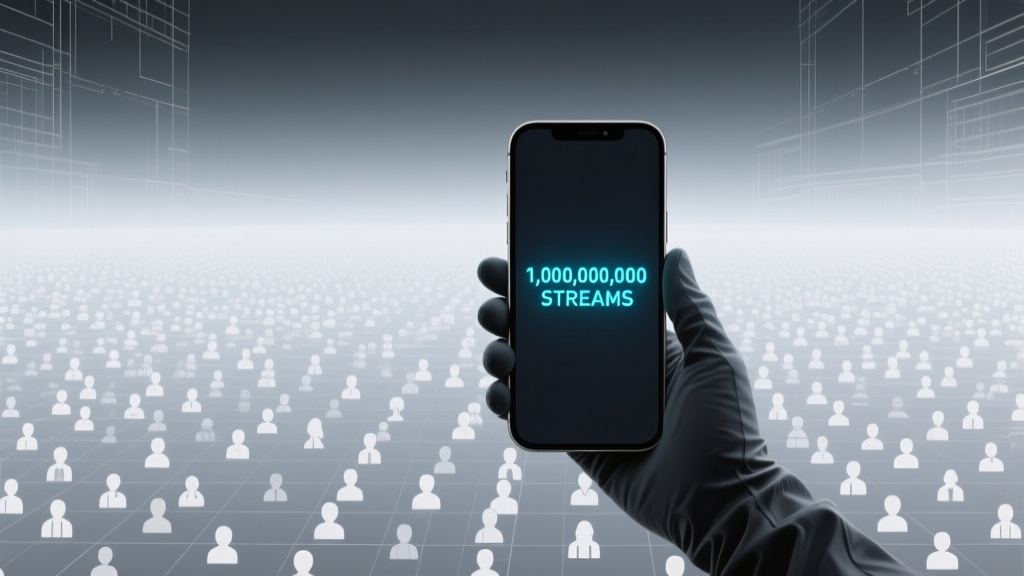
AI royalty fraud exposed: $8M scam reveals streaming’s bot problem📷 Published: Apr 14, 2026 at 06:21 UTC
- ★North Carolina man pleads guilty to $8M fraud
- ★Fake accounts streamed AI songs billions of times
- ★Streaming platforms’ vulnerability to bot manipulation
The music industry’s streaming gold rush just hit a brutal reality check. A North Carolina man has admitted to siphoning over $8 million in royalties by creating thousands of fake accounts to stream AI-generated songs billions of times—all using bots. The scheme, first reported by The Decoder, didn’t just exploit gaps in streaming platforms’ fraud detection; it exposed how fragile their payout models truly are. Spotify alone processes over 100 million tracks, and with AI-generated content flooding platforms, distinguishing real listeners from bots is becoming a high-stakes game of whack-a-mole.
For years, artists and labels have complained about streaming’s microscopic payouts, but this case flips the script: fraudsters aren’t just gaming the system—they’re proving it’s broken. The man behind the scheme didn’t need sophisticated AI; he used basic automation to mimic human listening patterns, a tactic that’s alarmingly easy to scale. Wired has previously detailed how fake streams inflate artist metrics, but this case takes it further, showing how bot networks can single-handedly distort royalty pools. If a single individual can pocket millions by weaponizing AI and bots, what’s stopping organized crime or state actors from doing the same at scale?
The real casualty here isn’t just the $8 million—it’s trust in the entire streaming economy. Platforms like Spotify and Apple Music rely on algorithms to detect fraud, but as AI-generated content explodes, those algorithms are playing catch-up. Billboard reports that fake streams now account for up to 10% of total plays on some platforms, a figure that’s likely underreported. The question isn’t whether this will happen again—it’s how much worse it’ll get before platforms act.

The gap between fraud detection and deployment reality📷 Published: Apr 14, 2026 at 06:21 UTC
The gap between fraud detection and deployment reality
The broader implications stretch far beyond this single case. For independent artists, fake streams aren’t just a nuisance—they’re an existential threat. Every bot-generated play dilutes the royalty pool, meaning legitimate musicians earn less while fraudsters and deep-pocketed labels (who can afford to game the system) benefit. The Verge has highlighted how the top 1% of artists earn 90% of streaming revenue, and bot fraud only widens that gap. If platforms can’t distinguish real listeners from bots, the entire payout model collapses under its own weight.
What’s striking is how low-tech this scam was. The defendant didn’t need generative AI to create the songs—he used simple bots to play them, proving that the real vulnerability lies in streaming platforms’ inability to detect synthetic engagement. The industry’s response so far? Mostly reactive: takedowns of fake accounts after the damage is done. Meanwhile, platforms continue to tout AI-powered fraud detection as a solution, but this case shows it’s more of a band-aid than a fix. GitHub repositories for stream-botting scripts have existed for years, and community discussions suggest this is a well-known loophole among shady operators.
The real signal here isn’t that AI-generated content is flooding platforms—it’s that the infrastructure supporting it is fundamentally insecure. Platforms are racing to integrate AI tools for discovery and curation, but if they can’t even detect bots, how will they handle deeper fakes? The next wave of fraud won’t just involve fake plays; it’ll involve fake artists, fake labels, and even fake charts. For all the hype around AI transforming the music industry, the biggest disruption so far has been exposing how easily the system can be exploited.
In other words, the $8 million scam wasn’t just a fraud—it was a stress test, and the streaming economy failed spectacularly. The real surprise isn’t that someone did this; it’s that it took until 2024 for anyone to get caught.