
Zoox’s robotaxis hit the road—but real miles reveal real limits
Zoox’s robotaxis hit the road—but real miles reveal real limits📷 Published: Apr 14, 2026 at 08:04 UTC
- ★Purpose-built robotaxis enter two new US cities
- ★Service area expands without disclosed scale
- ★Hardware constraints shape real-world deployment
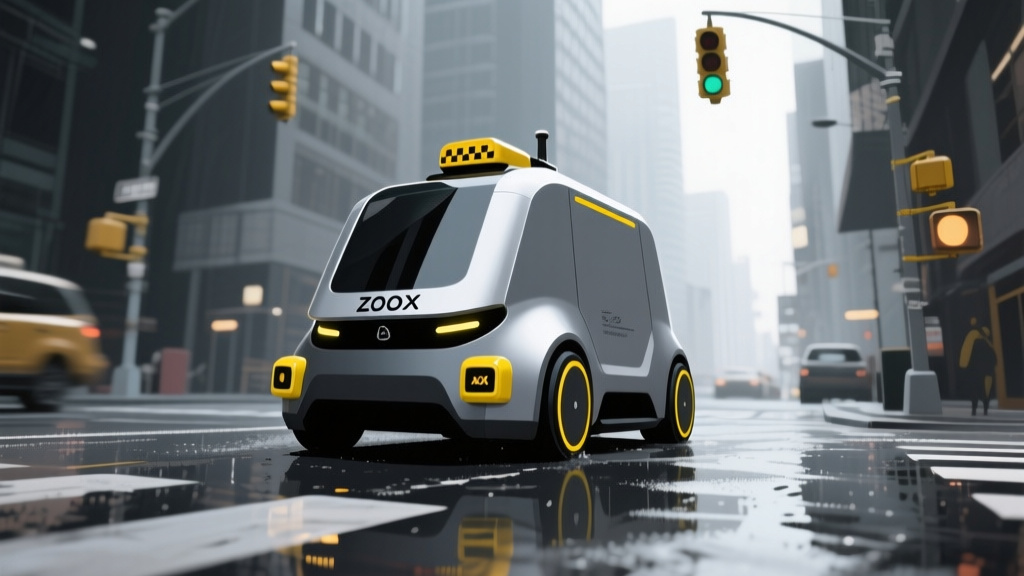
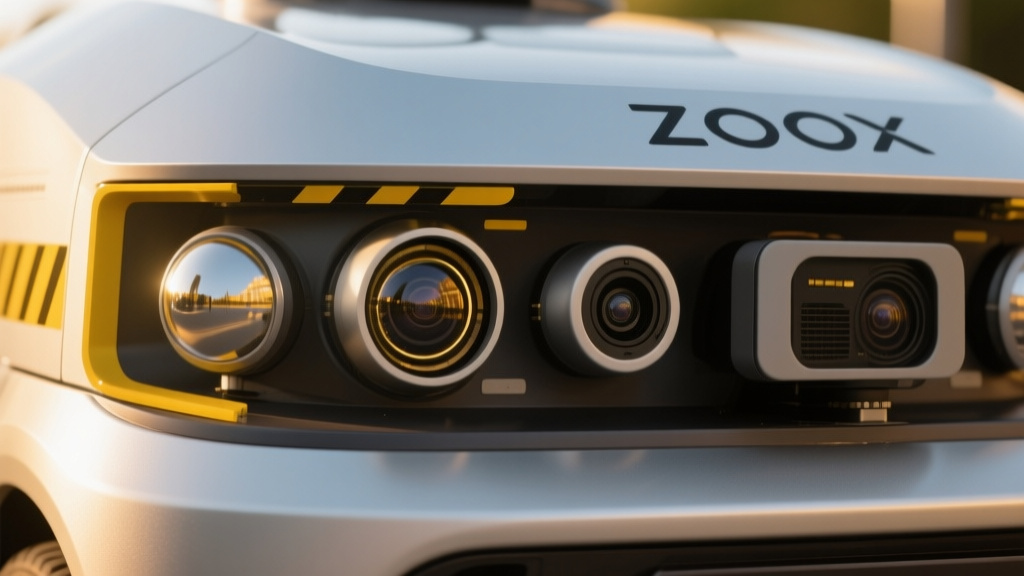
Zoox’s latest expansion isn’t just another press release. The company’s purpose-built robotaxis are now operational in two unnamed US cities, marking a rare transition from controlled demos to public roads. Unlike competitors retrofitting conventional vehicles, Zoox’s symmetrical, bi-directional pods were designed from the ground up for autonomous operation—no steering wheel, no pedals, just sensors and compute. But design purity doesn’t guarantee deployment readiness. The vehicles’ 360-degree sensor suite, while impressive on paper, faces real-world challenges: glare from low-angle sun, reflective surfaces in urban canyons, and the unpredictable behavior of human drivers and pedestrians. These aren’t theoretical problems; they’re daily hurdles for any robotaxi service aiming for 99.99% reliability.
The service area expansion is equally telling. Zoox hasn’t disclosed the scale—whether it’s a few square miles or entire neighborhoods—but the omission itself speaks volumes. Most autonomous vehicle companies start with small, carefully mapped zones before scaling up. Zoox’s 2023 safety report revealed its vehicles had driven just 67,000 miles autonomously, a fraction of Waymo’s 2 million. That gap isn’t just about time; it’s about the diversity of scenarios encountered. A demo route in Las Vegas, for example, might avoid heavy rain or construction zones, but real-world deployment can’t cherry-pick conditions. The question isn’t whether Zoox’s robotaxis can navigate a sunny day in a well-mapped area—it’s whether they can handle the chaos of rush hour in a city they’ve never seen before.
The gap between demo routes and daily commutes isn’t just distance—it’s infrastructure📷 Published: Apr 14, 2026 at 08:04 UTC
The gap between demo routes and daily commutes isn’t just distance—it’s infrastructure
New rider features, like dynamic route adjustments and in-cabin customization, suggest Zoox is betting on user experience to differentiate itself. But these software tweaks distract from the harder truth: hardware constraints still dictate where and how these vehicles operate. The pods’ top speed of 75 mph is academic in urban environments where 35 mph is the norm, but their 133 kWh battery pack—while large for a robotaxi—limits range in extreme temperatures. Zoox’s patent filings reveal a focus on thermal management, a nod to the fact that lithium-ion batteries degrade faster in hot climates like Phoenix or cold ones like Chicago. These aren’t minor engineering challenges; they’re fundamental limits that shape where Zoox can realistically deploy.
The real test isn’t whether Zoox’s robotaxis can operate in two new cities—it’s whether they can do so profitably. The company’s 2022 cost analysis pegged each vehicle at $1 million, a figure that includes sensors, compute, and redundant systems. Even with economies of scale, that’s a steep hurdle for a service that competes with $3 Uber rides. The expansion may signal confidence, but the silence on unit economics suggests caution. For all the talk of a "year of growth," the real story is that robotaxis are still in the proving phase—not the scaling one.
Tech demos love to show vehicles gliding through empty streets at golden hour, as if rush hour and potholes don’t exist. Zoox’s expansion is a rare admission that the real world doesn’t come with a "skip obstacles" button—just a long list of edge cases to solve, one slow mile at a time.