
Meta’s EUPE: A 100M-Param Vision Model That’s Actually Useful
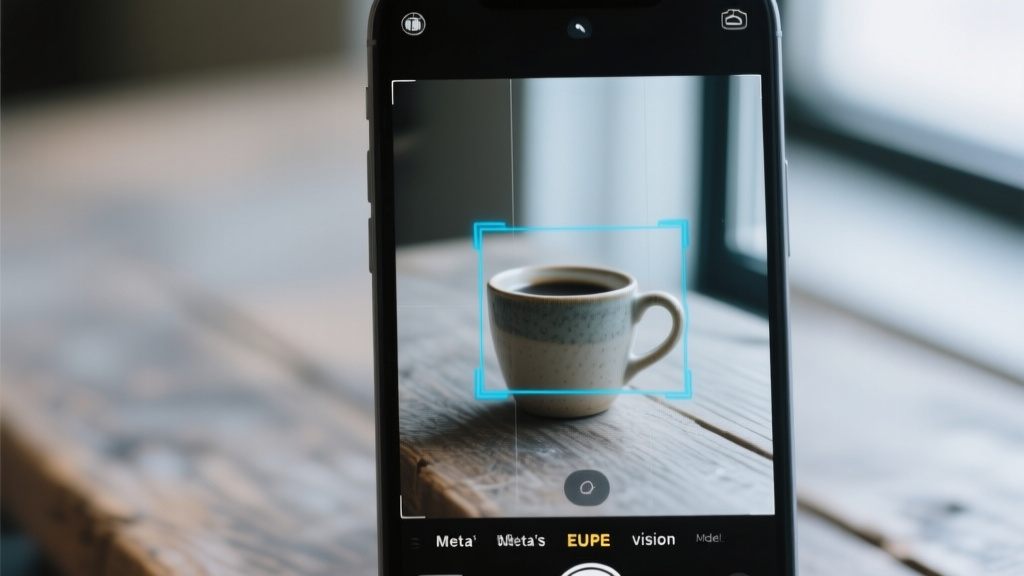
Meta’s EUPE: A 100M-Param Vision Model That’s Actually Useful📷 Published: Apr 14, 2026 at 08:09 UTC
- ★100M-parameter vision encoder claims specialist-level performance
- ★Edge deployment trade-offs: capability vs. compression
- ★Meta’s play for on-device AI dominance
Meta AI’s latest release, EUPE, isn’t just another ‘compact model’—it’s a direct challenge to the assumption that smaller vision encoders must sacrifice performance. The family tops out at under 100M parameters, a stark contrast to the 300M–1B monsters typically trimmed for edge devices. Early claims suggest it rivals specialist models in image understanding, dense prediction, and even vision-language tasks (VLMs), which usually require orders of magnitude more compute.
The hype filter kicks in immediately: rivaling specialists doesn’t mean surpassing them. Meta’s benchmarks—likely synthetic—show EUPE holding its own against models 5–10x its size. But the reality gap between controlled tests and real-world deployment is where most ‘efficient’ models stumble. Latency, thermal throttling, and battery drain aren’t captured in FLOPs.
This isn’t just about shrinking models—it’s about rethinking architecture for edge cases. Most vision encoders are built for cloud-scale inference, then brutally pruned for phones. EUPE flips that script, designing for constraints first. The bet? That on-device AI’s bottleneck isn’t just hardware, but the models themselves.

The real test isn’t benchmarks—it’s whether this runs on your phone without melting it📷 Published: Apr 14, 2026 at 08:09 UTC
The real test isn’t benchmarks—it’s whether this runs on your phone without melting it
The industry map here is predictable: Meta wins if EUPE becomes the default for mobile vision tasks. Qualcomm and ARM-based chipmakers get a lifeline—no more pretending 1B-parameter models will run smoothly on Snapdragon. And specialist model shops (looking at you, Scale AI, Hugging Face’s tiny variants) now face a Meta-backed alternative with deeper pockets for optimization.
Developer signals are mixed but telling. GitHub activity around EUPE’s repo is brisk, but early adopters note the usual pain points: sparse documentation, framework lock-in (PyTorch, naturally), and the open question of whether ‘specialist-level’ holds outside Meta’s curated datasets. One forum thread dryly observes that ‘rivaling’ might mean ‘within 10% on 3 of 12 benchmarks.’
The competitive advantage isn’t just technical—it’s strategic. Meta’s pushing EUPE as part of its on-device AI stack, tying it to Llama, Emu, and its ad-targeting pipelines. If EUPE works as advertised, it’s less about ‘democratizing AI’ and more about ensuring Meta’s models run everywhere except competitors’ clouds.
There’s still the unanswered question: Does ‘rivaling specialists’ mean matching their peak performance, or just their average on a good day? Ask again after real-world deployments—preferably on a phone that isn’t plugged in.