
AI stole GDC’s spotlight—but players are the last priority
AI stole GDC’s spotlight—but players are the last priority📷 Published: Apr 15, 2026 at 20:19 UTC
- ★Tencent’s AI generated a pixel-art demo in minutes
- ★NPCs built by chatbots, not devs
- ★Gaming’s AI hype ignores player experience
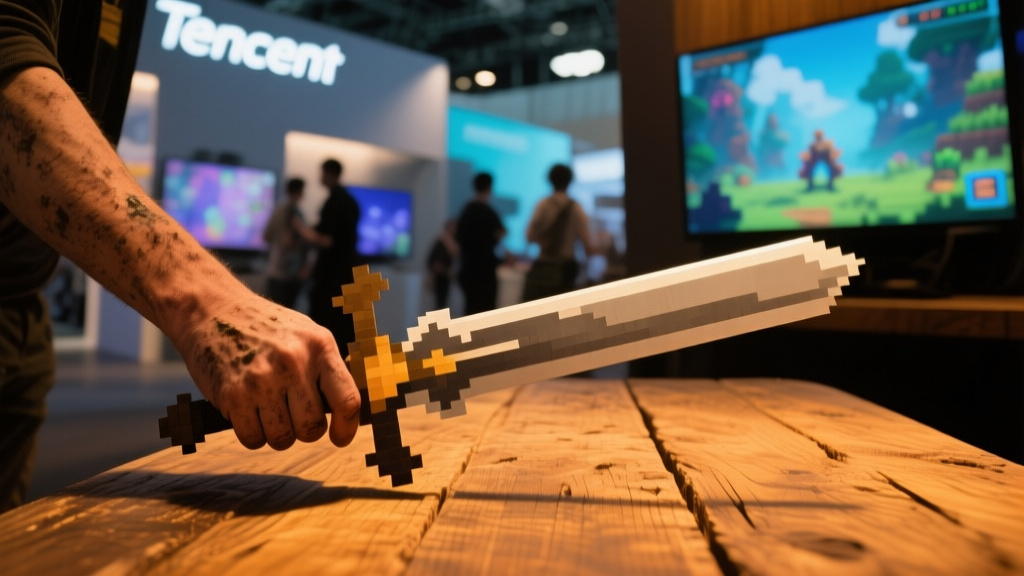
GDC 2024 wasn’t just another developer conference—it was an AI trade show disguised as one. Tencent’s booth let attendees play a 10-minute demo of a pixel-art fantasy world generated entirely by its AI tools, a stunt that took mere minutes to produce The Verge. Vendors pitched generative AI as the future of game creation, from chatbox-designed levels to NPCs that write their own dialogue. The message was clear: why spend years crafting a game when a prompt can do the heavy lifting?
But here’s the catch: none of this actually changes how games feel to play. The demos were flashy, but the pixel-art world Tencent showed off was a hollow shell—no depth, no personality, just a technical flex. Even the AI-driven NPCs, while impressive on paper, lacked the nuance of handcrafted characters. Players aren’t clamoring for procedurally generated quests; they want stories that resonate, worlds that feel alive. The industry’s obsession with AI tools risks skipping the part where games become good.
The real tension at GDC wasn’t about innovation—it was about priorities. Developers are being sold on AI as a way to cut costs and speed up production, but the trade-off is creativity. If a chatbot can design a dungeon in seconds, why bother refining it? The answer, of course, is that players will notice. And they won’t like it.
The tools are here, but the gameplay isn’t📷 Published: Apr 15, 2026 at 20:19 UTC
The tools are here, but the gameplay isn’t
Community reaction has been a mix of curiosity and skepticism. On Reddit, threads about AI-generated games are flooded with concerns about job losses and artistic integrity r/Gaming. Some indie devs see AI as a way to compete with AAA studios, but others worry it’ll turn game development into a race to the bottom. The loudest voices aren’t the ones celebrating AI—they’re the ones asking what happens when every game starts to feel the same.
The bigger problem? AI’s role in gaming is still theoretical. No major studio has shipped a game where AI is the backbone of the experience, and for good reason. Players can spot a gimmick from a mile away. Look at Ubisoft’s AI-generated NPCs in Assassin’s Creed—they were forgettable at best, frustrating at worst. If GDC’s AI demos are any indication, the industry is sprinting toward automation without stopping to ask if players even want it.
For now, AI at GDC feels like a solution in search of a problem. The tools exist, but the artistry doesn’t. And until that changes, players will keep voting with their wallets—by ignoring games that feel like they were made by a chatbot.
In other words, the gaming industry is treating AI like a shiny new toy, but players are the ones who’ll have to play with it. And if the demos at GDC are any indication, they’re not going to like the rules.