
Curiosity's Mars organics discovery: What we know for certain
Curiosity's Mars organics discovery: What we know for certain📷 Published: Apr 21, 2026 at 14:04 UTC
- ★Curiosity detects diverse organic molecules on Mars
- ★Building blocks of life found, not proof of life
- ★Origin of molecules remains unclear
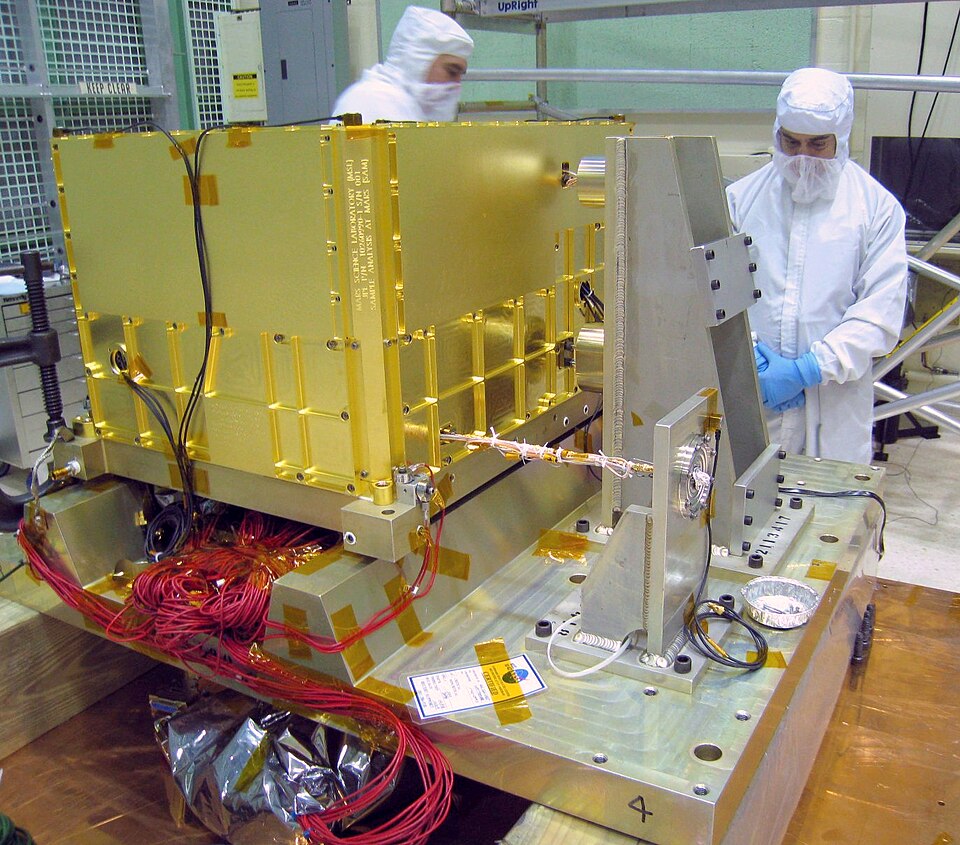
NASA’s Curiosity rover has identified a complex suite of organic molecules preserved in Martian rock, including thiophenes, benzene, and small carbon chains. The findings were confirmed by the rover’s Sample Analysis at Mars (SAM) instrument suite during analyses of mudstone samples drilled from Gale Crater. While volatiles such as toluene and chlorobenzene were measured at parts-per-billion levels, their diversity and preservation state point to a rich geochemical history.
The detection follows nine years of surface operations since the rover’s 2012 landing, with SAM’s tunable laser spectrometer and gas chromatograph providing isotopic context. Organic molecules are not unique to biology—hydrothermal vents, meteorites, and photochemical reactions can produce them. Still, their presence in an ancient lakebed strengthens the case for past habitability at Gale Crater.
Mars orbiters first spotted clays and sulfates there, but Curiosity’s wet chemistry experiments now reveal molecular fingerprints of carbon’s mobility in water. The rover’s ChemCam laser has even imaged calcium sulfate veins cutting through sediment, showing fluid pathways that could have hosted prebiotic chemistry.

The geological record now suggests ancient Mars harbored the ingredients for biology📷 Published: Apr 21, 2026 at 14:04 UTC
The geological record now suggests ancient Mars harbored the ingredients for biology
Early signals suggest these compounds formed in situ rather than arriving via comets, though definitive proof is lacking. Sulfur-bearing thiophenes, for example, often associate with microbial metabolisms on Earth, yet geochemical pathways like volcanic or impact-driven reactions remain plausible under Martian conditions. NASA’s Perseverance rover, targeting Jezero Crater’s delta deposits, will seek similar signatures at a site confirmed to host a paleolake.
The real signal here is temporal. Gale Crater’s surface age—between 3.5 and 3.8 billion years old—aligns with Earth’s earliest biosphere, when life emerged from similar chemical soups. This discovery doesn’t prove biology took root on Mars, but it moves the needle from theoretical habitability to measurable chemistry.
Operationally, this validates the strategy of drilling sedimentary targets in search of organics, informing where future missions should drill. It also highlights the need for return-sample missions, as Earth labs could distinguish biotic from abiotic signatures with far greater precision.