
Neutrino breaks cosmic records—blazars next?📷 Published: Apr 21, 2026 at 16:11 UTC
- ★Ultra-high-energy neutrino recorded in 2020
- ★Possible blazar origin remains unconfirmed
- ★Science stumped as particle’s path stays a mystery
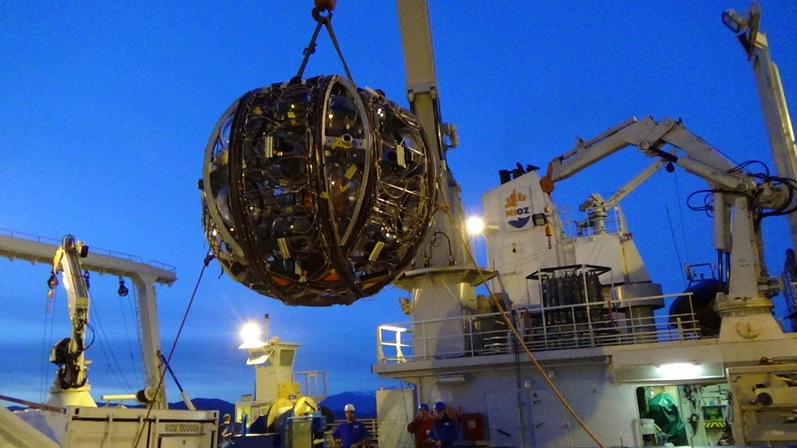
Physics just got a cosmic curveball. Three years ago, detectors in the Mediterranean Sea logged a neutrino packing more punch than any previous cosmic visitor—over ten times the energy of the next closest particle. This wasn’t some background radiation trickle; it was a full-throttle bullet from the void, and nobody saw it coming. For reference, the energy dumped by this neutrino in a single shot would power a small city for hours. KM3NeT’s strings of sensors were the ones catching the fallout, but pinpointing where it started is like tracing a scream in a hurricane.
Early signals point toward blazars—those galactic powerhouses hurling matter at near-light speed—as potential birthplaces. If true, this particle traveled farther than most galaxies have had time to exist. The scientific community lit up faster than a supernova alert, but the public’s reaction stayed oddly muted, as if the cosmos itself had slipped a glitch into the simulation.
Blazars sit at the heart of active galaxies, acting like cosmic lighthouses feasting on matter. The neutrino’s trajectory fits the kind of extreme environment these monsters generate, but absence of proof isn’t proof of absence—just a gap in our cosmic map. Right now, the data’s sharper than a scalpel but the target’s still a shadow.
Researchers are already cross-referencing sky surveys with neutrino tracks, hoping a blazar flare will line up like a bullseye on a cosmic shooting range.
A cosmic speedrunner leaves astronomers scrambling to hit replay.📷 Published: Apr 21, 2026 at 16:11 UTC
A cosmic speedrunner leaves astronomers scrambling to hit replay.
For players of the astronomical discovery game, the stakes aren’t about virtual loot but scientific treasure. Every new neutrino record is a high-score announcement in the universe’s weirdest leaderboard. The fact this one hails from the unknown makes it the ultimate secret boss—no health bar, no strategy guide, just raw, unexplained power. The community’s reaction split fast: half cheering for blazars as the champions, half betting on something even stranger lurking in deep space.
What matters here is the ripple effect. Labs worldwide are adjusting detector sensitivity, hunting for more particles that could rewrite our understanding of cosmic physics. If blazars are confirmed as the source, expect a wave of new simulations, telescope schedules, and maybe even a few late-night memes about ‘space bullets.’ The real signal isn’t just the neutrino—it’s that the universe still has moves we’ve never seen before.
There’s friction too. Tracking an invisible particle across billions of light-years feels like trying to solve a murder where the weapon vaporized on impact. Teams are sifting through years of archival data, hoping the culprit was caught on camera—just in the slow-motion replay of space-time itself.
Will blazars get the credit, or will another cosmic wildcard steal the show? The meter’s running, and the universe isn’t giving practice mode.