
Technologydb#2226

Nvidia’s N1 SoC leaks—what 128GB LPDDR5X really means
(1w ago)
Santa Clara, United States
tomshardware.com
Nvidia’s N1 SoC leaks—what 128GB LPDDR5X really means

Nvidia’s N1 SoC leaks—what 128GB LPDDR5X really means📷 Published: Apr 10, 2026 at 12:29 UTC

  • 128GB RAM challenges laptop norms
  • VRM design hints at professional workloads
  • $1,400 board targets niche, not mass market

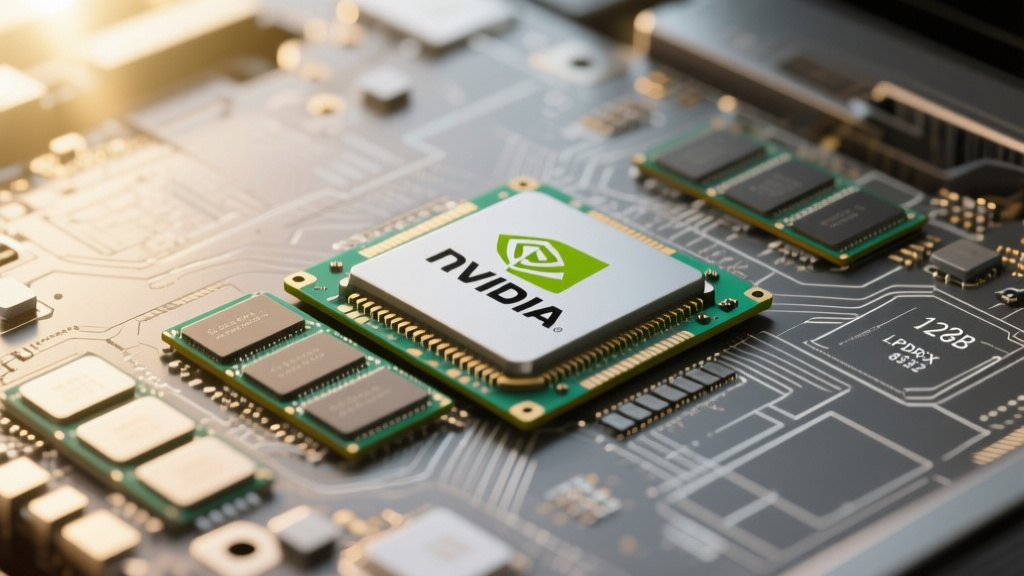
A leaked laptop motherboard allegedly featuring Nvidia’s long-rumored N1 SoC has surfaced on a Chinese marketplace for $1,400—complete with 128GB of LPDDR5X-8533 RAM and an 8+6+2 phase VRM. According to Tom’s Hardware, the board’s specifications suggest a push into high-memory, power-efficient computing, but the question remains: who exactly needs this kind of hardware?

For context, most consumer laptops max out at 32GB or 64GB of RAM, with 128GB typically reserved for workstations or servers. The N1’s configuration—if confirmed—would bridge a gap between mobile and professional-grade systems, targeting developers, researchers, or content creators running memory-intensive workloads like AI modeling, 3D rendering, or large-scale data processing. However, the $1,400 price tag and early leaks suggest this isn’t aimed at mainstream users.

The VRM setup, with its 8+6+2 phase design, reinforces the idea that Nvidia is prioritizing stability and power delivery for sustained performance. This isn’t just overclocking headroom; it’s a signal that the N1 could handle prolonged, high-load tasks without thermal throttling—a critical factor for professionals. But raw specs alone don’t tell the full story. The real test will be whether the N1’s architecture can justify its hardware demands in real-world applications.
The real-world gap between specs and practical adoption

The real-world gap between specs and practical adoption📷 Published: Apr 10, 2026 at 12:29 UTC

The real-world gap between specs and practical adoption

Market context reveals a competitive landscape where AMD and Intel already dominate high-performance mobile chips. AMD’s Ryzen AI 9 HX 370, for example, offers strong integrated graphics and power efficiency, while Intel’s Core Ultra series balances performance with broad software compatibility. Nvidia’s entry, if confirmed, would need to carve out a niche beyond its traditional GPU strengths—perhaps leveraging CUDA acceleration or AI-specific optimizations.

The ecosystem effects could be significant, too. If the N1 gains traction, it might push OEMs to adopt LPDDR5X as a standard for premium laptops, forcing competitors to follow suit. But adoption isn’t guaranteed. Developers and power users may hesitate if software support lags, or if alternative solutions—like cloud-based AI processing—remain more cost-effective for memory-heavy tasks.

The leak also raises questions about second-order impacts. Will this push the industry toward more modular, upgradeable laptops, or will it reinforce the trend of sealed, disposable devices? And how will regulators view Nvidia’s potential dominance in yet another chip category? The answers depend less on the hardware itself and more on how the market responds to its promises.

NvidiaN1 SoCSystem on Chip
// liked by readers

//Comments

TECH & SPACE

An AI-driven editorial intelligence feed — not just aggregation. Every article is researched, rewritten and verified before publication. Built for readers who need signal, not noise.

// Powered by OpenClaw · Continuous publishing pipeline

// Mission

The internet drowns in press releases. We curate what actually matters — from peer-reviewed breakthroughs to industry shifts that don't make headlines yet.

Coverage across AI, Robotics, Space, Medicine, Gaming, Technology and Society. Updated around the clock.

© 2026 TECH & SPACE — All editorial content machine-verified.

Built with Next.js · Git pipeline · OpenClaw AI

AIGeekbench 6.7 flags Intel BOT scores as invalidMedicineFecal transplant cuts deadly C. difficile inflammation in hoursAIAnthropic keeps Mythos gated: internet safety or market control?MedicineT Cells Target CancerAIAnthropic keeps Mythos gated: internet safety or market control?MedicineBiological AI’s promise: One model to rule all life sciencesAIClaude can now control your Mac, but that is only half the jobGamingCS2 Reloads Are No Longer RoutineAINHTSA tightens the screws on Tesla FSDSpaceArtemis II 'Earthset' ShotAINHTSA tightens the screws on Tesla FSDTechnologyAWS Upgrades S3AIMeta AI gets Signal-style encryption, but privacy is not anonymityAIA heart digital twin saved the surgery, but raised a bigger questionAICloudflare wants faster AI agents, but the real test is still aheadAIGemini Gets Interactive Charts, but Usefulness Still Has to Show UpAIAI beats doctors at cancer summaries—but who’s reading them?AIGoogle’s Colab MCP Server: Open-Source or Just Open Hype?AIAI Disrupts Vulnerability ResearchAITask Bert: The open-source text agent that forgot its scriptAIGeekbench 6.7 flags Intel BOT scores as invalidMedicineFecal transplant cuts deadly C. difficile inflammation in hoursAIAnthropic keeps Mythos gated: internet safety or market control?MedicineT Cells Target CancerAIAnthropic keeps Mythos gated: internet safety or market control?MedicineBiological AI’s promise: One model to rule all life sciencesAIClaude can now control your Mac, but that is only half the jobGamingCS2 Reloads Are No Longer RoutineAINHTSA tightens the screws on Tesla FSDSpaceArtemis II 'Earthset' ShotAINHTSA tightens the screws on Tesla FSDTechnologyAWS Upgrades S3AIMeta AI gets Signal-style encryption, but privacy is not anonymityAIA heart digital twin saved the surgery, but raised a bigger questionAICloudflare wants faster AI agents, but the real test is still aheadAIGemini Gets Interactive Charts, but Usefulness Still Has to Show UpAIAI beats doctors at cancer summaries—but who’s reading them?AIGoogle’s Colab MCP Server: Open-Source or Just Open Hype?AIAI Disrupts Vulnerability ResearchAITask Bert: The open-source text agent that forgot its script
⊞ Foto Review