
The Super Micro case shows how AI hardware became a geopolitical commodity
The Super Micro case shows how AI hardware became a geopolitical commodity📷 Published: Apr 16, 2026 at 08:21 UTC
- ★GPUs are now strategic assets, not just hardware
- ★The case exposes cracks in export enforcement
- ★Legitimate buyers will likely bear part of the cost

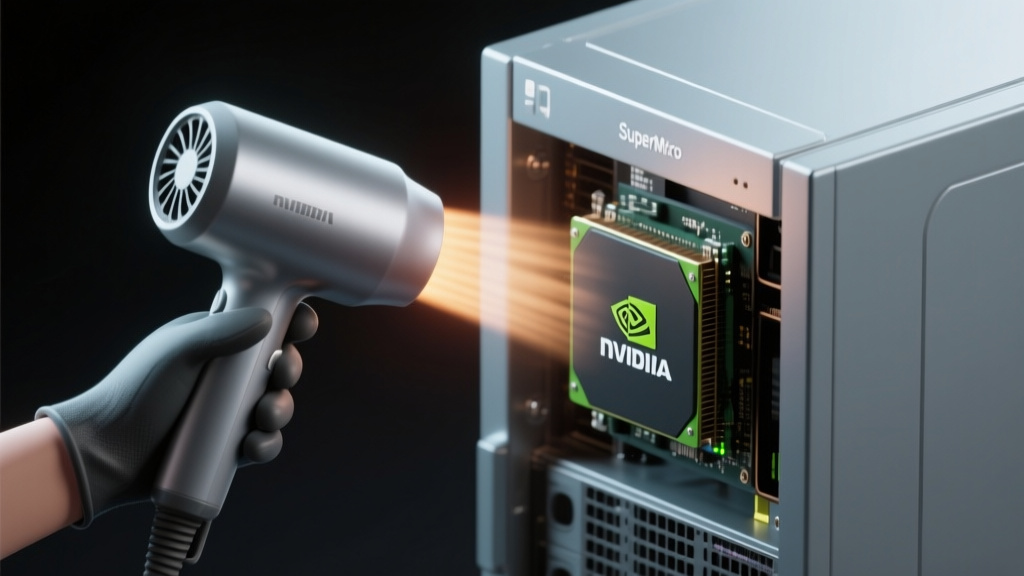
The Super Micro-linked case reads like a mix of warehouse improvisation and export-control thriller: high-end Nvidia GPUs, dummy servers, and a hairdryer used to manipulate hardware identity. But the memorable detail is not the important part. The deeper story is that AI hardware has stopped behaving like a normal server component and started behaving like a geopolitical commodity.
That shift changes how the incident should be read. When chips such as the Nvidia H100 and A100 are central to training leading AI systems, a GPU is no longer just a board in a rack. It becomes a strategic asset. In that setting, U.S. export controls are not merely compliance paperwork; they are industrial policy. The problem is that industrial controls often create a secondary market, and secondary markets around scarce strategic goods have a habit of turning black very quickly.
That is why this case does not just hit Super Micro. It exposes the fragility of the broader AI infrastructure supply chain. If the allegations are accurate and hardware identity can be obscured through a mixture of dummy systems, paperwork, and legitimate-looking export channels, the likely response will be more audits, slower shipments, and more compliance friction for everyone buying GPUs legally. That is bad news for startups, researchers, and smaller cloud operators who already face long waits and inflated prices.

Once chips become strategic goods, the supply chain becomes a battleground📷 Published: Apr 16, 2026 at 08:21 UTC
Once chips become strategic goods, the supply chain becomes a battleground
There is an uncomfortable economic logic here. The tighter the controls, the stronger the incentive to route around them when the product carries high strategic value. The Verge and Wired have both tracked how the AI boom turned chip procurement into a competitive obsession. The Super Micro case is simply a more dramatic expression of the same reality.
For the market, that means two things. First, legitimate buyers will probably absorb more of the cost through extra verification, delays, and compliance overhead. Second, the incentive to build alternatives will intensify. AMD, Google’s TPU stack, and China’s domestic accelerator efforts now look less like optional competitors and more like political and commercial responses to a market tightening around Nvidia’s ecosystem.
So yes, the hairdryer detail is memorable. But it is not the real story. The real story is that AI hardware has become a contested strategic good, and when that happens, every weakness in the supply chain stops being a niche security problem. It becomes evidence that access to compute may matter almost as much as the quality of the models trained on top of it.