
OpenAI’s $100 ChatGPT Pro: Vibe Coding or Real Value?
OpenAI’s $100 ChatGPT Pro: Vibe Coding or Real Value?📷 Published: Apr 10, 2026 at 02:10 UTC
- ★New $100 tier targets power users
- ★Higher limits, but details still unclear
- ★Developer reaction balances skepticism and curiosity
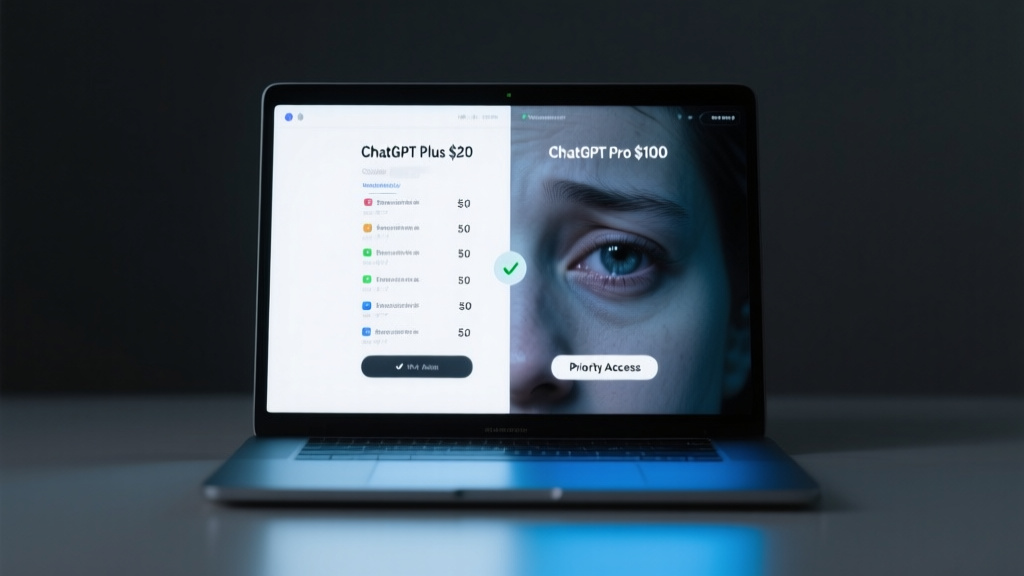
OpenAI has quietly rolled out a $100/month ChatGPT Pro tier, positioning it as the next step up from the $20 ChatGPT Plus plan. The move, confirmed by CNET, frames the upgrade as a response to so-called vibe coding—a term that’s either a playful nod to AI-generated code or a sign of how nebulous the tier’s actual benefits remain. Early reports suggest the Pro tier offers "higher usage limits," but OpenAI hasn’t specified what those limits are, nor how they compare to the existing Plus plan’s constraints.
For all the hype around AI’s rapid evolution, OpenAI’s pricing strategy here feels less like a technical breakthrough and more like a segmentation play. The $20 Plus plan already provides access to GPT-4 and basic API features; the $100 Pro tier seems designed to siphon off users who hit those limits hard—developers running frequent queries, businesses testing automation, or hobbyists pushing boundaries. But without concrete numbers or feature comparisons, the value proposition hinges on vibes—a risky bet for a product that costs as much as a streaming service bundle.
The timing is also telling. OpenAI has spent months touting enterprise use cases, but Gartner’s latest report warns that most AI deployments fail to scale beyond pilots. If Pro is just a usage limit bump, it’s not solving the real bottlenecks—hallucinations, latency, or integration headaches—that slow down adoption. The question isn’t whether power users will pay, but whether they’ll get anything more than a slightly faster version of what they already have.
The gap between marketing and meaningful differentiation📷 Published: Apr 10, 2026 at 02:10 UTC
The gap between marketing and meaningful differentiation
Developer reactions have been predictably mixed. On GitHub, some power users have expressed cautious optimism, noting that even incremental improvements in rate limits could unlock new workflows. Others, however, have pointed out that $100/month is steep for features that could be rolled into Plus—especially when competitors like Anthropic and Mistral offer comparable models at lower price points with fewer strings attached. The lack of transparency around Pro’s exact capabilities hasn’t helped; OpenAI’s announcement reads like a placeholder, leaving users to guess whether the tier includes perks like priority access, custom model tuning, or advanced analytics.
There’s also the vibe coding angle—a term that’s already spawned memes in tech forums. If the Pro tier is primarily about code generation, it risks overshooting its audience. Most developers already use tools like GitHub Copilot (priced at $10–$20/month) for coding assistance, which integrates more seamlessly into IDEs. OpenAI’s play here feels more like an attempt to capture high-spend users than to deliver a targeted solution. That’s not inherently flawed—segmentation is a valid strategy—but it does little to address the elephant in the room: AI’s biggest limitations aren’t solved by more expensive tiers, but by better product design.
The real signal here isn’t the price hike; it’s the shift toward monetizing intensity of use. OpenAI isn’t selling a feature; it’s selling the absence of friction for a subset of users. That’s a smart business move, but it’s not innovation—it’s metered access dressed up as premium value. For developers and businesses weighing the cost, the question isn’t can I afford this? but what am I actually getting for my money? And right now, the answer is frustratingly vague.