
ChatGPT for Clinicians: Marketing edge or real edge?

ChatGPT for Clinicians: Marketing edge or real edge?📷 Published: Apr 23, 2026 at 12:13 UTC
- ★OpenAI rolls out free ChatGPT for Clinicians
- ★GPT-5.4 beats doctors in synthetic tests
- ★Benchmark specifics remain unclear
OpenAI is betting big on its newest experiment: ChatGPT for Clinicians, a free, specialized version of its chatbot tailored for medical professionals. The company claims its latest model, internally dubbed GPT-5.4, clears clinical benchmarks better than human doctors—even when those doctors have unlimited time and internet access to cross-check every fact.
The headline is provocative, but the fine print raises eyebrows. Details on the benchmark’s tasks, evaluation criteria, and third-party validation are conspicuously absent. Without transparency, the announcement lands more like a marketing demo than a peer-reviewed result. The Decoder, first to report the news, flags the lack of independent verification—a red flag for a field where accuracy isn’t optional.
What’s genuinely new here isn’t the AI itself, but its packaging for a high-stakes domain. OpenAI hasn’t just recast an existing model; it’s positioning the tool as a productivity aid for harried clinicians, not a replacement. The free tier lowers barriers to entry, but it also sets expectations: this is a research playground, not a regulatory-approved diagnostic tool.
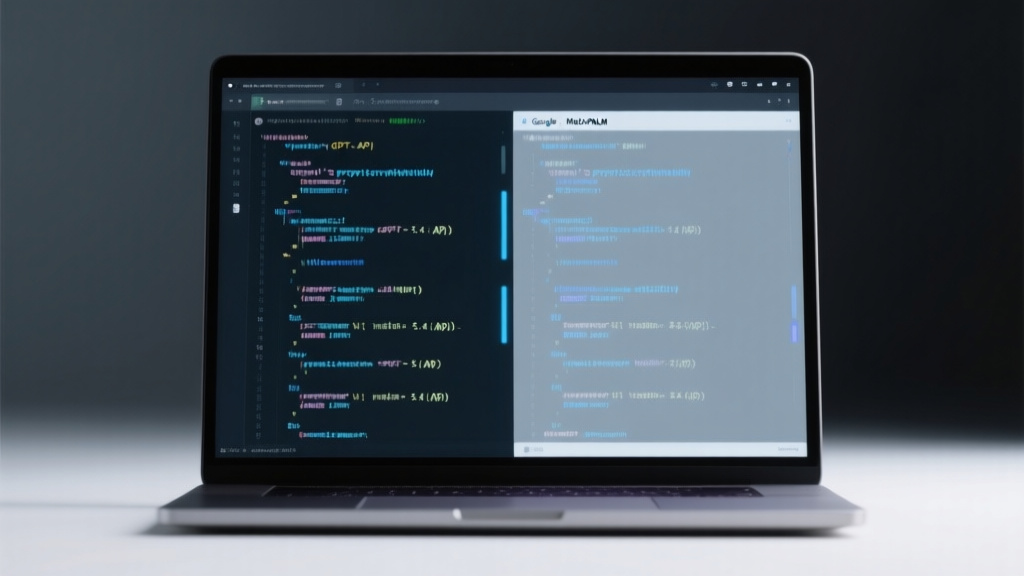
Benchmark blitz: Hype meets the messy reality of medical AI📷 Published: Apr 23, 2026 at 12:13 UTC
Benchmark blitz: Hype meets the messy reality of medical AI
For developers, the move signals OpenAI’s push into vertical markets, where domain-specific models could command premium access in the future. Competitors like Google and Microsoft are already exploring similar territory with Med-PaLM and other medical-focused models, making OpenAI’s entry a preemptive strike to lock in mindshare among healthcare innovators.
The real signal here is the company’s willingness to court controversy by staking claims on unverified metrics. If confirmed, GPT-5.4’s performance in these benchmarks could redefine how AI is evaluated in medicine—but for now, the gap between demo and deployment remains vast. The community is responding with cautious curiosity, but the burden of proof lies squarely on OpenAI to open its methodology to scrutiny.
For startups eyeing healthcare, the play is clear: align with OpenAI’s early access to shape the tool’s evolution. Incumbents, meanwhile, may accelerate their own medical AI roadmaps to avoid ceding ground in a market hungry for innovation.