
Humanoid robots learn parkour to bridge lab and street
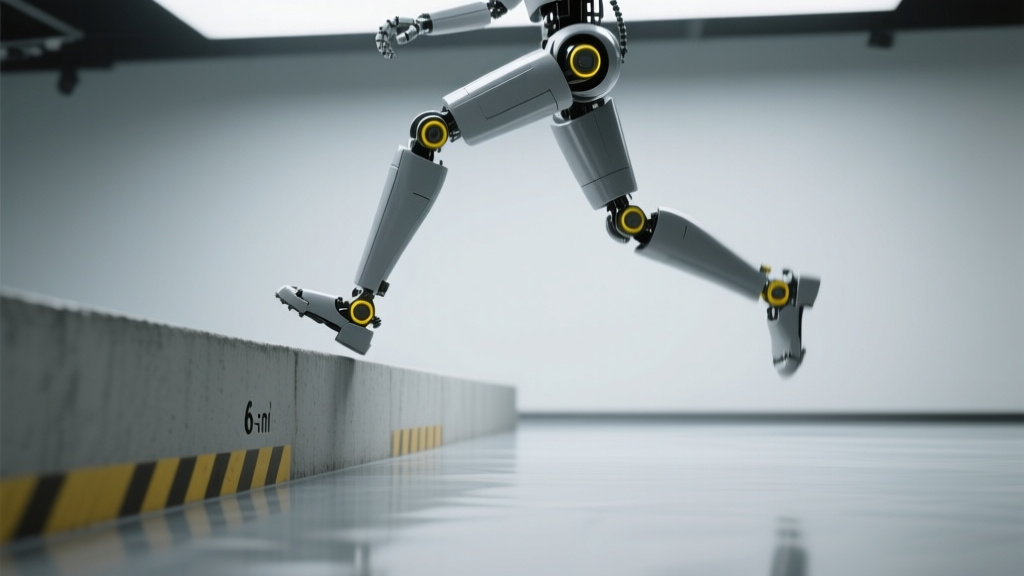
Humanoid robots learn parkour to bridge lab and street📷 Published: Apr 23, 2026 at 10:16 UTC
- ★bipedal agility now matches demo levels
- ★hardware limits prevent real-world use
- ★industrial partners wait on stability
A bipedal robot just cleared a 6-inch curb in under two seconds—simultaneously impressive and inadequate for the factory floor. That’s the paradox of today’s humanoid parkour demos: they prove dynamic motion is possible in controlled video runs, but not that the same robots can survive a Tuesday morning in a logistics warehouse. According to researchers at the Institute for Human & Machine Cognition, the latest models now string together toe-walking, sidesteps, and even a modified cartwheel to clear obstacles. The maneuvers look fluid because the controllers borrow from reinforcement learning trained on simulated parkour environments. Videos clock the robots’ success rate at 78–85% in lab trials, but drop to single digits when the surface tilts more than three degrees or the lighting drops below 200 lux.
Energy budgets remain the silent killer. A single three-minute parkour routine can drain a humanoid’s battery by 40%, leaving little reserve for actual work. Current lithium-ion stacks top out around 400 Wh/kg, forcing robots into brief bursts of motion followed by long recharges. Even the best-in-class motors, like those from Boston Dynamics, cap continuous output at roughly 2 kW—enough for a sprint but not for a full eight-hour shift. The gap between flashy clips and flat energy curves is widening, not shrinking.
Collaborative robots still can’t collaborate. While Boston Dynamics’ Atlas now avoids small obstacles, its payload ceiling sits below 5 kg—useful for moving empty boxes, useless for palletizing steel sheets. On platforms like The Robot Report, engineers openly question whether today’s humanoids are anything more than overpriced research toys priced at $100,000–$200,000 each.
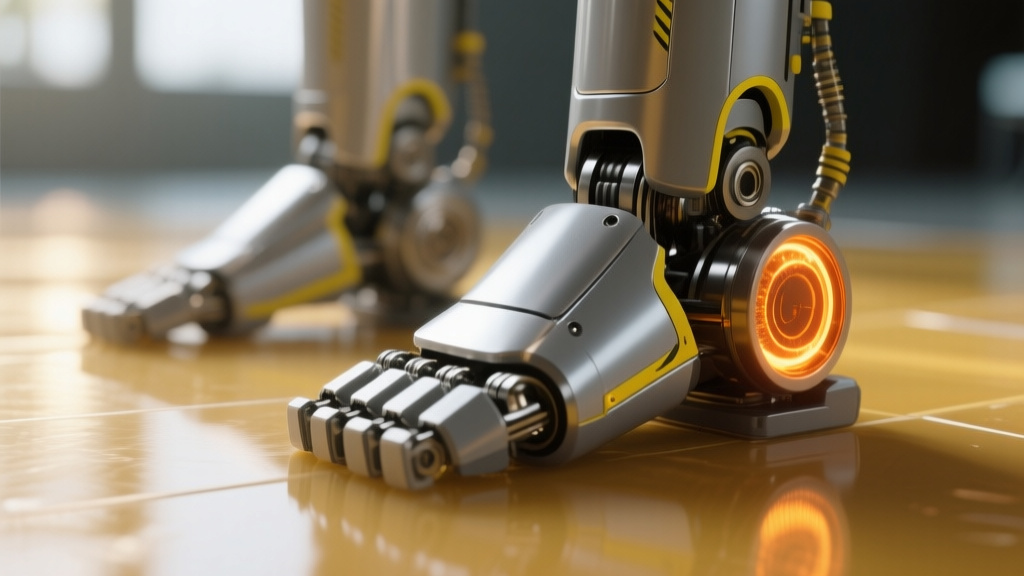
Demo finished. Reality starts now: why humanoids still need training wheels📷 Published: Apr 23, 2026 at 10:16 UTC
Demo finished. Reality starts now: why humanoids still need training wheels
Safety protocols demand the robot stop whenever a joint exceeds 70 °C or when ground friction drops below 0.3 μ. Those thresholds explain why most demos happen on seamless epoxy floors and why the same robots wobble on factory grating. Regulatory frameworks, such as ISO/TS 15066 for collaborative robots, still treat humanoids as “mobile manipulators,” leaving gaps for dynamic whole-body motion. Until certification catches up, liability for a humanoid taking a header rests entirely with the operator.
Industrial partners are watching but not signing. Hyundai’s robotics division quietly shelved a 2024 pilot after Atlas tipped a 90-liter tote during a negotiated turn. Meanwhile, Agility Robotics’ Digit clocks in at 1.9 m tall and carries only 16 kg, making it viable for shelf stocking but not for heavy assembly. The real signal here is that parkour is a talent show, not a toolbox. Until robots can reliably operate on uneven terrain for 12 hours without thermal throttling or legal exposure, their utility remains confined to the demo circuit.
What’s missing is not motion but mass-market economics: cheaper power, certified joints, and a clear use case beyond Instagram reels.
Showcasing parkour moves is easier than shipping products. It’s the same reason race cars aren’t sold with video-game stunt compilations—until the brakes, tires, and fuel tank are production-grade, the stunts are noise.