
AI finds no brain structure link to navigation skills—so what does?
AI finds no brain structure link to navigation skills—so what does?📷 Published: Mar 22, 2026 at 12:00 UTC
- ★AI analysis debunks brain structure-navigation link in young adults
- ★London taxi driver studies challenged by new findings
- ★Study limits: small sample, no causal claims
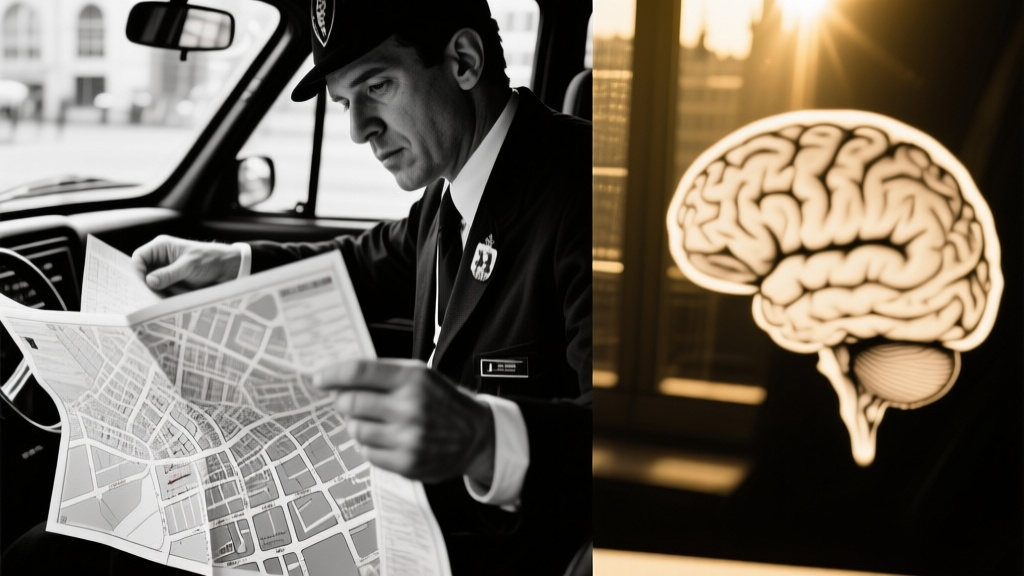
For years, the idea that elite navigators—like London’s black-cab drivers—might have uniquely structured brains felt almost intuitive. Studies suggested their hippocampal expansion stemmed from years of memorizing the city’s labyrinthine streets. But a new AI-powered analysis led by Steven Weisberg at the University of Texas at Arlington upends that assumption: in healthy young adults, no clear link exists between brain anatomy and navigation ability. The study, published in Nature Human Behaviour, used advanced machine learning to scan brain structures and spatial performance in participants. Unlike prior work—often observational or reliant on small, specialized groups—this approach systematically tested whether gray matter volume or cortical thickness correlated with navigation skill. The result? A near-total absence of association. This isn’t just a null finding. It’s a direct challenge to a long-held narrative that brain morphology predicts cognitive talents. If elite navigators do show structural differences, Weisberg’s work suggests those changes might arise from experience—not innate advantage.
A decades-old assumption falters—but what does this mean for neuroscience?📷 Published: Mar 22, 2026 at 12:00 UTC
A decades-old assumption falters—but what does this mean for neuroscience?
Yet the study’s limits demand equal attention. The sample was modest (100 participants), and the AI models, while robust, can’t prove causation. As Weisberg notes, ‘absence of evidence isn’t evidence of absence’—other factors, like neural connectivity or white matter integrity, may still play a role. The London taxi driver studies, for instance, tracked changes over time in trained professionals, not static snapshots of young adults. For patients today, this changes little. Navigation disorders (e.g., developmental topographical disorientation) aren’t diagnosed via brain scans alone. But the findings reframe how researchers approach spatial cognition. If structure doesn’t dictate skill, perhaps dynamic neural processes—like real-time hippocampal activity—matter more. The bigger question lingers: If brain anatomy isn’t destiny, what does shape our ability to navigate? Training? Genetics? Environmental exposure? Weisberg’s work doesn’t answer that—it merely clears the path for harder questions.