
Atlas Redefines Humanoid Design
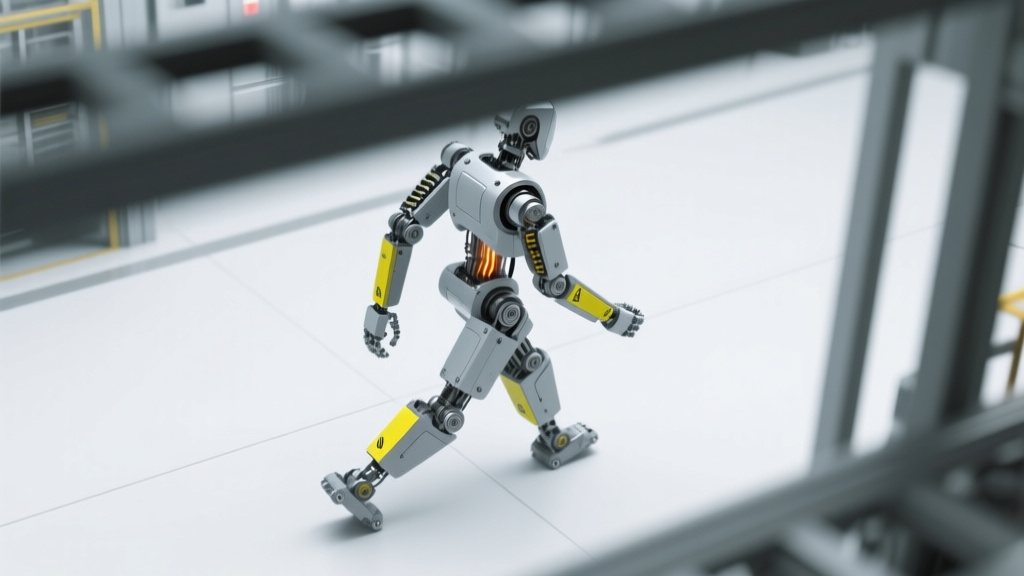
Atlas Redefines Humanoid Design📷 Published: Apr 15, 2026 at 16:03 UTC
- ★Industrial utility prioritized
- ★Modular architecture
- ★Passive thermal management
Boston Dynamics' Atlas production version marks a significant departure from typical humanoid designs, prioritizing industrial utility over human likeness. The robot's form factor signals its role as a machine, rather than a companion or friendly assistant. According to Boston Dynamics, Atlas is designed for purposeful work in industrial settings, with key product requirements such as passive thermal management and a modular architecture dictating its design.
The Atlas design intentionally avoids a human-like or companionable appearance, aligning with its industrial work purpose. This approach is reflected in the robot's ability to perform tasks that require strength, endurance, and precision, making it an attractive option for industries such as manufacturing and construction. As noted by The Verge, Atlas's modular architecture suggests potential for customization or adaptability in industrial applications.

From lab to industrial deployment: the gap that remains📷 Published: Apr 15, 2026 at 16:03 UTC
From lab to industrial deployment: the gap that remains
The Boston Dynamics Tech Talk on Atlas features discussions by two lead hardware engineers and the head of industrial design, providing valuable insights into the robot's development and capabilities. The talk highlights the importance of considering real-world deployment scenarios, rather than just demo environments. As Wired points out, the real challenge lies in scaling up the production and deployment of robots like Atlas, while ensuring safety and reliability.
The hardware limits of Atlas, such as its battery life and payload capacity, will play a crucial role in determining its suitability for various industrial applications. Additionally, the cost and certification processes for deploying robots like Atlas in industrial settings will need to be carefully considered. According to IEEE, the development of robots like Atlas has significant implications for the future of industry and workforce development.
The realistic industrial implication of Atlas's design is that it has the potential to increase efficiency and productivity in various industries. The real signal here is that Atlas is not just a demo robot, but a machine that can be used to perform real-world tasks. That's just another way of saying that Atlas is a significant step forward in the development of industrial robots.