
// INITIALIZING GLOBE FEED...
AIdb#3150

Google’s TurboQuant cuts LLM cache needs sixfold, boosts H100 speeds

(3d ago)
Mountain View, United States
tomshardware.com
Google’s TurboQuant cuts LLM cache needs sixfold, boosts H100 speeds

Google’s TurboQuant cuts LLM cache needs sixfold, boosts H100 speeds📷 Published: Apr 21, 2026 at 08:12 UTC

  • TurboQuant compresses KV caches to 3 bits with no accuracy loss
  • 8x speedups on Nvidia H100 GPUs for attention logits
  • Memory cuts shrink LLM cache needs by at least six times

Google’s new TurboQuant delivers what reads like a magic trick for AI memory budgets: shrinking KV caches to 3 bits without dipping quality. On Nvidia’s H100 GPUs, the 4-bit variant pushes attention logit computation up to eight times faster than unquantized 32-bit keys. The claims land hard, but the real question is whether they survive outside synthetic benchmarks. Early signals suggest this isn’t just repackaged quantization; the compression targets memory bandwidth bottlenecks that throttle large language models during inference. If it scales, the tech could let developers run longer sequences or bigger batches on the same hardware.

The technique arrives as Nvidia’s H100 dominates high-end AI training and inference, where memory often becomes the ceiling. Google’s pitch pivots on efficiency, promising the same model performance at a fraction of the memory cost. Benchmarks cited in sources show measurable gains, but whether those translate to real-world latency or throughput improvements remains to be seen. Developers hungry for headroom on constrained GPUs are already circling the details.
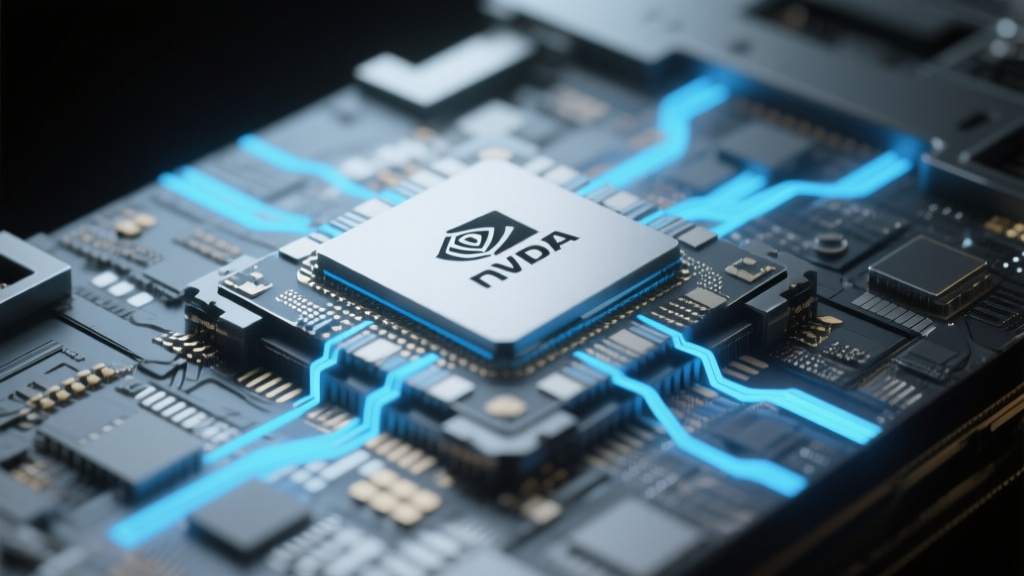
Compression breakthrough or another AI demo that stays in the lab

Compression breakthrough or another AI demo that stays in the lab📷 Published: Apr 21, 2026 at 08:12 UTC

Compression breakthrough or another AI demo that stays in the lab

What’s less clear is how TurboQuant’s compression plays with mixed precision training or multi-GPU setups. The H100’s Tensor Cores are optimized for 4-bit operations, so the speedup aligns with hardware trends. Yet memory savings alone don’t guarantee wall-clock improvements if the decompression overhead eats the gains. The community is responding with cautious optimism, noting that compression techniques often stumble on edge cases where numerical instability creeps in. If TurboQuant dodges those pitfalls, it could become a must-have for inference-heavy deployments.

The bigger play may be Google’s stack integration. TurboQuant fits where LLM caches balloon during chatbot or search inference. Competitors scrambling to match H100 performance may find the clock ticking on their own memory optimizations.

Google TurboQuant3-bit quantizationLLM memory optimizationKV cache compressionlarge language model efficiency
// liked by readers

//Comments

TECH & SPACE

Editorial intelligence for the frontier of technology — AI, Space, Robotics, and what comes next.

// Continuous publishing pipeline

// Mission

The internet drowns in press releases. We surface what actually matters — peer-reviewed breakthroughs, industry shifts, and signals that don't make headlines yet.

Updated around the clock.

© 2026 TECH & SPACE — All editorial content machine-verified.

Next.js · AI Pipeline · Open Source

AIGoogle’s 8th-gen TPUs and Agentic Enterprise playSpaceArtemis 2 crosses lunar sphere as Moon return beginsAIBroadcom’s TPU pipeline fuels Anthropic’s $30B growth claimGamingNvidia's odd 9GB RTX 5050 is a memory math problem nobody asked forAIAnthropic's Claude can now run your computer while you sleepTechnologyAustralia’s NEM flips: when power pays consumersAIAI data centers’ emissions may rival entire nationsTechnologyTesla’s FSD split leaves 4 million owners in the lurchAIChatGPT for Clinicians: Marketing edge or real edge?TechnologyBlockchain scams now haunt the Strait of HormuzAIX throws Communities out for Grok-curated feedsTechnologyTesla’s AI4.1 doubles chip memory — is HW4 next?AICyberpunk poetry jailbreaks AI safety filters 10–20x faster than direct requestsRoboticsHumanoid robots learn parkour to bridge lab and streetAIAI Scams Are Getting Scarily ConvincingRoboticsA&K Robotics raises $8M to push terminal autonomyAIClaude overtakes ChatGPT in fresh installsAIOne Photo, Zero Models: Simplifying Urban Solar ForecastingAIAI prior auth test slows care for seniorsAITrump's 'rescued' Iranian women blur into AI-generated fictionAIGoogle’s 8th-gen TPUs and Agentic Enterprise playSpaceArtemis 2 crosses lunar sphere as Moon return beginsAIBroadcom’s TPU pipeline fuels Anthropic’s $30B growth claimGamingNvidia's odd 9GB RTX 5050 is a memory math problem nobody asked forAIAnthropic's Claude can now run your computer while you sleepTechnologyAustralia’s NEM flips: when power pays consumersAIAI data centers’ emissions may rival entire nationsTechnologyTesla’s FSD split leaves 4 million owners in the lurchAIChatGPT for Clinicians: Marketing edge or real edge?TechnologyBlockchain scams now haunt the Strait of HormuzAIX throws Communities out for Grok-curated feedsTechnologyTesla’s AI4.1 doubles chip memory — is HW4 next?AICyberpunk poetry jailbreaks AI safety filters 10–20x faster than direct requestsRoboticsHumanoid robots learn parkour to bridge lab and streetAIAI Scams Are Getting Scarily ConvincingRoboticsA&K Robotics raises $8M to push terminal autonomyAIClaude overtakes ChatGPT in fresh installsAIOne Photo, Zero Models: Simplifying Urban Solar ForecastingAIAI prior auth test slows care for seniorsAITrump's 'rescued' Iranian women blur into AI-generated fiction
⊞ Foto Review