
HopChain: Alibaba’s fix for AI’s visual reasoning mess

HopChain: Alibaba’s fix for AI’s visual reasoning mess📷 Published: Apr 7, 2026 at 22:47 UTC
- ★Multi-stage questions force models to verify each step
- ★20/24 benchmarks improved—but real-world tests pending
- ★Qwen team’s move pressures Google, Meta on vision agents
Alibaba’s Qwen team didn’t just tweak another vision model—they admitted a dirty secret: AI’s visual reasoning is a house of cards. Small errors in perception (a mislabeled object, a missed spatial relationship) cascade into full-blown hallucinations by step three. HopChain doesn’t claim to solve this; it just forces models to slow down and check their work like a student showing calculations.
The framework breaks problems into linked sub-questions—‘Is the apple red?’ before ‘Is it ripe?’—and demands verification at each hop. It’s not agentic workflows or emergent intelligence; it’s basic error containment, repackaged as a ‘chain.’ The 20/24 benchmark bump is real, but those are controlled tests, not Instagram’s chaotic feed or a warehouse robot’s split-second decisions.
This isn’t Alibaba’s first rodeo with vision-language models. The Qwen-VL series already competed with Google’s Gemini and Meta’s LLaVA, but HopChain is a tacit concession: brute-force scaling isn’t cutting it. The real tell? They’re open-sourcing the framework now, before the paper’s even peer-reviewed. That’s not altruism—it’s a land grab for developer mindshare in a field where everyone’s racing to ship ‘agents’.
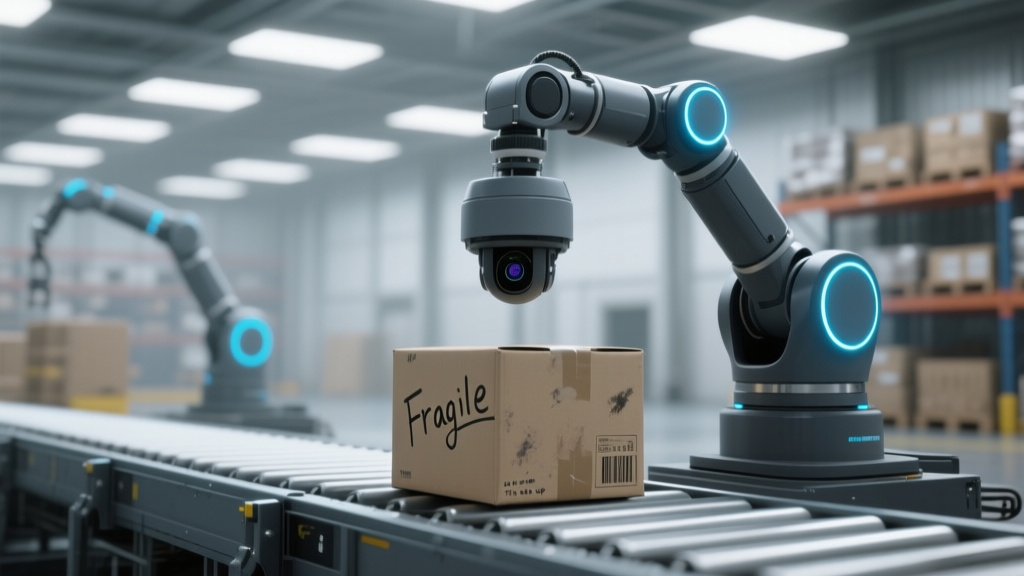
The gap between synthetic benchmarks and production reality📷 Published: Apr 7, 2026 at 22:47 UTC
The gap between synthetic benchmarks and production reality
The benchmark numbers (a 10–15% lift on tasks like VQAv2) are solid—for synthetic datasets. Real-world deployment? That’s where the reality gap hits. HopChain adds latency; each ‘hop’ is another round-trip. For a logistics AI scanning packages, that’s a tradeoff; for a medical imaging tool, it’s a non-starter until proven in clinical noise.
Industry-wise, this pressures Google and Meta to either adopt similar safeguards or double down on end-to-end black boxes. Alibaba’s play is clearer: dominate the enterprise stack where verifiability > speed. Early GitHub chatter suggests cautious optimism—devs like the modularity, but complain about the ‘training tax’ for custom datasets.
The bigger question isn’t whether HopChain works (it does, in a lab). It’s whether Alibaba can turn this into a moat before OpenAI or Mistral ship their own ‘reasoning guards.’ For now, it’s a clever patch—not a rewrite of the rules.