
OpenAI’s GPT-5.4 nano is a pricing ambush
OpenAI’s GPT-5.4 nano is a pricing ambush📷 Published: Apr 18, 2026 at 12:12 UTC
- ★GPT-5.4 nano beats prior mini at max reasoning effort
- ★Prices fall 73% for input, 80% for output vs GPT-5.4
- ★Smaller models now outperform larger ones on economic grounds
OpenAI just flipped the economics of vision-language models with two new entries: GPT-5.4 mini and GPT-5.4 nano, landing two weeks after the flagship GPT-5.4 release. Nano’s headline numbers are brutal—$0.20 per input token, $0.02 for cached input, and $1.25 per output token, placing it squarely below Google’s Flash-Lite on cost while outperforming older generations on OpenAI’s own benchmarks.
Efficiency isn’t just a marketing slide here. OpenAI claims its self-reported metrics show the new nano model surpassing the prior GPT-5 mini when pushed to maximum reasoning depth, while also delivering double the speed. That’s rare territory: a smaller, cheaper model that can outthink the previous mid-tier offering. For developers staring at runaway inference bills, this looks less like an incremental update and more like a cost ambush aimed at competitors still pricing at legacy tiers.
Benchmark metrics meet bargain-basement pricing—who actually benefits?📷 Published: Apr 18, 2026 at 12:12 UTC
Benchmark metrics meet bargain-basement pricing—who actually benefits?
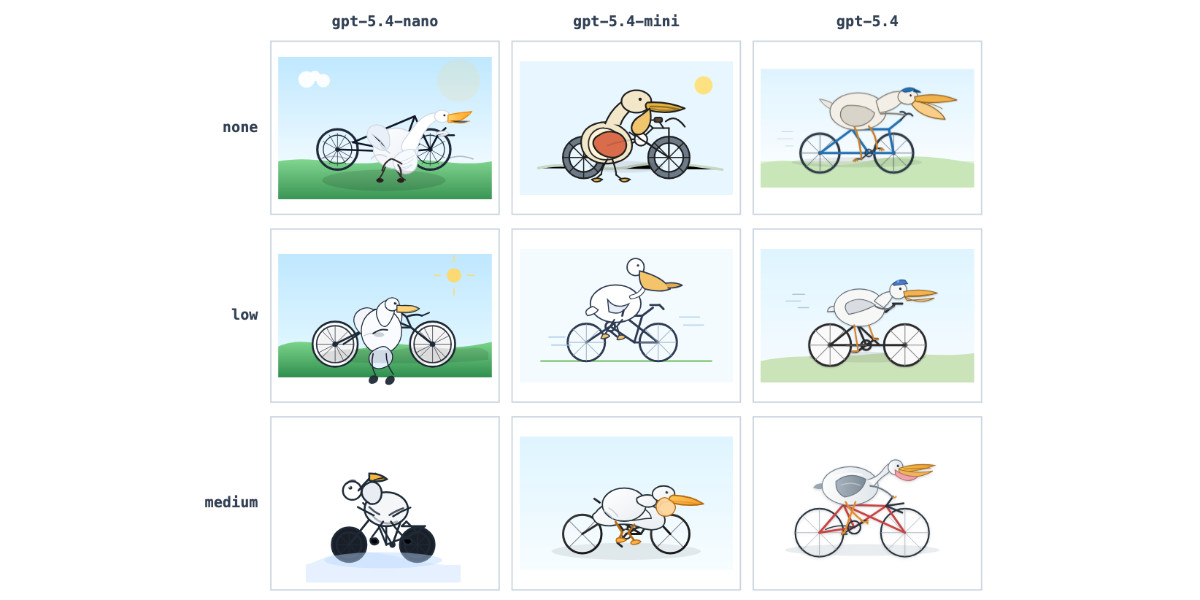
The pricing moves read like a hostile takeover of the low-end inference market. Compare GPT-5.4 at $2.50 input and $15.00 output versus GPT-5.4 mini at $0.75 and $4.50—and now GPT-5.4 nano at $0.20 and $1.25. The delta isn’t polite competition; it’s value demolition. Early adopters like Simon Willison are already experimenting with nano’s heavy visual-description workloads, hinting that the real shift isn’t theory but viable deployments at consumer-grade pricing.
What’s less clear is who ends up holding the bag. Cloud providers love volume, but at these rates, gross margins on AI inference could compress faster than hardware upgrades can offset them. OpenAI wins mindshare and market share, but the wider ecosystem might discover that pricing warfare has a way of leaving everyone hollowed out—not just the laggards.
For startups and indie devs, this is real leverage: a 73% drop in input token costs means prototypes become products overnight. The business implication is simple—if your pitch relies on margin, assume it’s already obsolete.