
Sulfur-based soft robots leap from concept to reality
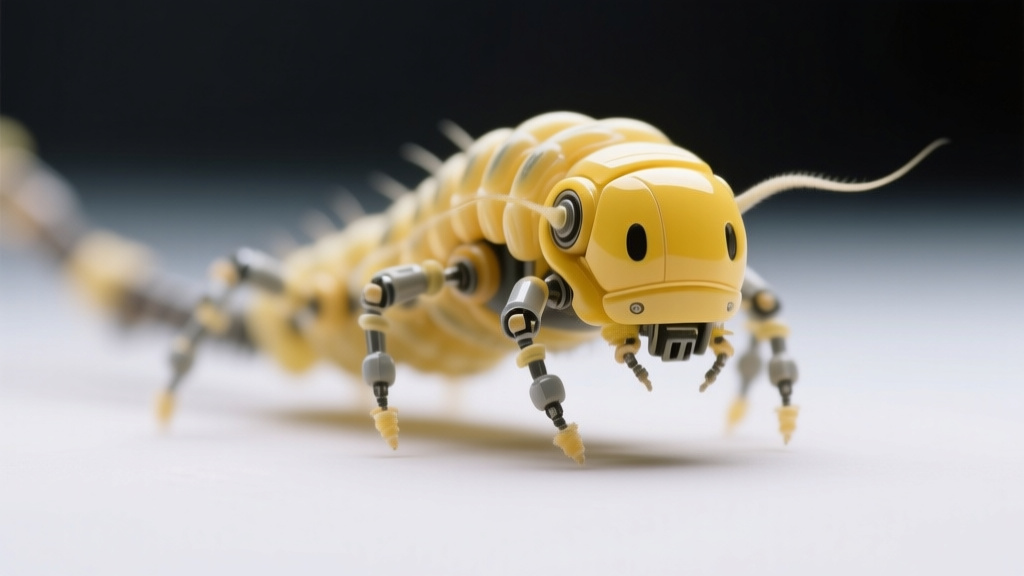
Sulfur-based soft robots leap from concept to reality📷 Published: Apr 18, 2026 at 14:23 UTC
- ★World’s first 4D printing with sulfur-rich polymers
- ★Waste sulfur enables self-actuating robots
- ★Responsive to heat, light, and magnetic fields
Researchers from KRICT, Hanyang University, and Sejong University have demonstrated the first 4D printing technology that harnesses waste sulfur to create polymers reacting to heat, light, and magnetic fields. These materials don’t just hold shapes—they actively morph when stimulated, enabling soft robots to move without external motors or hydraulics. The work, published in Advanced Materials, marks a rare instance where industrial waste isn’t just repurposed, but becomes the core functional ingredient.
The polymers’ triple responsiveness suggests roles beyond merely flexing limbs. Early prototypes already show promise in gripping delicate objects and adapting to temperature shifts, hinting at applications in biomedical devices or adaptive manufacturing grippers. If scalable, these sulfur-based robots could sidestep rare-earth metals and silicon, leaning on a feedstock both abundant and cheap.
Testing so far stays in controlled conditions: benchtop heaters, LED arrays, and neodymium magnets deliver the stimuli. In the lab, cycle times stretch to hundreds of activations before fatigue sets in, but real-world heat gradients or stray magnetic interference could shorten lifespans dramatically.
From lab material to deployable hardware: the gap that remains📷 Published: Apr 18, 2026 at 14:23 UTC
From lab material to deployable hardware: the gap that remains
Hardware limits loom large. The materials’ mechanical strength caps out around 2 MPa, suitable for lightweight soft robots but inadequate for load-bearing exoskeleton segments. Thermal hysteresis—the lag between stimulus and response—also means speed is capped unless designers accept lower precision.
Industry uptake will hinge on process reliability. Current prints require inert atmospheres to prevent sulfur oxidation, complicating factory floors already hostile to moisture and oxygen. Chase 3D Systems’ polymer printing division has privately signaled interest, but warns that tolerances tighter than ±0.5 mm would demand retooling entire production chains.
The real signal here is sustainability meeting actuation. By anchoring innovation to a waste stream, the team flips the script on green tech narratives that still treat circularity as an add-on.
Before these sulfur robots move beyond academic posters, can they survive a single weekend in a factory with no climate control?