
Back to Home
Medicinedb#621

A brainstem link to hypertension—what the evidence really shows
(3w ago)
Hrvatska (Croatia)
ScienceDaily Health
A brainstem link to hypertension—what the evidence really shows

A brainstem link to hypertension—what the evidence really shows📷 Published: Mar 23, 2026 at 12:00 UTC

  • Brainstem region tied to breathing also raises blood pressure
  • Deactivating it normalized BP in lab experiments
  • No direct patient impact yet—early-stage research

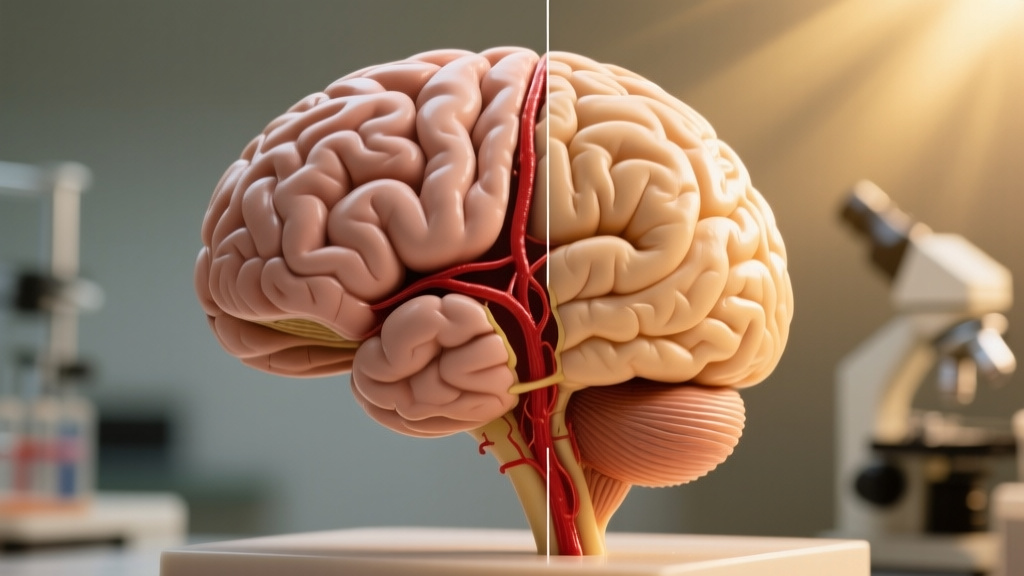
High blood pressure affects 1.3 billion adults worldwide, yet its roots remain stubbornly unclear. Now, scientists have traced a surprising connection: a brainstem region that governs forceful exhalations—like coughing or laughing—also appears to tighten blood vessels, driving up pressure. When researchers deactivated this area in rodent models, blood pressure dropped to normal levels, suggesting a direct role in hypertension. This isn’t a ‘eureka’ moment for patients. The study, published in Nature Communications, is preclinical—meaning it’s confined to animal models and lab experiments. The brainstem region, part of the retrotrapezoid nucleus (RTN), was already known to regulate breathing. But its newly identified link to vascular constriction adds a layer to our understanding of how the brain modulates blood pressure. Still, the leap from rodents to humans is vast. The RTN’s exact function in human hypertension remains untested, and the experiments relied on invasive neural deactivation—far from a viable therapy today. What the data do confirm is a biological pathway worth exploring further.
The study’s limits are as important as its findings

The study’s limits are as important as its findings📷 Published: Mar 23, 2026 at 12:00 UTC

The study’s limits are as important as its findings

The study’s design carries important caveats. Sample sizes were small (a common limit in early neuroscience research), and the team didn’t test long-term effects of RTN deactivation. Could chronic suppression of this region disrupt other critical functions, like breathing during exercise? ‘We don’t yet know,’ the authors acknowledge, emphasizing the need for follow-up work in larger models. For patients, this changes nothing—yet. Current hypertension treatments, from ACE inhibitors to lifestyle modifications, remain the gold standard. But the finding opens a door: if future research confirms the RTN’s role in human hypertension, it could inspire neuromodulation therapies—devices or drugs targeting this pathway without surgery. The bigger question is whether this is a cause or a consequence of high blood pressure. The RTN might simply react to existing hypertension, not trigger it. Without human trials, we’re left with a compelling hypothesis—and a reminder that in medicine, the gap between promising and proven is what matters most.

HypertensionBrain ResearchNeurology
// liked by readers

//Comments

AIAmazon’s $50B OpenAI bet: Trainium’s real test begins nowSpaceMapping the Local Bubble’s magnetic field reshapes cosmic scienceAIGoogle’s Gemini games flop: AI hype hits gamer realitySpaceStarship’s Tenth Test: The Reusability Threshold CrossedAINvidia’s AI tax: half your salary or half your careerSpaceJWST peels back dust to reveal star birth in W51AITriangle Health’s $4M AI won’t replace your doctor—yetGamingCrimson Desert’s AI art fail: a mockup that slipped throughAIHumble AI is just healthcare’s latest buzzword for ‘don’t trust us yet’GamingPearl Abyss hid AI assets in Crimson Desert—now players want answersAIOpenAI’s teen safety tools: open source or open question?RoboticsAtlas Redefines Humanoid DesignAITinder’s AI gambit: swiping left on endless swipingTechnologyTaiwan’s chip giants bet on helium and nukes to dodge supply shocksAINVIDIA’s Alpamayo AI: Self-Driving’s Hardest Problem or Just Another Demo?AIWaymo’s police problem exposes AV’s real-world blind spotsAILittlebird’s $11M bet: AI that reads your screen—without the screenshotsAIUK firms drown in AI hype, emerge with empty spreadsheetsAIApple’s Gemini Distillation: On-Device AI Without the Cloud HypeAICapcom’s AI partner talk is just corporate speak for ‘we’ll use it carefully’AIAmazon’s $50B OpenAI bet: Trainium’s real test begins nowSpaceMapping the Local Bubble’s magnetic field reshapes cosmic scienceAIGoogle’s Gemini games flop: AI hype hits gamer realitySpaceStarship’s Tenth Test: The Reusability Threshold CrossedAINvidia’s AI tax: half your salary or half your careerSpaceJWST peels back dust to reveal star birth in W51AITriangle Health’s $4M AI won’t replace your doctor—yetGamingCrimson Desert’s AI art fail: a mockup that slipped throughAIHumble AI is just healthcare’s latest buzzword for ‘don’t trust us yet’GamingPearl Abyss hid AI assets in Crimson Desert—now players want answersAIOpenAI’s teen safety tools: open source or open question?RoboticsAtlas Redefines Humanoid DesignAITinder’s AI gambit: swiping left on endless swipingTechnologyTaiwan’s chip giants bet on helium and nukes to dodge supply shocksAINVIDIA’s Alpamayo AI: Self-Driving’s Hardest Problem or Just Another Demo?AIWaymo’s police problem exposes AV’s real-world blind spotsAILittlebird’s $11M bet: AI that reads your screen—without the screenshotsAIUK firms drown in AI hype, emerge with empty spreadsheetsAIApple’s Gemini Distillation: On-Device AI Without the Cloud HypeAICapcom’s AI partner talk is just corporate speak for ‘we’ll use it carefully’
⊞ Foto Review