
TI + NVIDIA’s robot push: Demo vs. deployment reality
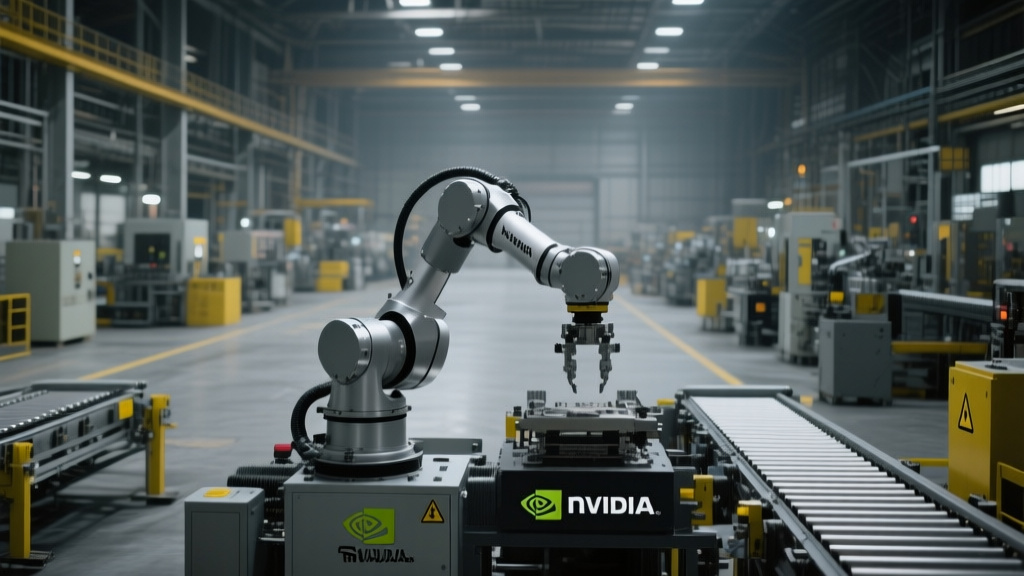
TI + NVIDIA’s robot push: Demo vs. deployment reality📷 Published: Mar 25, 2026 at 12:00 UTC
- ★TI bridges NVIDIA AI compute to real-world robotics
- ★Deterministic control vs. demo flexibility tradeoff
- ★Scale-up friction: safety certs and hardware limits
Texas Instruments and NVIDIA’s new partnership isn’t just another AI-powered robotics handshake. It’s a rare attempt to drag physical AI compute out of controlled demos and into environments where a misfiring actuator isn’t just embarrassing—it’s a safety incident. TI’s role is critical here: providing the deterministic control, sensing, and power management that NVIDIA’s AI models lack when rubber meets metal, grease, and 12-hour shifts.
The collaboration targets the gap between demonstrated capability and deployable reliability. NVIDIA’s Isaac platform excels at simulation and perception, but real-world robots need TI’s precision timing, fail-safes, and power efficiency to avoid becoming expensive paperweights when Wi-Fi drops or a motor overheats. Early signals suggest the focus is on industrial arms and mobile manipulators—areas where latency isn’t just a nuisance, but a dealbreaker.
Yet the press release glosses over the hard part: certification. A robot that works in a polished trade show video isn’t the same as one that passes ISO 13849 or survives a year in an automotive plant. TI’s components might solve the control problem, but the partnership’s success hinges on whether integrators can afford the recertification costs for every new AI-driven ‘upgrade.’
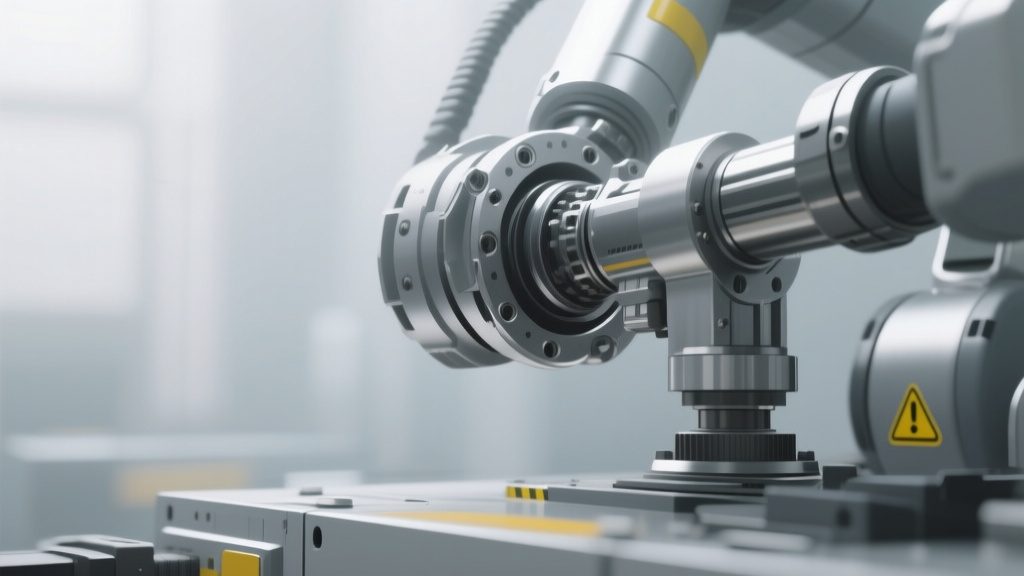
The partnership’s real test isn’t the lab—it’s the factory floor at 3 AM.📷 Published: Mar 25, 2026 at 12:00 UTC
The partnership’s real test isn’t the lab—it’s the factory floor at 3 AM.
The use cases here are predictably industrial—logistics, manufacturing, and inspection—but the real constraint isn’t ambition, it’s hardware limits. NVIDIA’s edge AI modules demand power and cooling that TI’s efficiency gains only partially offset. A mobile manipulator running Isaac SIM on a Jetson Orin might handle dynamic obstacles in a warehouse, but its battery life under real-world loads remains an open question. TI’s motor drivers and power ICs help, but physics hasn’t been repealed: payload, speed, and uptime still trade off against each other.
Then there’s the scale-up friction. Retrofitting existing robots with this stack requires rewiring control architectures—a non-starter for brownfield sites. Greenfield deployments face their own hurdles: training workers to trust (and debug) AI-driven systems that behave differently than PLC-based predecessors. The community’s reaction has been cautiously optimistic, with engineers noting that TI’s real-time control is a missing link—but also that NVIDIA’s ‘end-to-end’ claims ignore the messy middle where integrators stitch everything together.
For all the talk of ‘accelerating deployments,’ the bottleneck isn’t compute. It’s the unsexy work of making AI-controlled robots boringly reliable—the kind of reliability that doesn’t need a press release.
Another demo where the robot gracefully avoids a fallen box—yet somehow, the same system freezes when a forklift backfires in the real world. The gap between ‘look, no hands!’ and ‘works Tuesday at 2 PM’ remains the industry’s favorite magic trick.