
NASA’s $20B Moon base isn’t just a base—it’s a foothold
NASA’s $20B Moon base isn’t just a base—it’s a foothold📷 Published: Mar 27, 2026 at 24:06 UTC
- ★Lunar base cost rivals ISS budget
- ★Nuclear Mars craft accelerates timeline
- ★Permanent presence shifts exploration math
NASA Administrator Jared Isaacman didn’t just announce a lunar base during Tuesday’s Ignition event—he quantified what ‘enduring presence’ actually means. The $20 billion price tag, nearly matching the inflation-adjusted cost of the International Space Station, isn’t expenditure; it’s investment in infrastructure that rewrites the economics of deep-space missions. Every subsequent Mars or asteroid expedition will piggyback on this fixed asset, turning what were once one-off Apollo-style landings into repeatable logistics chains. Isaacman’s nuclear-powered Mars spacecraft, revealed in the same breath, isn’t a sideshow. It’s a hedge: if the Moon base falters, Mars becomes the fallback timeline, compressing the agency’s horizon from decades to years. The Verge confirms that both initiatives share overlapping engineering teams, suggesting NASA is hedging its bets against congressional fickleness or commercial partner dropout.
The real signal: space infrastructure is leaving the drawing board📷 Published: Mar 27, 2026 at 24:06 UTC
The real signal: space infrastructure is leaving the drawing board
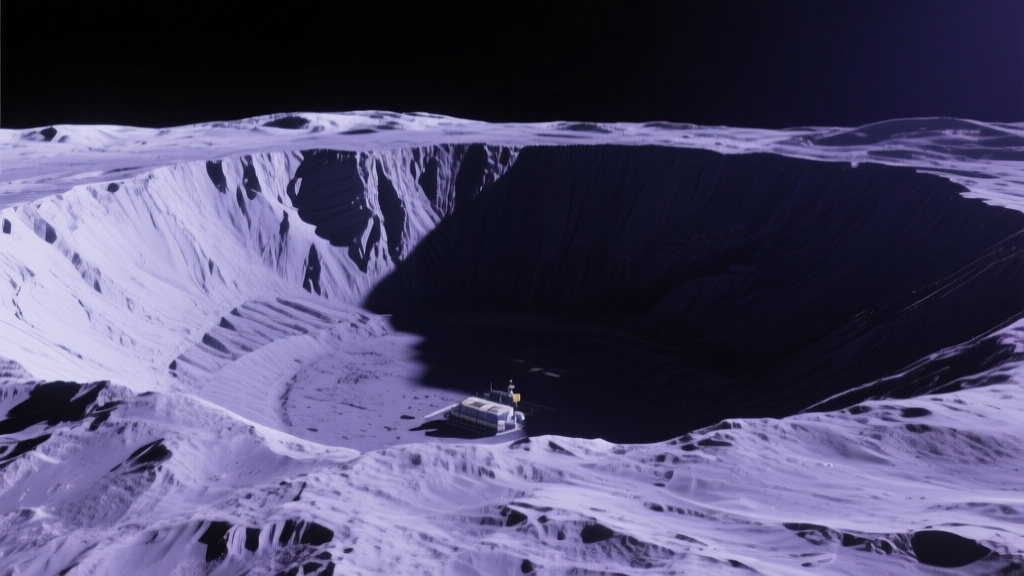
What’s missing from the press release is the operational granularity. A permanent lunar base isn’t just a habitat; it’s a launchpad, refueling depot, and research lab rolled into one. Current Artemis architecture treats the Moon as a destination; Isaacman’s vision treats it as a stepping stone. The base’s location—likely Shackleton Crater—matters: permanent shadow equals water ice, which equals propellant, which equals cheaper Mars launches. The nuclear Mars craft, meanwhile, sidesteps the tyranny of Earth’s gravity well; a direct ascent from the Moon slashes fuel needs by 60%. This isn’t futurism—it’s logistics. Yet the $20 billion line item contains hidden cliffs: Congress has historically balked at single-installation costs exceeding $15 billion (see: James Webb), and commercial partners like SpaceX remain wildcard variables. If either fails, the entire architecture unravels. The Verge notes that Isaacman’s timeline—base operational by 2032—assumes uninterrupted funding, an assumption that has doomed previous grand visions like the Space Exploration Initiative.
The bottleneck isn’t technology; it’s congressional appetite. The nuclear Mars craft, for instance, could fly tomorrow—it’s the same Kilopower reactor that NASA has been testing since 2018. The base’s habitat modules are direct descendants of Bigelow’s inflatable prototypes. What’s new is the integration: these aren’t standalone projects anymore. They’re nodes in a single economic network, where each success de-risks the next.