
Paperclip sensors: robots get skin, but can they feel?
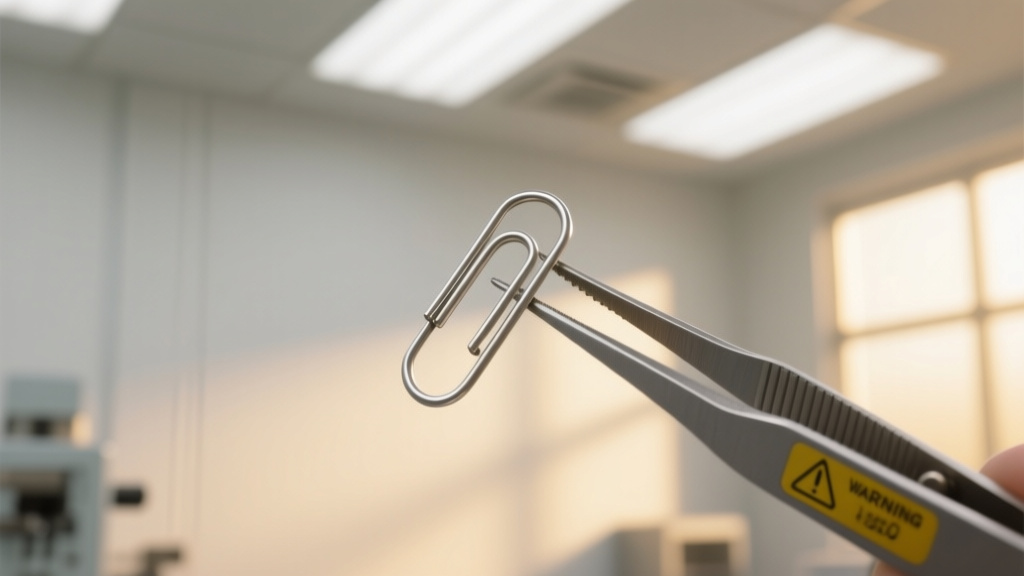
Ultra-macro photography of a matte silver paperclip-sized pressure sensor suspended between titanium tweezers, clean room environment with white📷 Photo by Tech&Space
- ★Tiny pressure sensors mimic e-skin
- ★Demo works—deployment questions remain
- ★Hardware limits cloud real-world use
Huanyu 'Larry' Cheng and his Penn State team have shrunk pressure sensors to the size of a paperclip, promising robots and prosthetics a sense of touch previously confined to science fiction TechXplore. These micro-devices measure force across an area, translating physical pressure into readable electrical signals—effectively granting machines an electronic 'skin.' The demo is polished, even impressive: sensors respond to touch, differentiate textures, and integrate with robotic limbs in controlled settings. Yet the leap from lab bench to factory floor—or battlefield, or hospital—remains vast and largely untested.
Early prototypes operate under strict environmental constraints: consistent temperature, minimal vibration, and near-zero interference from ambient light or electromagnetic noise. These are not conditions most real-world applications endure. The sensors themselves, while tiny, still require onboard power, data processing, and robust connectivity—all of which add bulk and complexity to systems already constrained by payload and battery life. The team claims scalability, but scaling anything from paperclip-sized prototypes to thousands of units across uneven surfaces invites failure modes rarely mentioned in promo videos.
The marketing language is seductive: 'robots that feel,' 'prosthetics with human-like sensitivity.' The reality, as always, leans toward incremental capability rather than transformative breakthrough. These sensors can detect pressure, yes—but interpreting that data into meaningful feedback (slip, texture, temperature) requires algorithmic maturity that lags far behind the hardware demo.
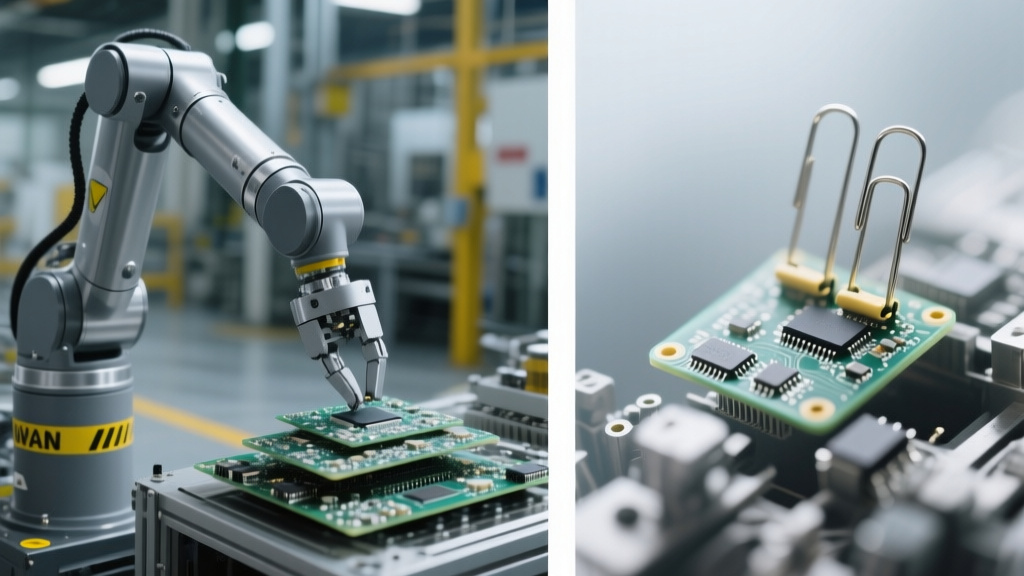
Split composition with an industrial robotic arm in gunmetal grey on the left handling delicate circuit boards, and on the right a macro view of📷 Photo by Tech&Space
From lab to factory floor: the gap that persists
So who actually needs this outside a controlled demo? Potential use cases do exist: industrial robotics handling fragile materials, surgical prosthetics requiring fine tactile feedback, or hazardous environment exploration where human presence is risky. Each application demands different sensor density, durability, and integration—none of which have been demonstrated at scale. The hardware constraints are equally formidable: power consumption, signal fidelity over time, and resistance to wear or corrosion all pose challenges that lab conditions simply sidestep.
Cost and certification present additional friction. Pressure sensors of this caliber require precision manufacturing, and integrating them into flexible, bio-compatible substrates raises production costs exponentially. Certification for medical or safety-critical applications adds another layer of regulatory delay, often overlooked in tech coverage. Even if mass production were feasible, reliability over months or years remains speculative—real-world deployment would expose weaknesses in material fatigue, signal drift, or environmental sensitivity.
The community reaction is cautiously optimistic, but grounded. Developers and engineers note the potential while acknowledging the gap between demo readiness and product viability. For now, the electronic skin remains a compelling prototype—one that highlights both the progress and persistent limitations of giving machines a sense of touch. The true test begins not when the sensors work in a lab, but when they work consistently, affordably, and safely where humans actually need them.
For all the noise, the actual story is: can these sensors survive a single shift on a factory floor, let alone a year in a prosthetic limb? Until durability and cost are addressed, the electronic skin remains a lab curiosity—one that looks great in a demo, but fades quickly under the glare of real-world conditions.