
Chicago’s robot tutors teach SEL without the human act
Chicago’s robot tutors teach SEL without the human act📷 Published: Apr 16, 2026 at 12:09 UTC
- ★Non-anthropomorphic robots teach empathy in classrooms
- ★Direct communication avoids misleading children
- ★Hardware limits may hinder national scaling
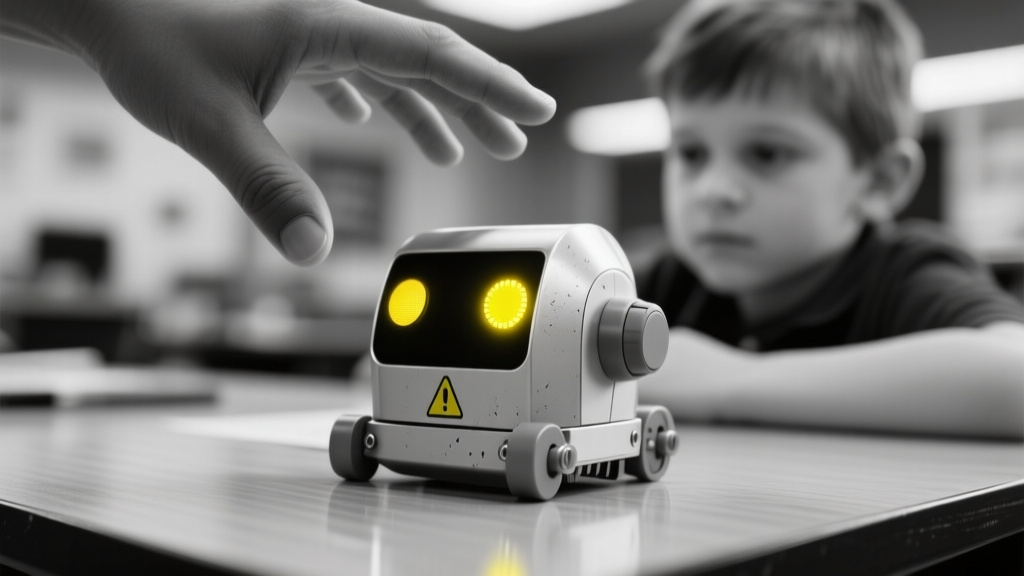
A fourth-grade classroom in Chicago’s South Side is the unlikely proving ground for a quiet revolution in educational robotics. Unlike the chatty, emotive robots that dominate tech demos, these tutors speak in flat, factual tones—no backstories, no fake smiles, no pretense of humanity. The goal isn’t to trick children into thinking they’re interacting with a peer but to teach Social-Emotional Learning (SEL) skills like conflict resolution and problem-solving through structured, evidence-based methods TechXplore.
Early results suggest the approach works. Teachers report that students engage with the robots’ direct, no-nonsense style, which avoids the uncanny valley while still delivering measurable improvements in SEL outcomes. The robots don’t rely on simulated emotions or anthropomorphic traits, a departure from the industry’s usual obsession with making machines feel human. Instead, they use plain language to guide discussions, a strategy that aligns with research on transparency in child-robot interactions IEEE Spectrum.
But the real question isn’t whether these robots can teach SEL—it’s whether they can do it outside a controlled classroom. The demo videos show flawless interactions, but real-world deployment introduces variables: crowded spaces, unpredictable student behavior, and the need for long-term reliability. The hardware itself, while functional, isn’t yet optimized for mass production, raising concerns about cost and durability at scale.
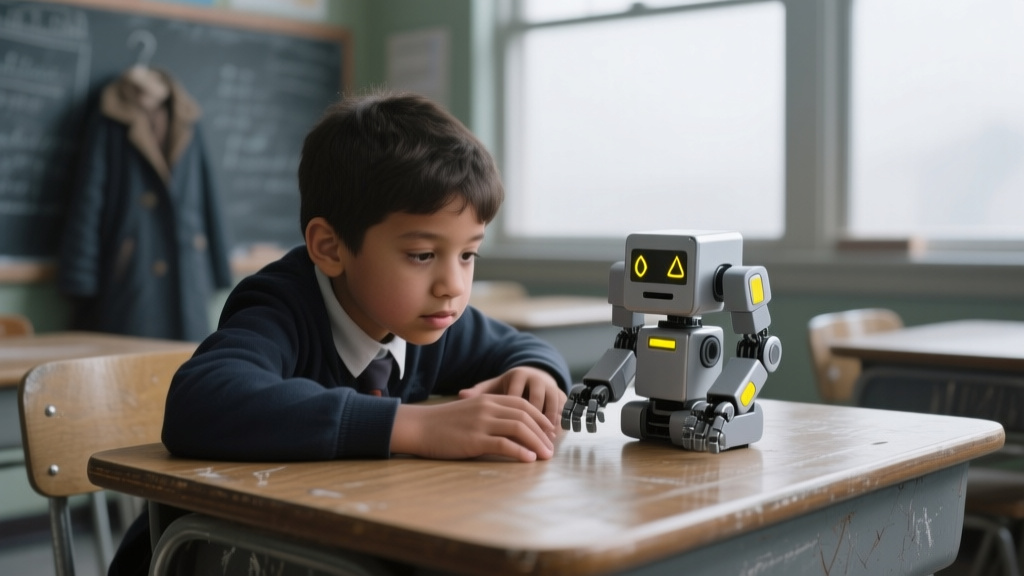
The real test: Can plain-spoken robots outlast the demo hype?📷 Published: Apr 16, 2026 at 12:09 UTC
The real test: Can plain-spoken robots outlast the demo hype?
The robots’ design reflects a growing skepticism toward the “human-like” approach in educational robotics. Studies show that children often prefer straightforward interactions over forced anthropomorphism, which can create confusion or false expectations MIT Technology Review. By stripping away the pretense, these tutors may actually foster more authentic learning experiences. Yet, the lack of a named developer or company behind the project raises red flags. Without transparency about the technology’s origins, educators and policymakers may hesitate to adopt it widely.
Hardware constraints further complicate the picture. The robots’ battery life, processing power, and sensory capabilities are likely tailored for short, structured sessions—fine for a demo but potentially limiting in a full school day. Scaling up would require addressing these limitations while keeping costs low enough for public schools to afford. Certification for child safety adds another layer of friction, as regulatory standards for educational robots remain inconsistent across states EdSurge.
The broader implication is clear: if these robots succeed, they could redefine how SEL is taught in schools. But success hinges on more than just pedagogical effectiveness. It requires solving the practical challenges of deployment, from hardware durability to regulatory compliance, before the demo hype fades into reality.
For all the noise about AI and robotics in education, the real bottleneck may not be the technology itself but the infrastructure to support it. Can these robots operate reliably in underfunded schools? Will teachers embrace them without extensive training? And who, exactly, is liable when a child’s SEL lesson goes off-script?