
Gotistobart’s survival edge: real progress or trial spin?
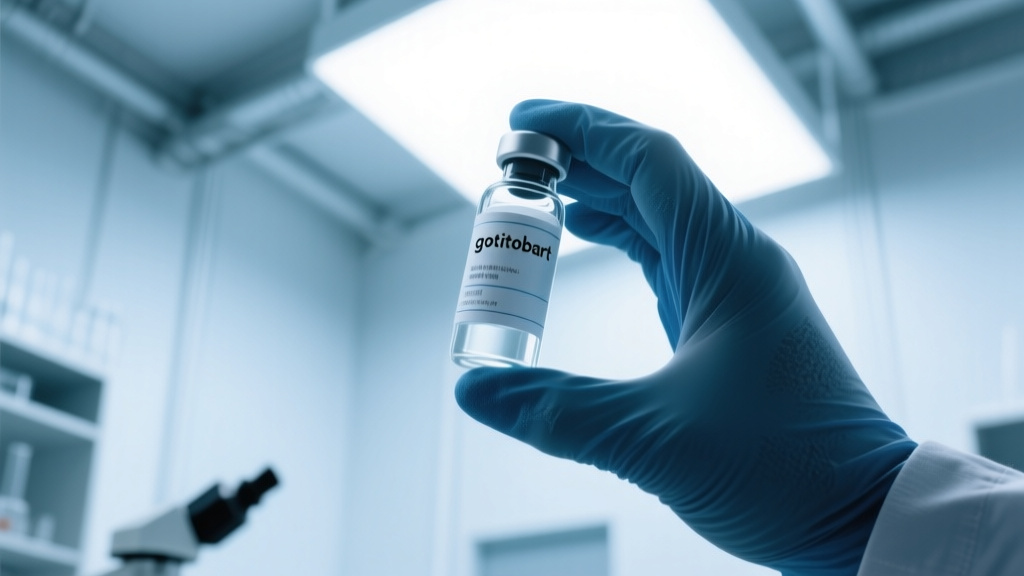
Gotistobart’s survival edge: real progress or trial spin?📷 Published: Mar 27, 2026 at 15:07 UTC
- ★Gotistobart beats docetaxel in resistant squamous NSCLC
- ★Phase 3’s stage 1 hints at survival gains—no pivot yet
- ★CTLA-4’s pH-sensitivity: clever tweak or incremental play?
The PRESERVE-003 trial’s stage 1 dropped a data point that oncologists and pharma watchers will parse carefully: gotistobart, a pH-sensitive anti-CTLA-4 agent, showed encouraging overall survival in patients with metastatic squamous non-small cell lung cancer (NSCLC) whose tumors resisted immunochemotherapy. The comparator? Docetaxel, a chemotherapy workhorse so unglamorous it’s become the control-group punching bag for novel agents.
The catch? This was non-pivotal—a stage 1 readout in a phase 3 trial, meaning no regulatory decisions hinge on it. The trial’s design also excluded patients with actionable genomic alterations, a fast-growing subset where targeted therapies already outperform broad immunotherapies. So while the survival signal is real, the patient population is a shrinking niche.
Gotistobart’s twist—a pH-sensitive mechanism to (theoretically) reduce systemic toxicity—echoes a familiar playbook: tweak the delivery, not the target. CTLA-4 inhibition isn’t new; ipilimumab’s 2011 approval proved that. The question isn’t whether pH-sensitivity works in a petri dish, but whether it translates to meaningful durability in a real-world setting where tumors evolve resistance faster than trials can adapt.

A non-pivotal trial’s ‘encouraging’ results leave room for skepticism—and rival strategies📷 Published: Mar 27, 2026 at 15:07 UTC
A non-pivotal trial’s ‘encouraging’ results leave room for skepticism—and rival strategies
For Bristol Myers Squibb (which acquired gotistobart’s developer in 2023), this is a strategic hedge. Docetaxel’s side effects are brutal, and checkpoint inhibitors have plateaued in squamous NSCLC. A ‘less toxic’ CTLA-4 agent could carve out a second-line niche, but the bar is high: Merck’s Keytruda + chemo already dominates first-line treatment, leaving scraps for late-stage contenders.
The developer community’s reaction? GitHub threads on the trial’s methodology focus on two gaps: the lack of biomarker stratification (a red flag in 2026) and the pH-sensitivity claim’s preclinical vs. clinical delta. As one bioinformatician noted, ‘pH-sensitive’ sounds great until you realize tumor microenvironments are chaotic—a reality often lost in press releases.
The bigger picture? This is immunology’s ‘me-too plus’ moment. Gotistobart isn’t a paradigm shift; it’s a refinement. The real test comes in stage 2, when the trial’s adaptive design either confirms the survival bump or reveals it as noise in a small, heavily pre-treated cohort.
Here’s the unasked question: If pH-sensitivity is the key, why hasn’t it worked in every other tumor type where CTLA-4 flopped? Or is this just another way to dress up incrementalism as innovation?