
AI’s Copyright Chaos Threatens Space Exploration Data
AI’s Copyright Chaos Threatens Space Exploration Data📷 Published: Apr 15, 2026 at 10:20 UTC
- ★AI-generated datasets risk ownership disputes
- ★NASA and ESA face legal uncertainty in training models
- ★Public domain space data may become legally contested
In 2023, NASA’s Jet Propulsion Laboratory quietly paused a project using AI to analyze Martian terrain data after legal advisors flagged copyright concerns. The issue wasn’t the raw images—those remain public domain—but the AI-generated annotations derived from them. According to available information, similar disputes have emerged at the European Space Agency, where researchers using AI to classify exoplanet signals now face questions about who owns the resulting catalogs: the scientists, the AI developers, or the original data providers.
The problem extends beyond academic institutions. Private companies like SpaceX and Blue Origin rely on AI to process vast amounts of satellite imagery, but early signals suggest these outputs may not be protected under existing copyright frameworks. A 2024 report from the U.S. Copyright Office explicitly excluded AI-generated works from protection unless a human made “significant creative contributions,” leaving space agencies and startups in legal limbo. The ambiguity threatens international collaborations, where data-sharing agreements assume clear ownership rights.
At stake isn’t just legal paperwork. Space exploration depends on the free flow of data—from telescope observations to rover telemetry. If AI-generated derivatives become legally contested, the community is responding with calls for urgent policy updates. The European Union’s AI Act, for example, includes provisions for “high-risk” AI systems but stops short of addressing copyright in scientific outputs.

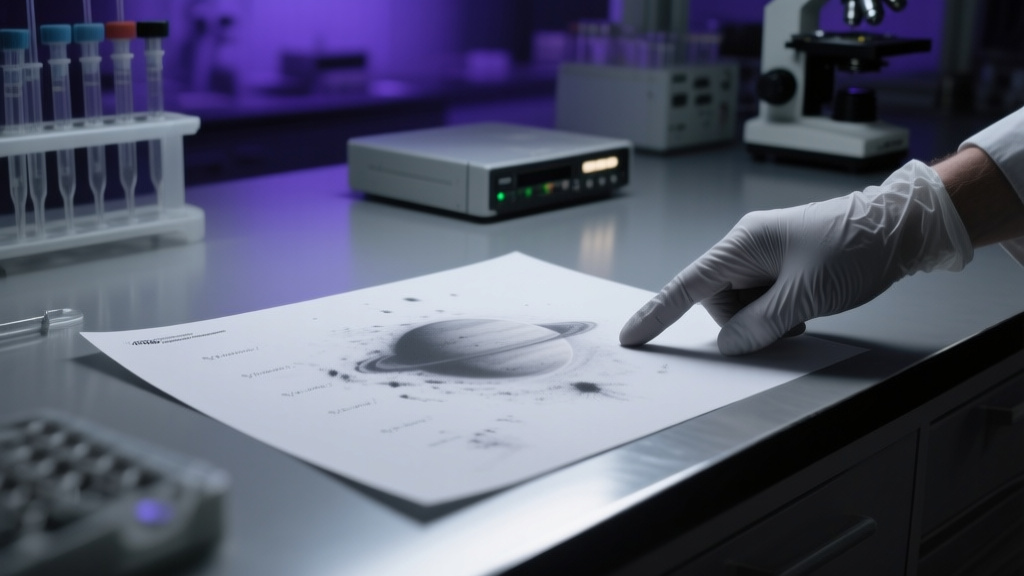
The legal ambiguity of AI outputs could stall critical space research collaborations📷 Published: Apr 15, 2026 at 10:20 UTC
The legal ambiguity of AI outputs could stall critical space research collaborations
The scientific significance is clear: space research thrives on reproducibility and open access. When AI tools transform raw data into new insights—like identifying geological formations or atmospheric patterns—the resulting outputs must remain usable by the global research community. Yet current copyright law treats these outputs as either “machine-generated” (no protection) or “human-authored” (protected), with no middle ground. This binary fails to account for the collaborative nature of modern space science, where AI acts as a co-pilot rather than a sole creator.
Mission context reveals a deeper tension. NASA’s Artemis program, for instance, plans to use AI to analyze lunar surface data in real time, but it’s possible that the resulting maps and hazard assessments could become entangled in legal disputes. The same applies to ESA’s Gaia mission, which relies on AI to process billions of stars—data that could be locked behind copyright claims if courts rule in favor of restrictive interpretations. The timeline for resolution is unclear, but the next steps are concrete: agencies are lobbying for exemptions, while legal scholars propose a new “scientific use” doctrine for AI-generated works.
For all the noise, the actual story is about preserving the integrity of space exploration. The real bottleneck may not be the technology itself, but the legal frameworks struggling to keep pace. Without intervention, the risk isn’t just stalled research—it’s the fragmentation of a global scientific ecosystem built on shared knowledge.
In other words, the tools designed to accelerate discovery could become its biggest obstacle. Every contested dataset, every paused project, represents a delay in answering fundamental questions about our universe—questions that depend on the free exchange of information. The scale of the problem isn’t just legal; it’s existential for collaborative science.