
One antenna, two worlds: robot sniffs out reality📷 Published: Apr 15, 2026 at 08:17 UTC
- ★Insect-inspired robot tracks odors with one sensor
- ★Indoor-outdoor accuracy despite hardware failure
- ★Research team spans three Japanese universities
A robot that can still track odors after losing half its sensing capability sounds like a marketing bullet point—until you realize insects do this every day. Researchers from the National Institute of Informatics, Science Tokyo, and Tohoku University have built a bio-inspired system that mimics insect antennae, maintaining consistent accuracy indoors and out even when one of its two sensors fails TechXplore. The robot doesn’t just tolerate failure; it treats redundancy as a feature, not a backup plan.
The demo video likely shows a controlled environment with predictable airflow and clean surfaces, but the real test begins when dust clogs the remaining sensor or wind gusts disrupt odor plumes. According to available information, the system appears to rely on insect-like casting movements—zigzagging to reacquire a scent trail—rather than brute-force sensor power IEEE Spectrum. That’s a clever workaround, but it also means speed and efficiency drop when the environment gets messy.
For all the talk of outdoor deployment, no one mentions how long the robot can operate on a single charge or how it handles rain, humidity, or temperature swings. These aren’t minor details; they’re the difference between a lab curiosity and a tool that fire departments or environmental agencies might actually use. The hardware limits aren’t just missing from the press release—they’re the elephant in the room every time a robotics demo claims real-world readiness.
Demo finished. Reality starts with battery life and dust📷 Published: Apr 15, 2026 at 08:17 UTC
Demo finished. Reality starts with battery life and dust
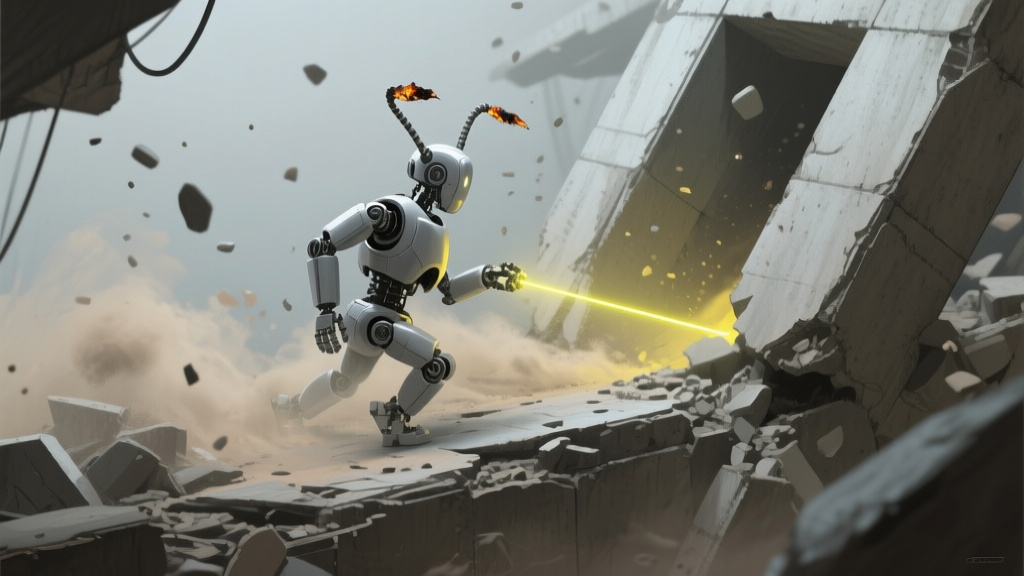
The genuine use cases are compelling but narrow. Search-and-rescue teams could deploy these robots in collapsed buildings where GPS fails and visibility is zero, relying on scent to locate survivors. Environmental monitoring agencies might use them to track chemical leaks in industrial zones, where odor plumes are stronger than visual cues. But both scenarios demand more than just odor tracking—they require ruggedization, long battery life, and the ability to navigate debris or uneven terrain without getting stuck.
Scale-up friction isn’t just about cost; it’s about certification. A robot that operates in hazardous environments needs to meet safety standards for explosive atmospheres, electromagnetic interference, and fail-safe protocols. The current prototype, impressive as it is, hasn’t been tested against any of these. There’s also the question of integration: will this system play nicely with existing drone fleets or ground robots, or is it a standalone solution that requires its own infrastructure?
The real signal here isn’t that the robot works with one antenna—it’s that the team designed for failure from the start. That’s a rare and valuable mindset in robotics, where most systems treat redundancy as a luxury. But mindset alone won’t get this out of the lab. The next step isn’t another demo; it’s a field test where the robot has to prove it can handle the unpredictability of the real world, not just the controlled chaos of a research facility.
In other words, the robot can find the scent of a pizza in a lab, but can it find a missing hiker in a forest during a storm? That’s the kind of question that turns a polished demo into a product—or a footnote.