
Back to Home
Spacedb#2294

LeoLabs’ Delta shifts space surveillance from debris to threats

(4d ago)
Houston, TX
spacenews.com
LeoLabs’ Delta shifts space surveillance from debris to threats

LeoLabs’ Delta shifts space surveillance from debris to threats📷 Published: Apr 11, 2026 at 06:24 UTC

  • Military-grade tool detects adversarial space activity beyond collisions
  • Expands LeoLabs’ role in commercial space domain awareness
  • No public details on classification or data-sharing protocols

Space domain awareness has long focused on one existential risk: collisions. LeoLabs, a company built on mapping orbital debris with radar precision, now explicitly targets another—intentional interference. Their new tool, Delta, marks the first commercial product designed to flag adversarial maneuvers in orbit, not just accidental ones.

The shift is subtle but seismic. Until now, LeoLabs’ public-facing platform provided collision warnings for satellite operators, a service grounded in transparency. Delta, by contrast, is military-exclusive, its capabilities described only in broad strokes: identifying ‘unusual patterns’ that suggest hostile intent. No specifics on what constitutes a ‘pattern,’ no examples of detected incidents—just the quiet implication that space is no longer a passive domain.

This aligns with a larger trend. The U.S. Space Force’s 2023 budget earmarked $1.3 billion for ‘tactical ISR’—intelligence, surveillance, and reconnaissance in orbit. Delta isn’t a government program, but it’s the first commercial tool positioning itself as a force multiplier for those efforts. The question isn’t whether space is militarized, but how deeply private companies will embed in that infrastructure.
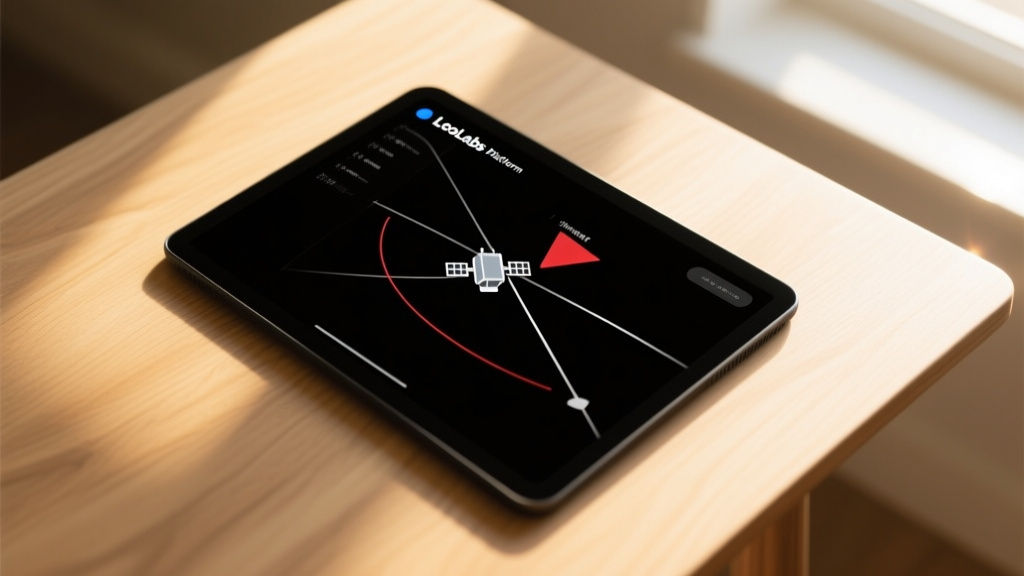
The line between civilian tracking and defense intelligence just blurred

The line between civilian tracking and defense intelligence just blurred📷 Published: Apr 11, 2026 at 06:24 UTC

The line between civilian tracking and defense intelligence just blurred

The scientific community has watched this evolution with measured concern. While collision avoidance relies on shared data (e.g., NASA’s CSpOC feeds), adversarial tracking thrives on secrecy. Delta’s closed-loop design—data in, alerts out, no public audit—raises questions about false positives in an environment where misinterpretation could escalate tensions. A ‘suspicious maneuver’ to one operator might be a routine station-keeping burn to another.

LeoLabs hasn’t disclosed whether Delta integrates with existing military systems like the Space Surveillance Network, or if it operates as a standalone layer. That ambiguity matters. If Delta’s algorithms flag an anomaly, who verifies it? The tool’s value proposition—speed—could become its liability if unchecked alerts trigger unnecessary responses.

For now, the company frames this as an extension of its space safety mission. Yet the pivot to defense applications suggests a calculated bet: that governments will pay premiums for proprietary insights into orbital behavior. The real test isn’t technical, but geopolitical. Will Delta’s users treat it as a deterrent or a provocation?

The responsible question isn’t whether we should monitor threats in space, but how to do so without turning every anomaly into a casus belli. Exploration demands trust; surveillance, by design, erodes it.

LeoLabsSpace Debris TrackingEarth Observation
// liked by readers

//Comments

AIAmazon’s $50B OpenAI bet: Trainium’s real test begins nowSpaceMapping the Local Bubble’s magnetic field reshapes cosmic scienceAIGoogle’s Gemini games flop: AI hype hits gamer realitySpaceStarship’s Tenth Test: The Reusability Threshold CrossedAINvidia’s AI tax: half your salary or half your careerSpaceJWST peels back dust to reveal star birth in W51AITriangle Health’s $4M AI won’t replace your doctor—yetSpaceAI’s Copyright Chaos Threatens Space Exploration DataAIHumble AI is just healthcare’s latest buzzword for ‘don’t trust us yet’GamingCrimson Desert’s AI art fail: a mockup that slipped throughAIOpenAI’s teen safety tools: open source or open question?GamingPearl Abyss hid AI assets in Crimson Desert—now players want answersAITinder’s AI gambit: swiping left on endless swipingRoboticsAtlas Redefines Humanoid DesignAINVIDIA’s Alpamayo AI: Self-Driving’s Hardest Problem or Just Another Demo?RoboticsOne antenna, two worlds: robot sniffs out realityAIWaymo’s police problem exposes AV’s real-world blind spotsRoboticsDrone swarms take flight—but not off the demo lot yetAILittlebird’s $11M bet: AI that reads your screen—without the screenshotsTechnologyTaiwan’s chip giants bet on helium and nukes to dodge supply shocksAIUK firms drown in AI hype, emerge with empty spreadsheetsMedicineTelmisartan Boosts Cancer TreatmentAIApple’s Gemini Distillation: On-Device AI Without the Cloud HypeMedicineXaira Unveils X-CellAICapcom’s AI partner talk is just corporate speak for ‘we’ll use it carefully’AIOpenSeeker’s open gambit: Can 11K data points break AI’s data monopoly?AIGimlet Labs Solves AI BottleneckAIHelion Powers OpenAIAINVIDIA’s OpenShell: Security for AI Agents or Just Another Hype Shell?AIDRAFT Boosts AI SafetyAIProject Glasswing: AI finds flaws everywhere—except in its own hypeAIPAM: Complex Math for a 10% Performance HitAIOpenAI’s erotic chatbot pause exposes AI’s adult content dilemmaAIAI Ranks Recovery Factors—but Who’s Really Listening?AIAmazon’s $50B OpenAI bet: Trainium’s real test begins nowSpaceMapping the Local Bubble’s magnetic field reshapes cosmic scienceAIGoogle’s Gemini games flop: AI hype hits gamer realitySpaceStarship’s Tenth Test: The Reusability Threshold CrossedAINvidia’s AI tax: half your salary or half your careerSpaceJWST peels back dust to reveal star birth in W51AITriangle Health’s $4M AI won’t replace your doctor—yetSpaceAI’s Copyright Chaos Threatens Space Exploration DataAIHumble AI is just healthcare’s latest buzzword for ‘don’t trust us yet’GamingCrimson Desert’s AI art fail: a mockup that slipped throughAIOpenAI’s teen safety tools: open source or open question?GamingPearl Abyss hid AI assets in Crimson Desert—now players want answersAITinder’s AI gambit: swiping left on endless swipingRoboticsAtlas Redefines Humanoid DesignAINVIDIA’s Alpamayo AI: Self-Driving’s Hardest Problem or Just Another Demo?RoboticsOne antenna, two worlds: robot sniffs out realityAIWaymo’s police problem exposes AV’s real-world blind spotsRoboticsDrone swarms take flight—but not off the demo lot yetAILittlebird’s $11M bet: AI that reads your screen—without the screenshotsTechnologyTaiwan’s chip giants bet on helium and nukes to dodge supply shocksAIUK firms drown in AI hype, emerge with empty spreadsheetsMedicineTelmisartan Boosts Cancer TreatmentAIApple’s Gemini Distillation: On-Device AI Without the Cloud HypeMedicineXaira Unveils X-CellAICapcom’s AI partner talk is just corporate speak for ‘we’ll use it carefully’AIOpenSeeker’s open gambit: Can 11K data points break AI’s data monopoly?AIGimlet Labs Solves AI BottleneckAIHelion Powers OpenAIAINVIDIA’s OpenShell: Security for AI Agents or Just Another Hype Shell?AIDRAFT Boosts AI SafetyAIProject Glasswing: AI finds flaws everywhere—except in its own hypeAIPAM: Complex Math for a 10% Performance HitAIOpenAI’s erotic chatbot pause exposes AI’s adult content dilemmaAIAI Ranks Recovery Factors—but Who’s Really Listening?
⊞ Foto Review