
Unitree’s Open-Source Humanoid Dataset: Demo vs. Deployment
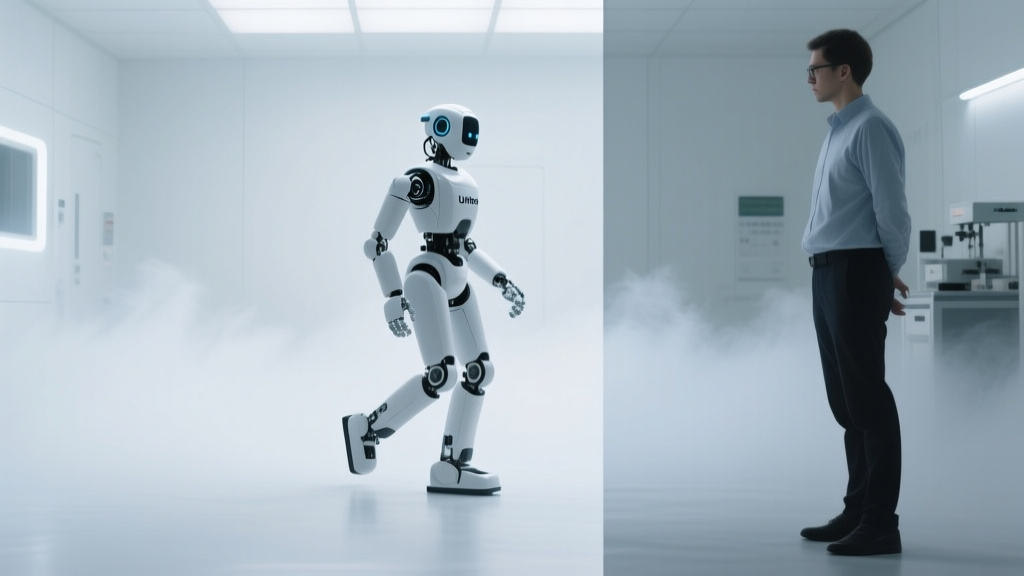
A Unitree humanoid robot is standing in the center of a white, clean-room environment, surrounded by soft atmospheric haze, with gentle diffused📷 Photo by Tech&Space
- ★120GB dataset for humanoid robots
- ★Lab conditions vs. real-world limits
- ★Battery and sensing bottlenecks exposed
Unitree Robotics has released a 120GB open-source dataset for humanoid robots, a rare move in an industry notorious for guarding training data like state secrets. The video showcases choreographed demos—precise steps, balanced turns, obstacle avoidance—all under ideal lighting and flat surfaces. But here’s the catch: the dataset was collected in a controlled lab environment, not a warehouse, sidewalk, or construction site.
The company claims the data will accelerate development of advanced humanoid robots, but the real question is: can these models generalize to unpredictable real-world conditions? Most demos gloss over sensor noise, slippery floors, or dynamic obstacles—factors that routinely trip up even the most polished prototypes. Unitree’s robots, like competitors’ models, still rely on computationally expensive vision systems and lithium-ion batteries that struggle with thermal management under heavy loads.
Reddit’s r/singularity and r/Sino communities picked up on the announcement, but the conversation remained technical, with engineers debating the dataset’s practical utility. One user pointed out that while 120GB sounds impressive, it pales in comparison to the petabytes used to train large language models—raising doubts about whether it’s enough to handle edge cases like stairs, uneven terrain, or human unpredictability.
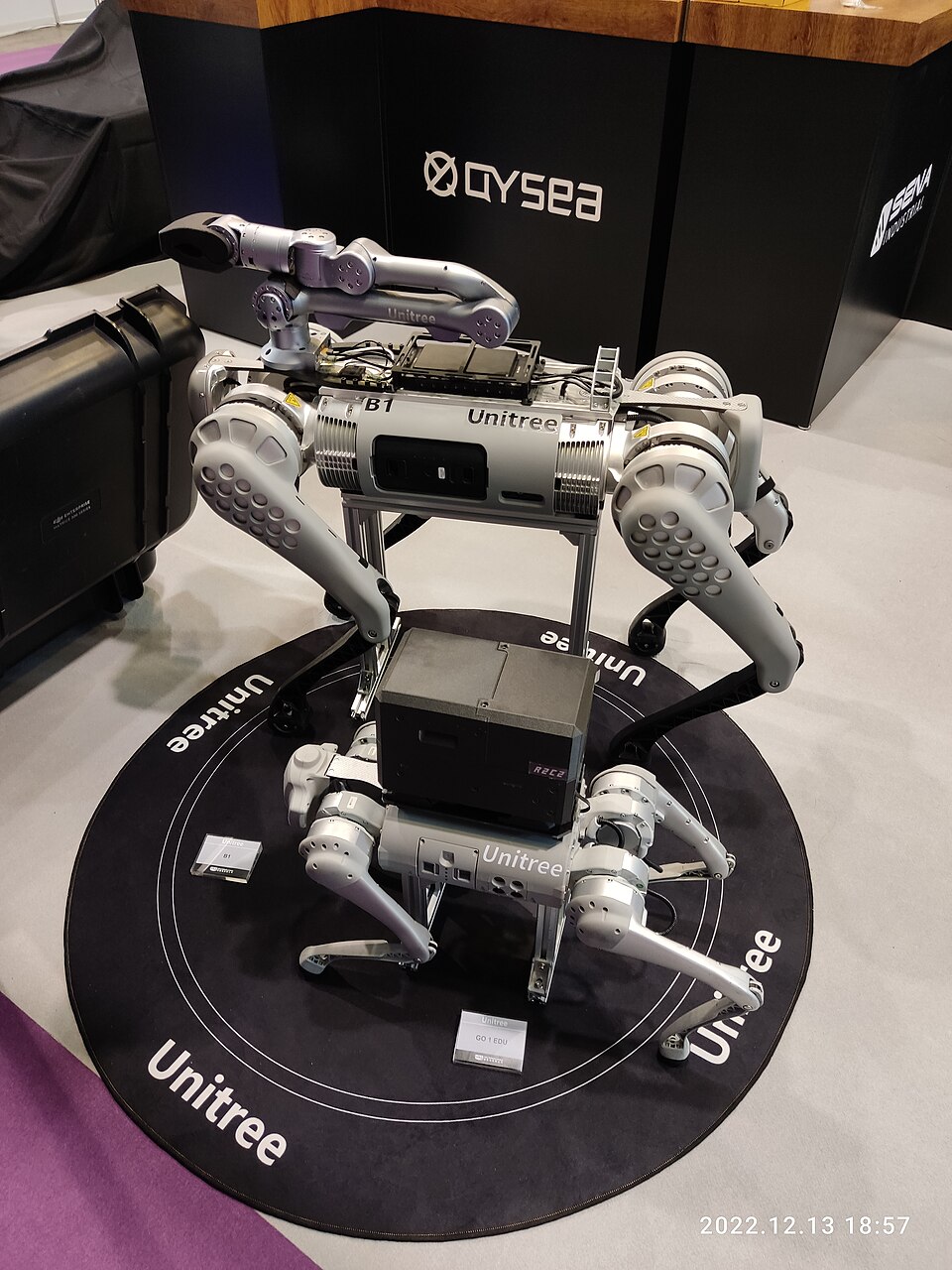
Unitree’s Open-Source Humanoid Dataset: Demo vs. Deployment📷 Photo by Tech&Space
The hardware limits nobody mentions in the demo
For all the talk of ‘high-quality’ data, Unitree hasn’t provided benchmarks for real-world performance—only demo footage. This isn’t unique; nearly every humanoid robot maker falls into the same trap, prioritizing polished choreography over deployable robustness. The hardware limits are glaring: most of these robots can’t operate for more than 60-90 minutes on a single charge, and their payload capacities (usually under 10kg) make them useless for industrial tasks like lifting heavy tools or navigating debris.
The dataset itself is a step forward, but it’s only one piece of the puzzle. Missing are details on how the data was collected, labeled, or validated—key for researchers who need reproducibility. Without addressing these gaps, the open-source gesture risks becoming little more than a marketing tool for showcasing Unitree’s own hardware, rather than a genuine resource for the broader robotics community.
Even if the dataset proves useful in labs, scaling up deployment faces regulatory and reliability hurdles. Certification for humanoid robots in industrial or consumer settings is nearly nonexistent, and safety standards lag far behind the technology. Companies like Boston Dynamics have spent years refining their robots for real-world use, yet their commercial deployments remain limited—mostly confined to controlled environments like factories or research labs.
Will this dataset actually help robots escape the lab, or is it just another shiny distraction from the hardware limits that still plague the field?