
Japan’s robots aren’t stealing jobs—they’re doing the ones humans won’t
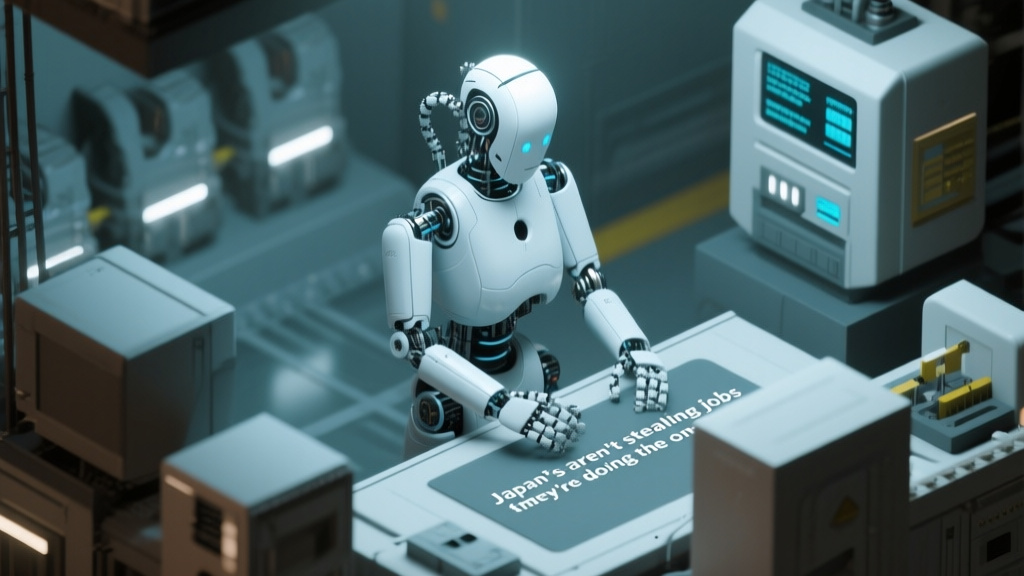
Japan’s robots aren’t stealing jobs—they’re doing the ones humans won’t📷 Source: Web
- ★Labor shortages force real-world robot deployments beyond pilots
- ★Dangerous, repetitive roles lead adoption—not flashy demos
- ★Aging workforce accelerates hardware scaling in 2023–2024
Japan’s robotics push isn’t about replacing workers—it’s about filling roles no one wants to do. Construction sites, elderly care, and logistics hubs are the proving grounds, not the polished trade-show floors. The shift marks a rare case where physical AI transitions from pilot projects to actual deployment, driven by a shrinking workforce and an aging population.
The Ministry of Economy, Trade and Industry (METI) has quietly accelerated funding for robots in sectors where human labor is scarce or unsafe. Unlike the humanoid hype cycles dominating Western coverage, Japan’s focus is on functional, ugly, and often slow machines that handle tasks like lifting patients, sorting hazardous waste, or operating in extreme temperatures. These aren’t the bots of sci-fi—they’re the ones that pass the ‘will this break in a real warehouse?’ test.
Early signals suggest scalability is the priority. Companies like Fanuc and Yaskawa are ramping up production of industrial arms and mobile platforms designed for 24/7 operation in uncontrolled environments. The hardware limits—battery life, payload capacity, and real-time sensing—are being stress-tested in ways no demo video could capture.
The gap between demo-ready bots and dirty, real-world work📷 Source: Web
The gap between demo-ready bots and dirty, real-world work
The real deployment barrier isn’t technical—it’s economic. While robots excel at repetitive tasks, their upfront costs and maintenance demands still outpace human wages in many sectors. A 2023 report from Nomura Research noted that only 12% of Japanese SMEs could justify robotics adoption without subsidies. The gap between ‘this works in a lab’ and ‘this saves money at scale’ remains wide.
Safety and reliability are the silent hurdles. A logistics robot that fails in a controlled Amazon warehouse is one thing; a carebot malfunctioning mid-lift in a nursing home is another. Regulatory frameworks lag behind deployment, with ISO 13482 (safety for personal care robots) still being interpreted differently across prefectures. The community is responding with cautious optimism—engineers note progress, but investors demand proof of real-world ROI, not just technical feasibility.
For all the noise about AI-driven automation, the actual story is simpler: Japan is treating robots as stopgap labor, not replacements. The question isn’t whether they’ll take jobs, but whether they’ll arrive fast enough to offset the 300,000 annual labor shortfall in critical sectors by 2030.
Can these systems handle a decade of 12-hour shifts in a dusty warehouse? Or will the next wave of robots still be stuck in the ‘almost there’ phase, just with better press releases?