
Back to Home
Spacedb#1044

Legged robots could end the slow crawl of planetary exploration
(2w ago)
San Francisco, US
phys.org
Legged robots could end the slow crawl of planetary exploration

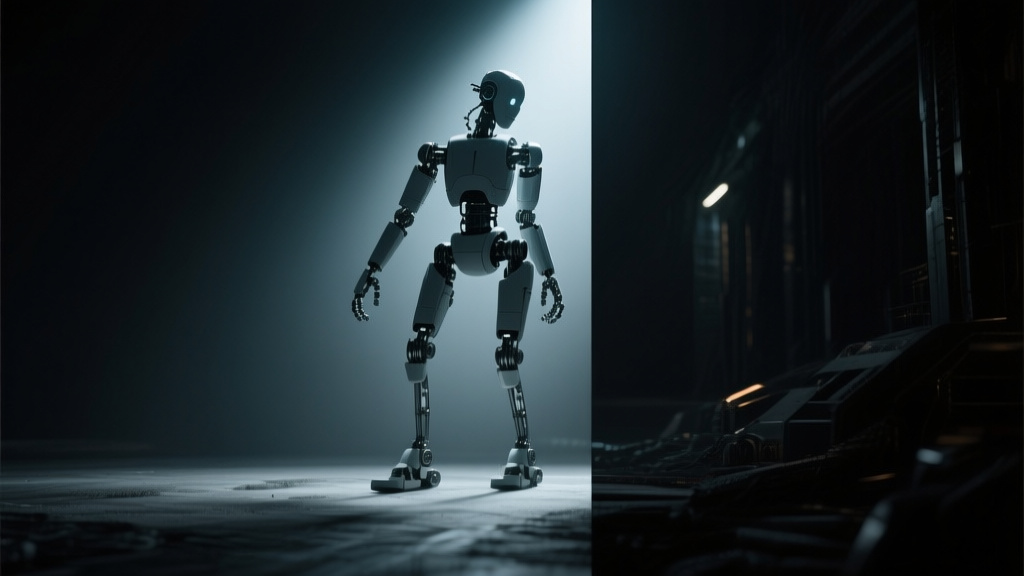
dark cinematic still, single-source dramatic light, split-composition, two contrasting elements side by side, maximum clarity, razor-sharp edges, no📷 Photo by Tech&Space

  • 22-minute Mars communication delays force pre-planned rover ops
  • Legged designs may outpace wheeled rovers on hazardous terrain
  • Energy-efficient mobility could redefine lunar resource mapping

Planetary rovers move at a glacial pace—not by accident, but by necessity. The four to 22-minute delay between Earth and Mars means every command must be pre-scripted, every route pre-vetted for safety. Wheeled rovers like Perseverance prioritize energy conservation and stability over speed, inching across uneven terrain to avoid catastrophic failures. This caution isn’t just operational prudence; it’s a fundamental constraint of remote exploration, where real-time adjustments are impossible and every misstep could terminate a billion-dollar mission.

The tradeoffs are stark. NASA’s Mars rovers average just 0.1–0.2 km/h, with Opportunity holding the record at a painstaking 5.2 km over 14 years. Even the more advanced Perseverance spends days analyzing a single rock sample, its movements dictated by orbital windows and bandwidth limits. Scientists accept these limitations because the alternative—losing a rover to a hidden crevice or power drain—is unthinkable. But what if the hardware itself could adapt faster than the communication lag allows?

Legged robots, like those tested by ETH Zurich’s Space Hopper or NASA’s RASSOR, propose a radical shift: dynamic mobility designed for unpredictability. Unlike wheels, legs can step over obstacles, redistribute weight, and recover from stumbles without human intervention. Early simulations suggest legged systems could traverse lunar regolith or Martian slopes at 2–3× the speed of wheeled rovers, while consuming comparable energy. The question isn’t whether they’re faster—it’s whether they’re reliable enough to justify the risk.

The engineering tradeoff that could unlock faster science

The fresh tread tracks of a slow-moving wheeled rover stretching across cold grey lunar regolith, forming a short geometric arc that covers only a📷 Photo by Tech&Space

The engineering tradeoff that could unlock faster science

The scientific significance lies in what faster traversal enables. On the Moon, where NASA’s Artemis program aims to establish a sustainable human presence, legged robots could accelerate the search for water ice in permanently shadowed craters. A rover that covers 500 meters in a lunar day instead of 200 meters doesn’t just save time—it expands the viable landing zones for future missions. On Mars, where Perseverance’s sample return campaign hinges on efficient pathfinding, reduced travel time could mean the difference between caching 30 samples and 50.

Yet the transition won’t be immediate. Wheeled rovers benefit from decades of flight heritage; legged systems must still prove their durability in thermal extremes and dust storms. JPL’s testing of prototypes like LEMUR (Limbed Excursion Mechanical Utility Robot) suggests promise, but lunar regolith’s abrasive texture has already damaged wheeled rovers’ seals. The real bottleneck may not be the legs themselves, but the algorithms governing their autonomy—can they outthink a 22-minute delay?

For all the noise about AI-driven exploration, the actual story is simpler: mechanical design dictates the pace of discovery. A rover that waits less time between decisions isn’t just a technical upgrade. It’s a force multiplier for every instrument it carries, every sample it collects, and every scientist waiting for data. The next decade of planetary exploration may hinge on whether we trust robots to take the first step—literally.

Lunar ExplorationMars ExplorationPlanetary Robotics
// liked by readers

//Comments

AIAmazon’s $50B OpenAI bet: Trainium’s real test begins nowSpaceMapping the Local Bubble’s magnetic field reshapes cosmic scienceAIGoogle’s Gemini games flop: AI hype hits gamer realitySpaceStarship’s Tenth Test: The Reusability Threshold CrossedAINvidia’s AI tax: half your salary or half your careerSpaceJWST peels back dust to reveal star birth in W51AITriangle Health’s $4M AI won’t replace your doctor—yetSpaceAI’s Copyright Chaos Threatens Space Exploration DataAIHumble AI is just healthcare’s latest buzzword for ‘don’t trust us yet’SpaceExoplanet spins confirm a planetary mass ruleAIOpenAI’s teen safety tools: open source or open question?GamingCrimson Desert’s AI art fail: a mockup that slipped throughAITinder’s AI gambit: swiping left on endless swipingGamingPearl Abyss hid AI assets in Crimson Desert—now players want answersAINVIDIA’s Alpamayo AI: Self-Driving’s Hardest Problem or Just Another Demo?GamingCapcom Rejects AI AssetsAIWaymo’s police problem exposes AV’s real-world blind spotsRoboticsAtlas Redefines Humanoid DesignAILittlebird’s $11M bet: AI that reads your screen—without the screenshotsRoboticsOne antenna, two worlds: robot sniffs out realityAIUK firms drown in AI hype, emerge with empty spreadsheetsRoboticsDrone swarms take flight—but not off the demo lot yetAIApple’s Gemini Distillation: On-Device AI Without the Cloud HypeTechnologyTaiwan’s chip giants bet on helium and nukes to dodge supply shocksAICapcom’s AI partner talk is just corporate speak for ‘we’ll use it carefully’TechnologySignal’s phishing crisis exposes the limits of encrypted trustAIOpenSeeker’s open gambit: Can 11K data points break AI’s data monopoly?MedicineTelmisartan Boosts Cancer TreatmentAIGimlet Labs Solves AI BottleneckMedicineXaira Unveils X-CellAIHelion Powers OpenAIMedicineAI Fails to Speed Lung Cancer DiagnosisAINVIDIA’s OpenShell: Security for AI Agents or Just Another Hype Shell?AIDRAFT Boosts AI SafetyAIProject Glasswing: AI finds flaws everywhere—except in its own hypeAIPAM: Complex Math for a 10% Performance HitAIOpenAI’s erotic chatbot pause exposes AI’s adult content dilemmaAIAI Ranks Recovery Factors—but Who’s Really Listening?AIDeepMind’s AI safety play: real guardrails or just another demo?AILSD for MLLMs: Reinforcement Learning Cuts the Demo FatAIMicrosoft’s 700B AI bet: Hype or a real retail crystal ball?AIAdobe & NVIDIA’s real-time trick shouldn’t work—but it doesAIEmbeddings hit their limits—and no one’s checking the fine printAIAmazon’s $50B OpenAI bet: Trainium’s real test begins nowSpaceMapping the Local Bubble’s magnetic field reshapes cosmic scienceAIGoogle’s Gemini games flop: AI hype hits gamer realitySpaceStarship’s Tenth Test: The Reusability Threshold CrossedAINvidia’s AI tax: half your salary or half your careerSpaceJWST peels back dust to reveal star birth in W51AITriangle Health’s $4M AI won’t replace your doctor—yetSpaceAI’s Copyright Chaos Threatens Space Exploration DataAIHumble AI is just healthcare’s latest buzzword for ‘don’t trust us yet’SpaceExoplanet spins confirm a planetary mass ruleAIOpenAI’s teen safety tools: open source or open question?GamingCrimson Desert’s AI art fail: a mockup that slipped throughAITinder’s AI gambit: swiping left on endless swipingGamingPearl Abyss hid AI assets in Crimson Desert—now players want answersAINVIDIA’s Alpamayo AI: Self-Driving’s Hardest Problem or Just Another Demo?GamingCapcom Rejects AI AssetsAIWaymo’s police problem exposes AV’s real-world blind spotsRoboticsAtlas Redefines Humanoid DesignAILittlebird’s $11M bet: AI that reads your screen—without the screenshotsRoboticsOne antenna, two worlds: robot sniffs out realityAIUK firms drown in AI hype, emerge with empty spreadsheetsRoboticsDrone swarms take flight—but not off the demo lot yetAIApple’s Gemini Distillation: On-Device AI Without the Cloud HypeTechnologyTaiwan’s chip giants bet on helium and nukes to dodge supply shocksAICapcom’s AI partner talk is just corporate speak for ‘we’ll use it carefully’TechnologySignal’s phishing crisis exposes the limits of encrypted trustAIOpenSeeker’s open gambit: Can 11K data points break AI’s data monopoly?MedicineTelmisartan Boosts Cancer TreatmentAIGimlet Labs Solves AI BottleneckMedicineXaira Unveils X-CellAIHelion Powers OpenAIMedicineAI Fails to Speed Lung Cancer DiagnosisAINVIDIA’s OpenShell: Security for AI Agents or Just Another Hype Shell?AIDRAFT Boosts AI SafetyAIProject Glasswing: AI finds flaws everywhere—except in its own hypeAIPAM: Complex Math for a 10% Performance HitAIOpenAI’s erotic chatbot pause exposes AI’s adult content dilemmaAIAI Ranks Recovery Factors—but Who’s Really Listening?AIDeepMind’s AI safety play: real guardrails or just another demo?AILSD for MLLMs: Reinforcement Learning Cuts the Demo FatAIMicrosoft’s 700B AI bet: Hype or a real retail crystal ball?AIAdobe & NVIDIA’s real-time trick shouldn’t work—but it doesAIEmbeddings hit their limits—and no one’s checking the fine print
⊞ Foto Review