
Robots share skills—but can they work outside the lab?
Robots share skills—but can they work outside the lab?📷 Published: Apr 15, 2026 at 24:13 UTC
- ★Intention-based learning for diverse robots
- ★Demo vs. deployment gap in real environments
- ★Hardware limits in dynamic industries
A team led by Chongjie Zhang at WashU McKelvey Engineering has developed a method allowing robots with different bodies to learn from each other’s demonstrated intentions. The approach, detailed in TechXplore, bypasses the need for identical hardware by focusing on the goal of an action rather than the mechanics. If a wheeled robot observes a robotic arm stacking boxes, it can infer the task’s purpose and adapt its own movements—even if its body lacks arms or grippers.
This isn’t just another lab trick. The technique targets real-world friction points in industries like agriculture and healthcare, where robots often operate in teams but face mismatched hardware. Early tests suggest the system could reduce programming overhead by up to 40% in controlled settings, according to IEEE Spectrum. But controlled settings are the operative phrase. The demo videos show choreographed movements in pristine environments—no dirt, no vibration, no unexpected obstacles. That’s a far cry from a vineyard where robots must navigate uneven terrain or a hospital where payloads vary by the hour.
The hardware limits are glaring. Most industrial robots run on power-hungry actuators with limited battery life, and intention-based learning adds computational overhead. A robot interpreting another’s actions in real time may struggle with latency, especially in environments where milliseconds matter—like assembly lines or surgical suites. Then there’s the question of scale: can this work with dozens of robots, or is it limited to small, carefully calibrated teams?
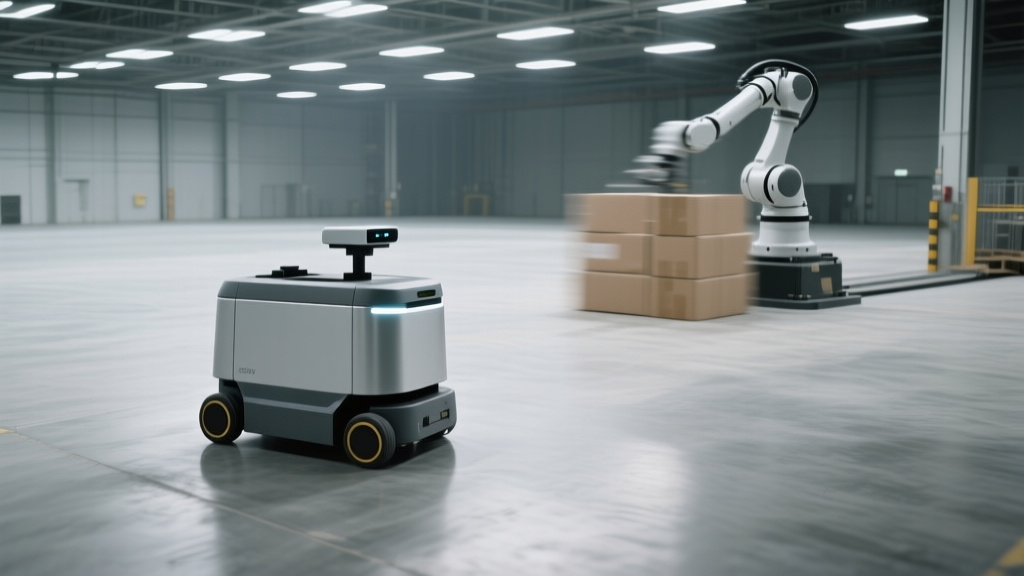
The demo looks fluid. The factory floor tells a different story.📷 Published: Apr 15, 2026 at 24:13 UTC
The demo looks fluid. The factory floor tells a different story.
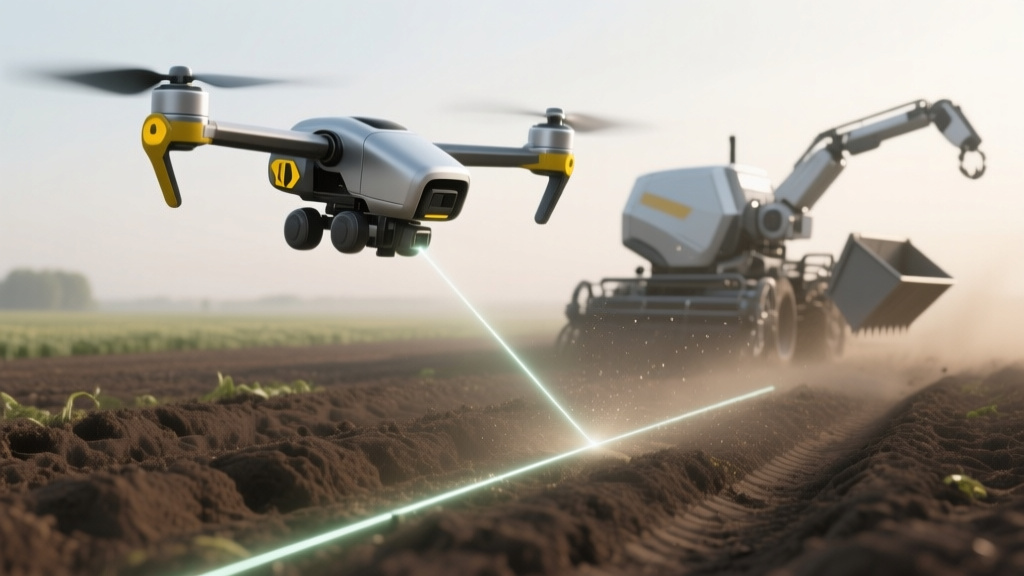
The real-world use cases are compelling but narrow. In agriculture, for example, a drone could guide a ground-based harvester by demonstrating the optimal path, but only if both robots share a common understanding of ‘optimal.’ That’s easier said than done. MIT Technology Review notes that even minor variations in sensor calibration can derail intention-based systems, leading to misaligned actions or safety risks. Certification adds another layer of complexity. Regulatory bodies like the FDA or ISO have strict guidelines for robotic collaboration, and intention-based learning introduces unpredictability that may not pass muster.
Cost is the elephant in the room. Deploying this technology at scale requires not just compatible hardware but also robust communication protocols. Most industrial robots rely on proprietary systems that don’t play well together, and retrofitting them for cross-platform learning could cost millions. Then there’s the training data. Intention-based systems need vast datasets of demonstrated actions, and collecting those in dynamic environments is time-consuming and expensive. The team’s paper hints at synthetic data as a workaround, but synthetic data often fails to capture the messiness of real-world operations.
For all the hype, the actual story is about trade-offs. The method works in demos because the conditions are ideal. In the wild, it’s a different beast. The question isn’t whether robots can share skills—it’s whether they can do it reliably, safely, and affordably when the stakes are high.
The demo video shows robots moving in perfect harmony, as if choreographed by a Hollywood director. In reality, the factory floor is less ‘Swan Lake’ and more ‘bumper cars.’ The gap between the two isn’t just technical—it’s cultural. We’ve spent decades perfecting the art of the polished tech demo, but deployment? That’s where the real work begins.