
SpaceX’s bicoastal Starlink surge: 54 satellites in one day
Two distinct columns of warm re-entry plasma and silver exhaust trails rising from opposite edges of a curved, dark horizon line under a crisp,📷 Photo by Tech&Space
- ★Simultaneous Falcon 9 launches from opposite coasts
- ★54 satellites deployed in low Earth orbit
- ★Starlink’s operational tempo accelerates in 2026
SpaceX’s March 1 dual Falcon 9 launches weren’t just another pair of routine Starlink deployments. They marked the first confirmed bicoastal operation of 2026, with rockets lifting off from Vandenberg Space Force Base in California and Cape Canaveral Space Force Station in Florida within hours of each other. The 54 satellites added to the constellation bring Starlink’s total operational count past 6,000—a threshold that shifts the network from expansion to optimization.
The precision of the operation underscores a larger trend: SpaceX is no longer just building a constellation but refining its orbital logistics. Unlike early Starlink missions, which prioritized sheer deployment volume, these launches reflect a mature phase where replacement cycles and orbital plane adjustments take precedence. The Falcon 9’s reuse—both boosters had flown at least six times previously—further cements its role as the workhorse of commercial space.
What stands out isn’t the spectacle but the tempo. SpaceX now conducts Starlink launches at a rate that outpaces its early projections, averaging one mission every 3.2 days in Q1 2026. That cadence has implications beyond internet coverage: it’s a stress test for global launch infrastructure and a benchmark for competitors still struggling to match it.
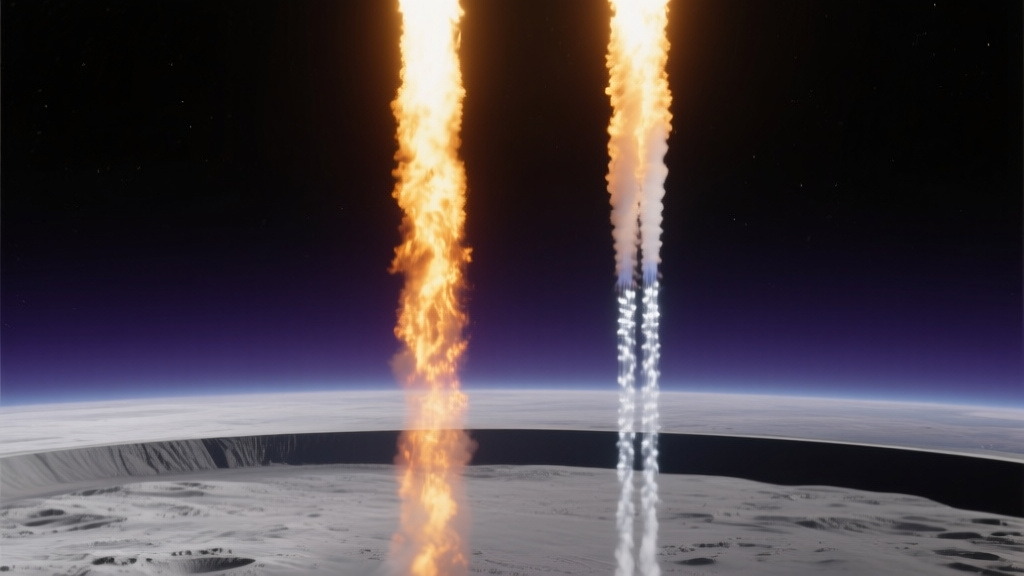
SpaceX’s bicoastal Starlink surge: 54 satellites in one day📷 Photo by Tech&Space
A coordinated deployment that reveals more than just launch capacity
The scientific significance lies in what this tempo enables. With 54 satellites deployed in a single day, SpaceX isn’t just adding capacity—it’s actively managing orbital debris risks by replacing older units before they fail. The FCC’s 2025 orbital debris mitigation rules require operators to deorbit non-functional satellites within five years; Starlink’s rapid refresh cycle ensures compliance while setting a de facto standard for mega-constellations.
Yet the operation also highlights unanswered questions about long-term sustainability. Independent analyses from Harvard-Smithsonian’s Minor Planet Center note that even with active debris mitigation, the sheer volume of Starlink satellites increases collision probabilities in low Earth orbit. SpaceX’s autonomous collision avoidance system mitigates some risk, but the system’s efficacy at scale remains unproven.
For all the noise about launch frequency, the real story is operational maturity. SpaceX has transitioned from proving it can deploy thousands of satellites to demonstrating it can maintain them—with implications for everything from global internet access to the future of orbital traffic management.