
Starlink 10-41 isn’t just another launch—it’s orbital infrastructure at scale
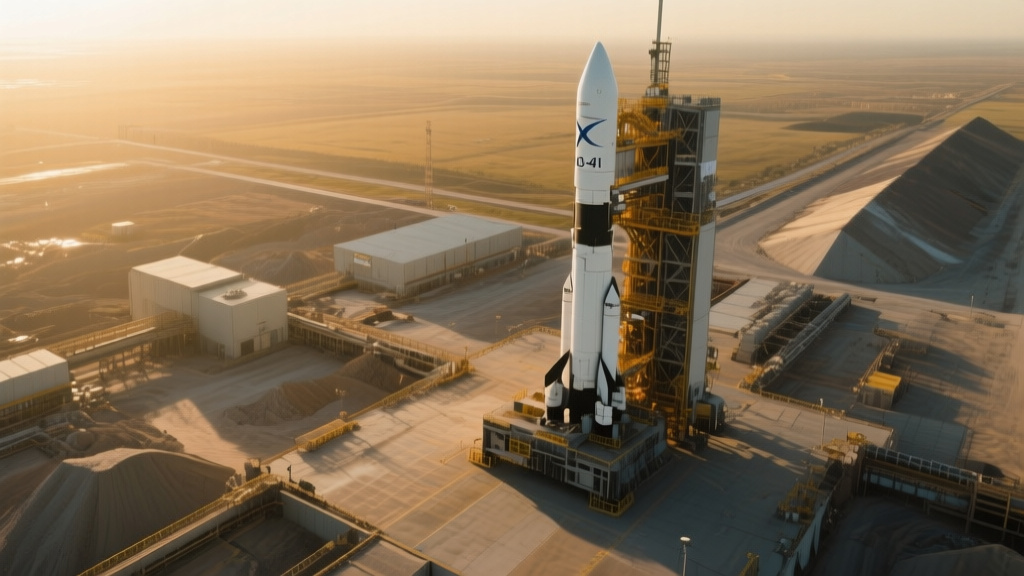
Wikipedia / Wikimedia Commons, Source — Wikimedia Commons📷 Source: Web
- ★29 satellites deployed in SpaceX’s 10th Starlink group this year
- ★North-easterly trajectory optimizes coverage over mid-latitude regions
- ★Falcon 9’s 218th flight marks routine as the new milestone
SpaceX’s Falcon 9 lifted off at 02:56:40 UTC on March 1, carrying 29 Starlink satellites into a north-easterly arc over the Atlantic—another data point in the company’s relentless cadence. This wasn’t a test flight or a one-off demonstration, but the 41st launch in the Starlink 10 series alone, a tempo that dwarfs historical deployment rates for satellite networks. The mission’s precision, from pad 40 at Cape Canaveral Space Force Station, underscores how orbital logistics have shifted: what once required international consortia now unfolds as a single operator’s weekly routine.
The north-easterly trajectory wasn’t arbitrary. It’s a calculated path to optimize coverage over the densely populated mid-latitudes, where demand for low-latency broadband outstrips ground-based infrastructure. Unlike early Starlink batches, which prioritized polar or equatorial orbits, this group targets the 45th parallel—a band stretching from Portland to Venice, where terrestrial networks struggle with topography and regulation. The Falcon 9’s first stage, on its 14th flight, landed on Just Read the Instructions eight minutes after liftoff, a footnote that would’ve been a headline five years ago.
What’s missing from the spectacle is the quiet revolution in orbital mechanics. SpaceX isn’t just launching satellites; it’s iterating a dynamic constellation that adjusts to real-time demand, rerouting capacity like a cellular network in the sky. The Federal Communications Commission’s 2022 report noted that Starlink’s active user count surpassed 1.5 million—most in regions where fiber is economically unviable. This mission, like its predecessors, isn’t about breaking records. It’s about proving that space-based utilities can operate at terrestrial scale.

Starlink 10-41 isn’t just another launch—it’s orbital infrastructure at scale📷 Source: Web
The confirmation that changes the timeline: megaconstellations are no longer theoretical
The scientific community’s response has been measured but telling. While early concerns about orbital debris persist, aerospace engineers now treat Starlink as a case study in collision-avoidance automation. The 10th iteration of Starlink’s laser-linked satellites, deployed in this batch, reduces reliance on ground stations—a critical step for polar coverage where latency spikes. ‘We’re watching a real-time stress test of the Outer Space Treaty’s “peaceful purposes” clause,’ noted Dr. Laura Grego of the Union of Concerned Scientists, pointing to the tension between commercial expansion and equitable access.
Operationally, the launch reaffirms SpaceX’s shift from R&D to industrial production. The Falcon 9’s 218th flight—with a success rate exceeding 98%—means the rocket is now statistically more reliable than the Soyuz workhorse it was designed to replace. Yet the real bottleneck isn’t hardware, but spectrum allocation. The International Telecommunication Union’s 2023 filings show Starlink competing with OneWeb and China’s Guowang for the same Ku-band frequencies, a regulatory chess game that will define the next decade of space commerce.
What we don’t yet know: how this scale affects long-term orbital sustainability. SpaceX’s automated deorbiting protocols meet FCC standards, but independent tracking data suggests a 0.3% failure rate—enough to double the debris population in low Earth orbit by 2030 if unchecked. The company’s silence on second-generation Starlink’s end-of-life disposal plans leaves a critical gap in the risk assessment.
For all the noise about Mars and lunar bases, the actual story is in the 550-kilometer shell around Earth. This launch cements that low Earth orbit is the new utility layer, as essential—and as contested—as underwater cables were a century ago. The next Falcon 9 flight, already scheduled for March 4, won’t make headlines. That’s the point.