
4D robot vision chip: demo brilliance, deployment silence
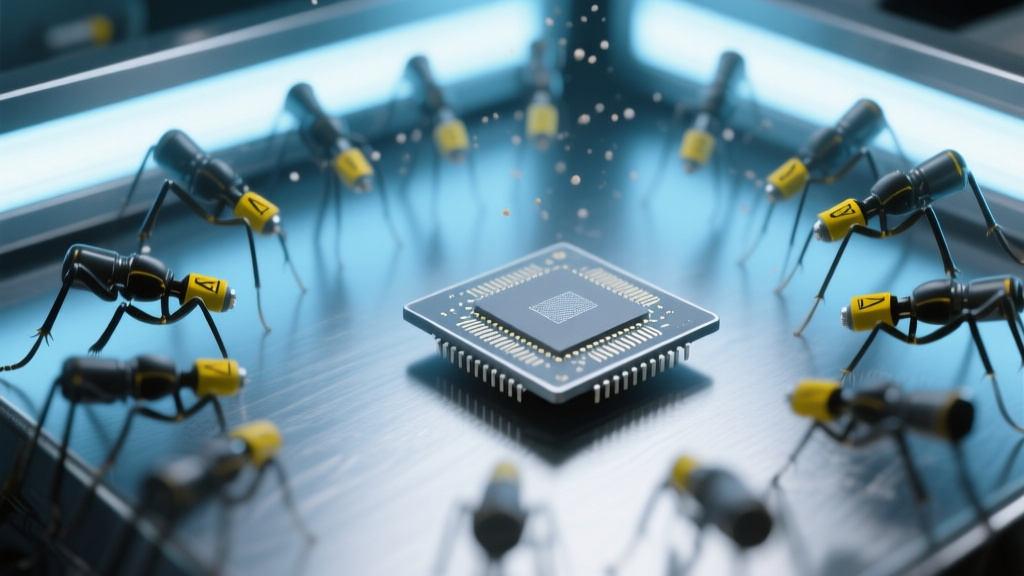
A **1mm-square 4D vision chip** (matte gunmetal grey with micro-etched circuits) centered on a **reflective stainless-steel clean-room workbench**,📷 Photo by Tech&Space
- ★Silicon chip tracks speed and depth live
- ★Nature publication confirms lab prototype
- ★Real-world constraints unaddressed
A team at the Swiss Federal Institute of Technology has etched a 4D imaging sensor onto a single millimeter-scale chip, packing depth, azimuth, elevation and velocity sensing into what amounts to a silicon postage stamp. Published in Nature, the device produces 3D point clouds while simultaneously measuring the speed of every pixel without temporal lag—something no commercial lidar or stereo camera can claim today.
According to the paper, the chip leverages an array of avalanche photodiodes paired with custom time-to-digital converters, achieving microsecond-level latency at room temperature. It runs on milliwatts, weighs under a gram, and is fabricated in a standard 130 nm CMOS process—metrics that look suspiciously like the spec sheet of a future drone payload. Yet the Nature video shows a robot arm tracking a swinging pendulum under studio lighting, a controlled scenario that sidesteps the real world’s glare, vibration, and unpredictable motion.
TechXplore’s original report calls the sensor a leap over existing 3D systems, yet the supplementary materials reveal a field-of-view of only 40° and a range capped at 1.5 meters—hardly the omniscient eye robots need to navigate city streets or warehouses.
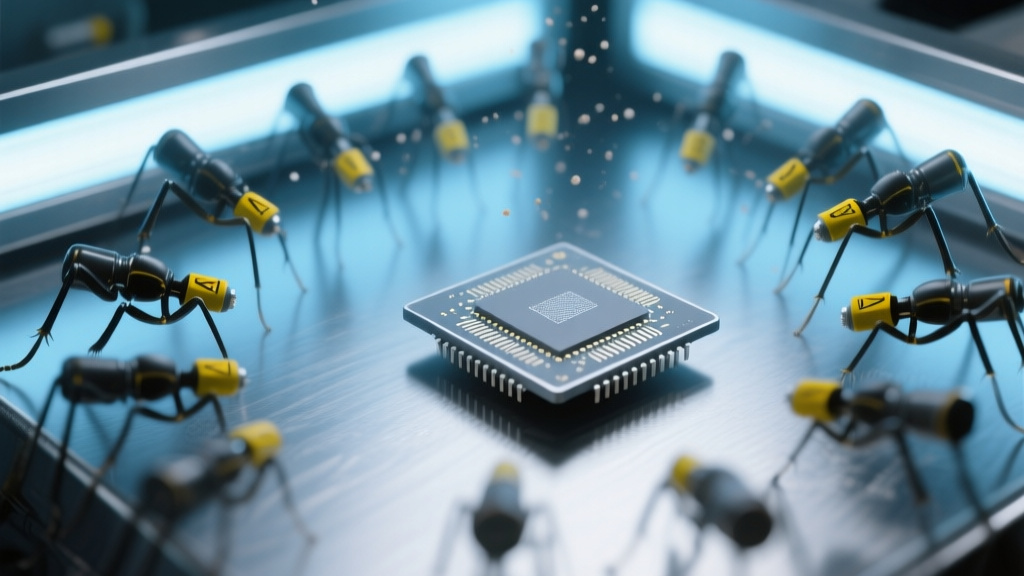
A single robotic drone motor, its warning-yellow plastic casing and delicate wires exposed, spinning slowly in a spotless white clean-room. The motor📷 Photo by Tech&Space
The hardware limit nobody mentions in the demo
The marketing filter is easy to apply: strip the word “breakthrough” and you’re left with a research prototype that works in a dark lab. Real deployments demand 360° coverage, 20-meter range, and immunity to sunlight—all absent from the Nature paper. Battery life, payload integration, and regulatory certification are also glossed over; the chip may sip power, but the processing pipeline required to turn 4D data into actionable commands will not.
Current industrial users—warehouse drones, logistics bots, agricultural sprayers—rely on fused sensors: lidar for structure, radar for speed, stereo cameras for texture. Replacing or augmenting any of those stacks with a 4D chip would require not just technical validation but a complete redesign of safety protocols. The team has not announced any OEM partnerships, suggesting that scale-up friction—cost, reliability, and certification—remains untested.
For all the noise, the actual story is a silicon proof-of-concept that skips the messy reality of robotics: the demo works, but deployment begins with the first dirty lens, the first cloudy day, and the first liability waiver.
In other words, we’ve seen this movie before: a polished lab video, a Nature splash, and zero mention of the thousand edge cases that turn a chip into a product. The only certainty is that next year’s trade show booth will have a looping demo reel.